BEL021 – BLUE HOUSE
RHAPSODY IN BLUE
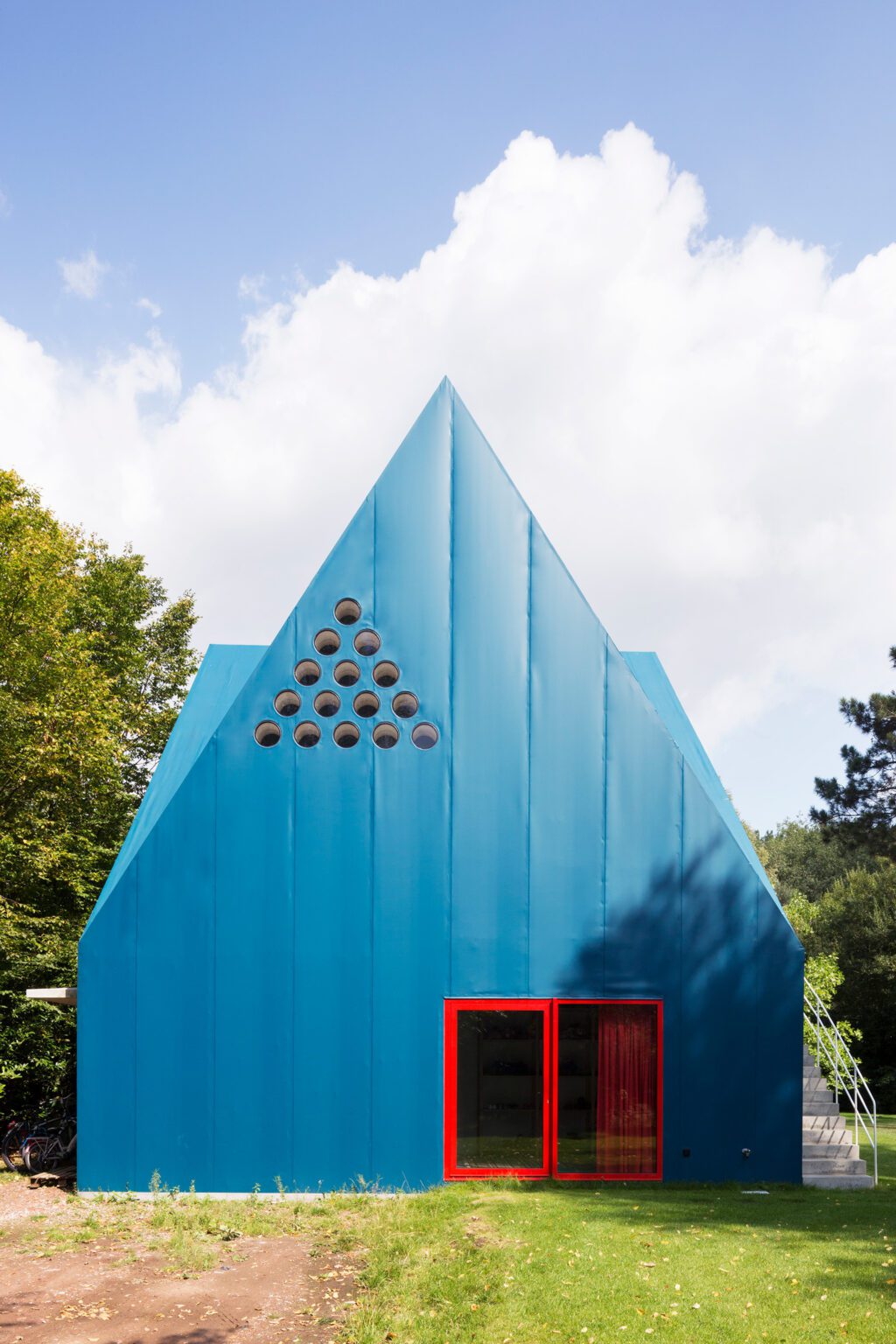
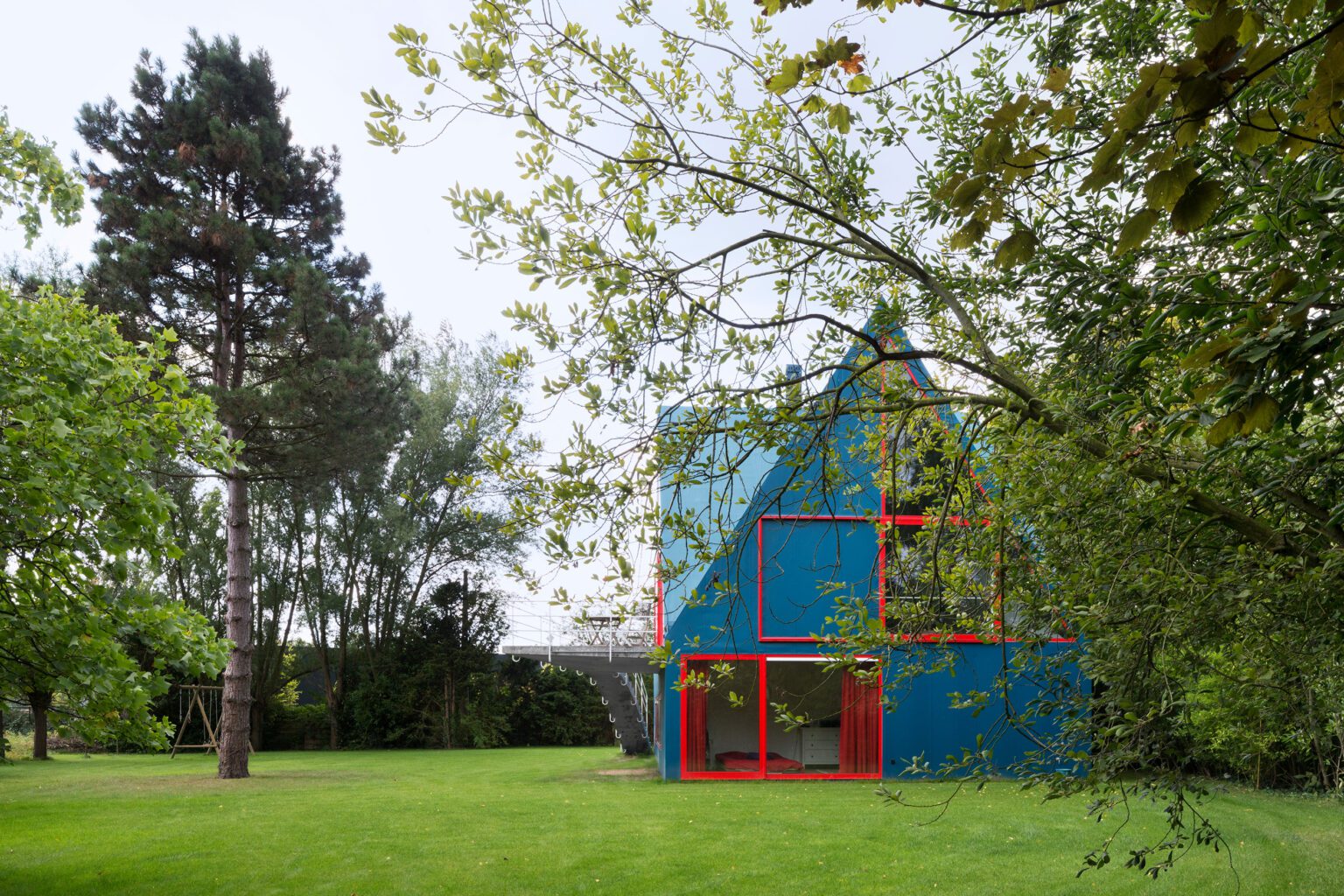
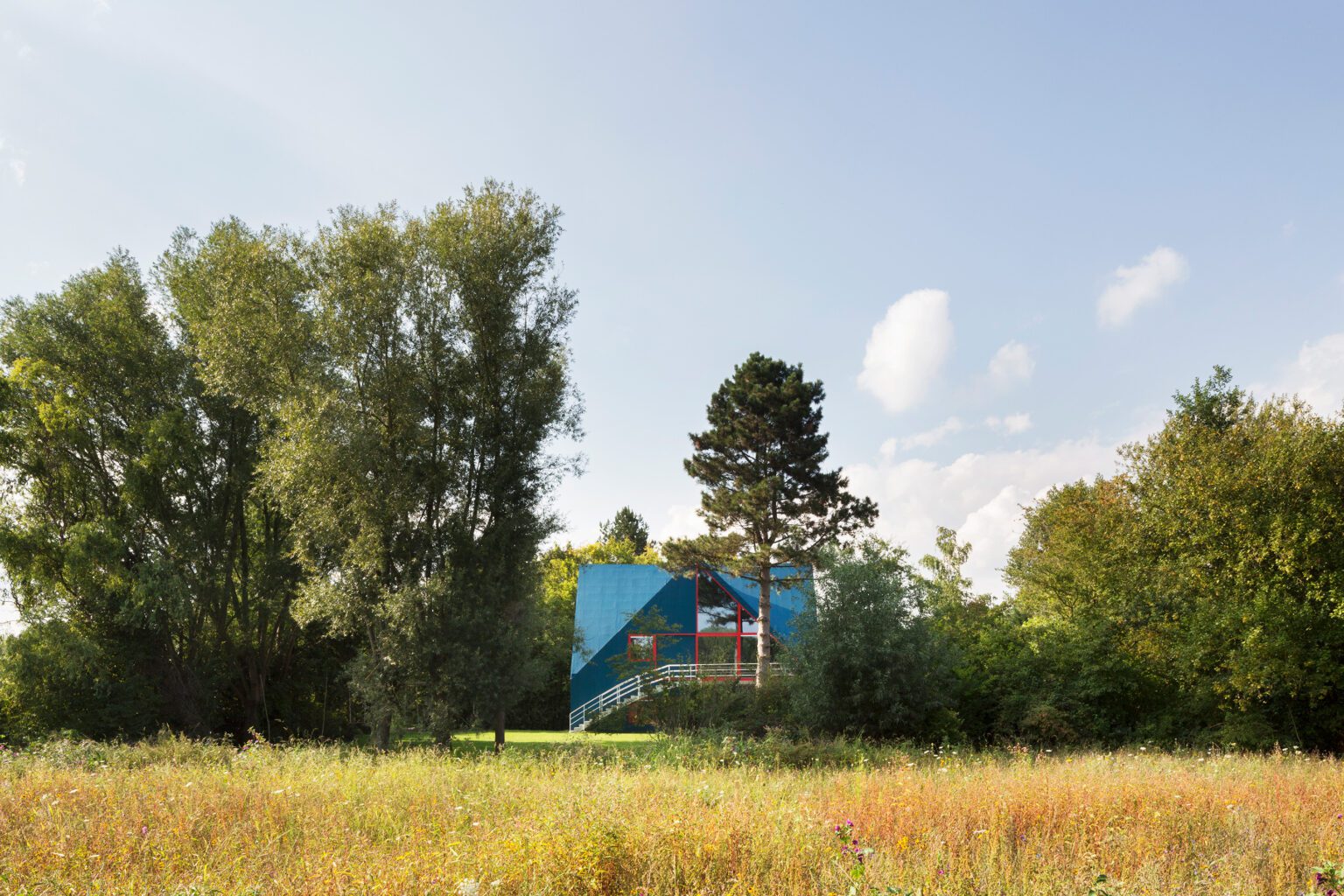
A short, paved road leads past two brick houses hidden behind thick hedges. At a wooden barrier, the last trace of inhabited world ends, and the former farm path winds deeper into the meadows. Suddenly, the eye catches something unusual: a sharp, bright-blue volume that appears to have landed smack in the middle of the pristine field. Like a frontal assault on the senses, the home of a young family stands here in cheerful multicolour.
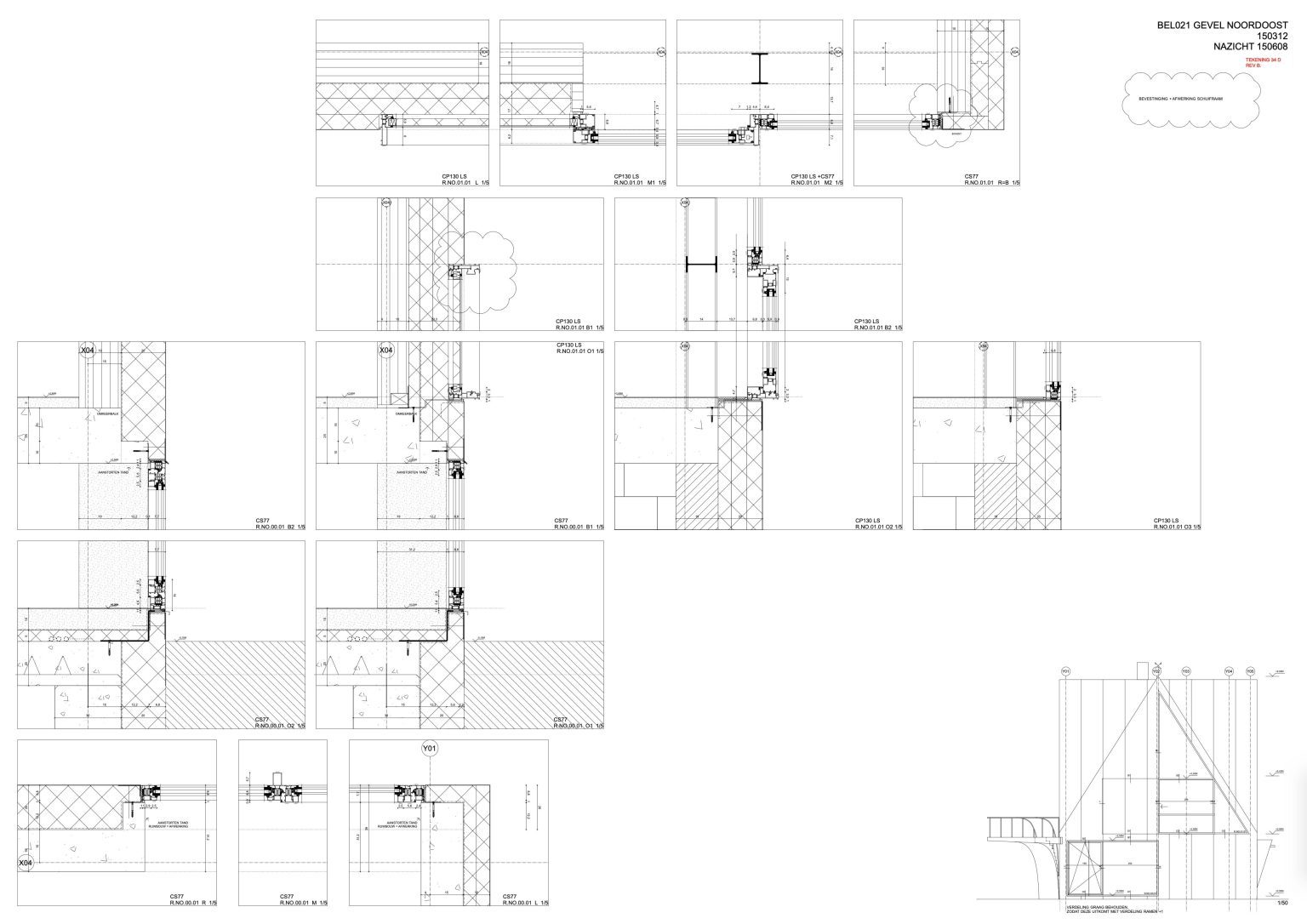
The man of the house runs a family business specializing in aluminium windows and doors. The designers of the house are two young architects with whom the client once shared lecture halls at KU Leuven. “They were always among the best in our year,” he says. “That’s why I approached them when I wanted to renovate our showroom. We were so pleased with the result that we asked them to design our home as well.” By now, the duo has built up a varied portfolio, including the recently completed water silo in Alsemberg and the new sports hall in Genk. The brief for the new residence was clear: a dingy 1970s holiday home had to make way for a “contemporary, exciting house with a loft feel.”
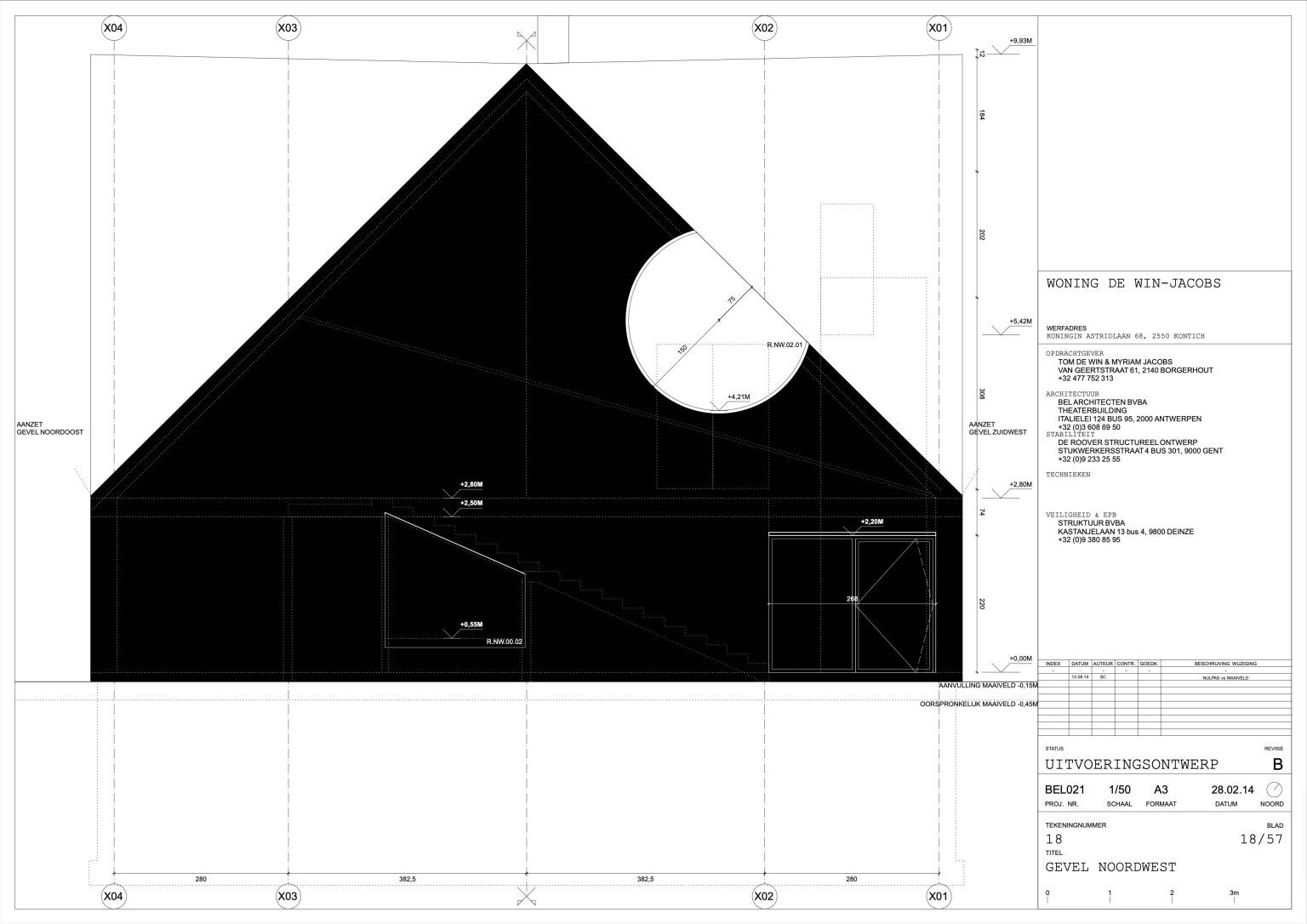
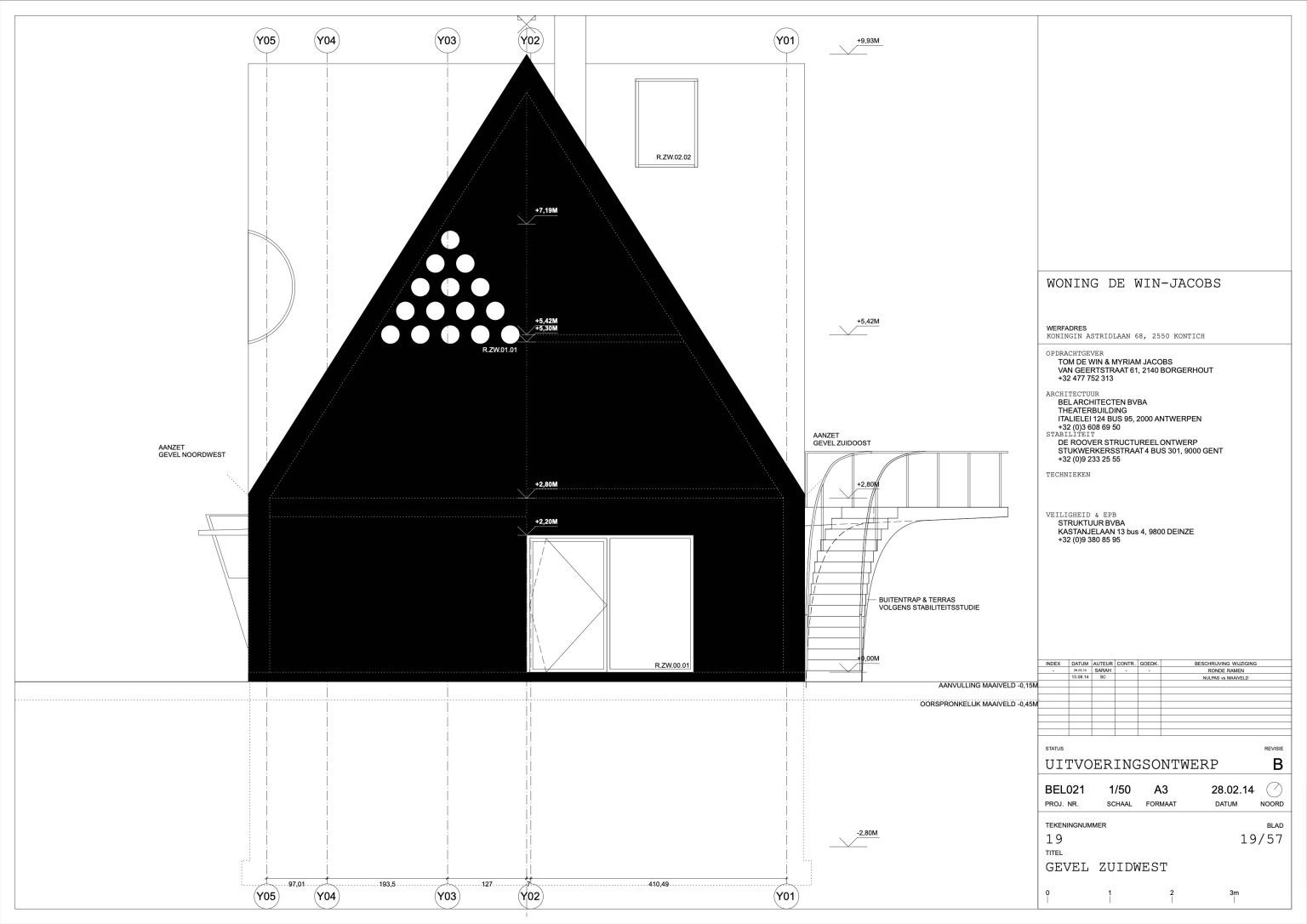
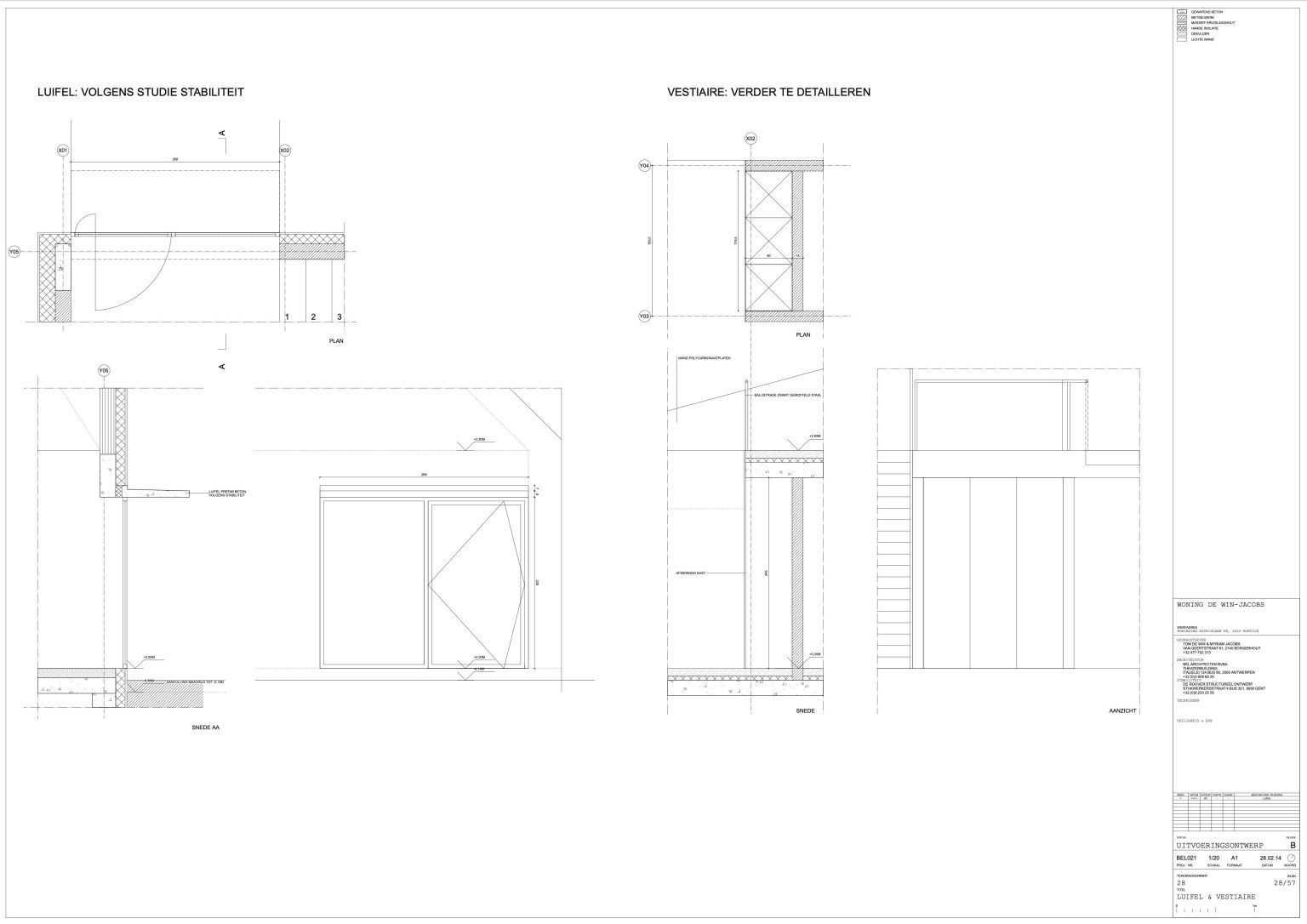
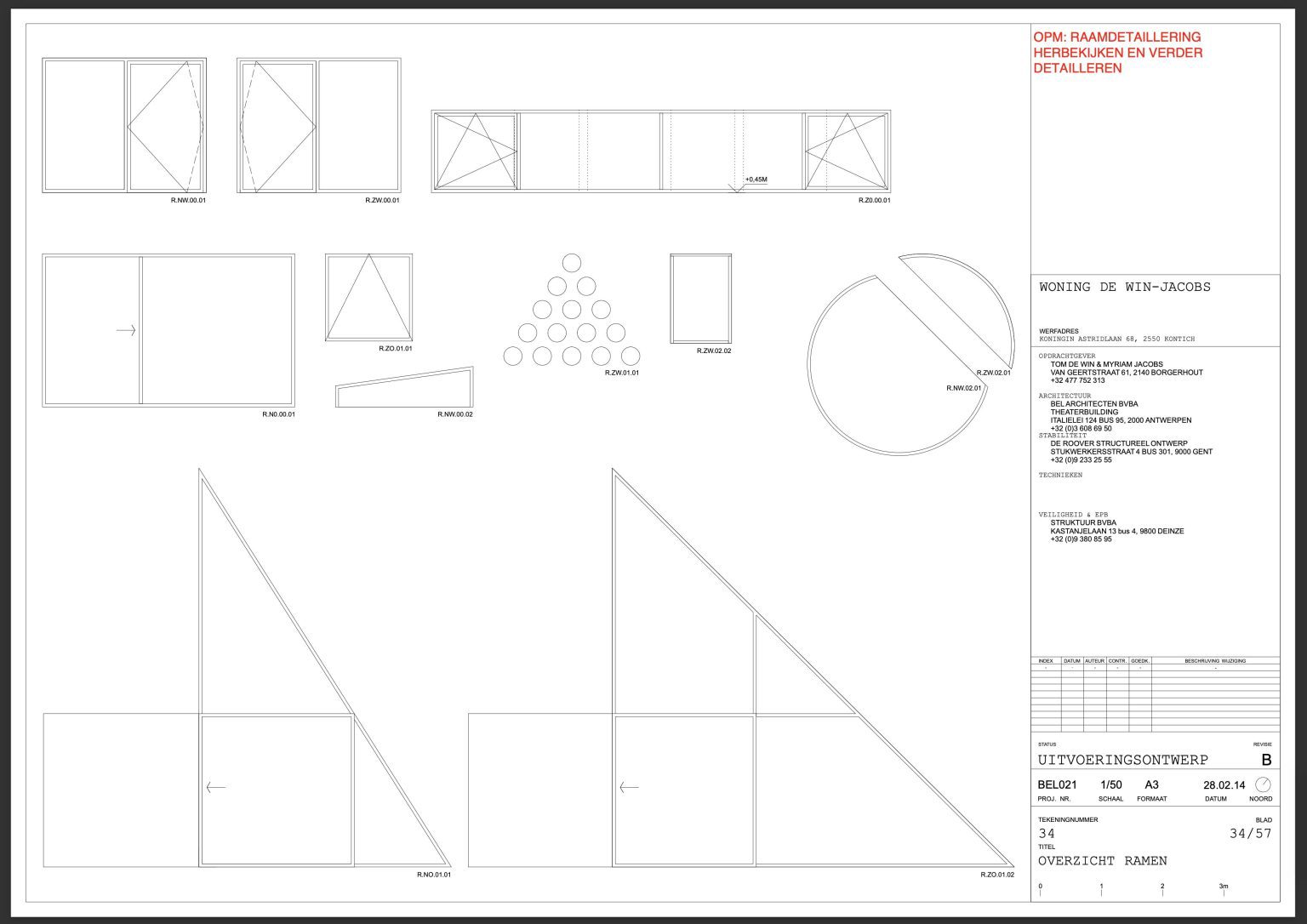
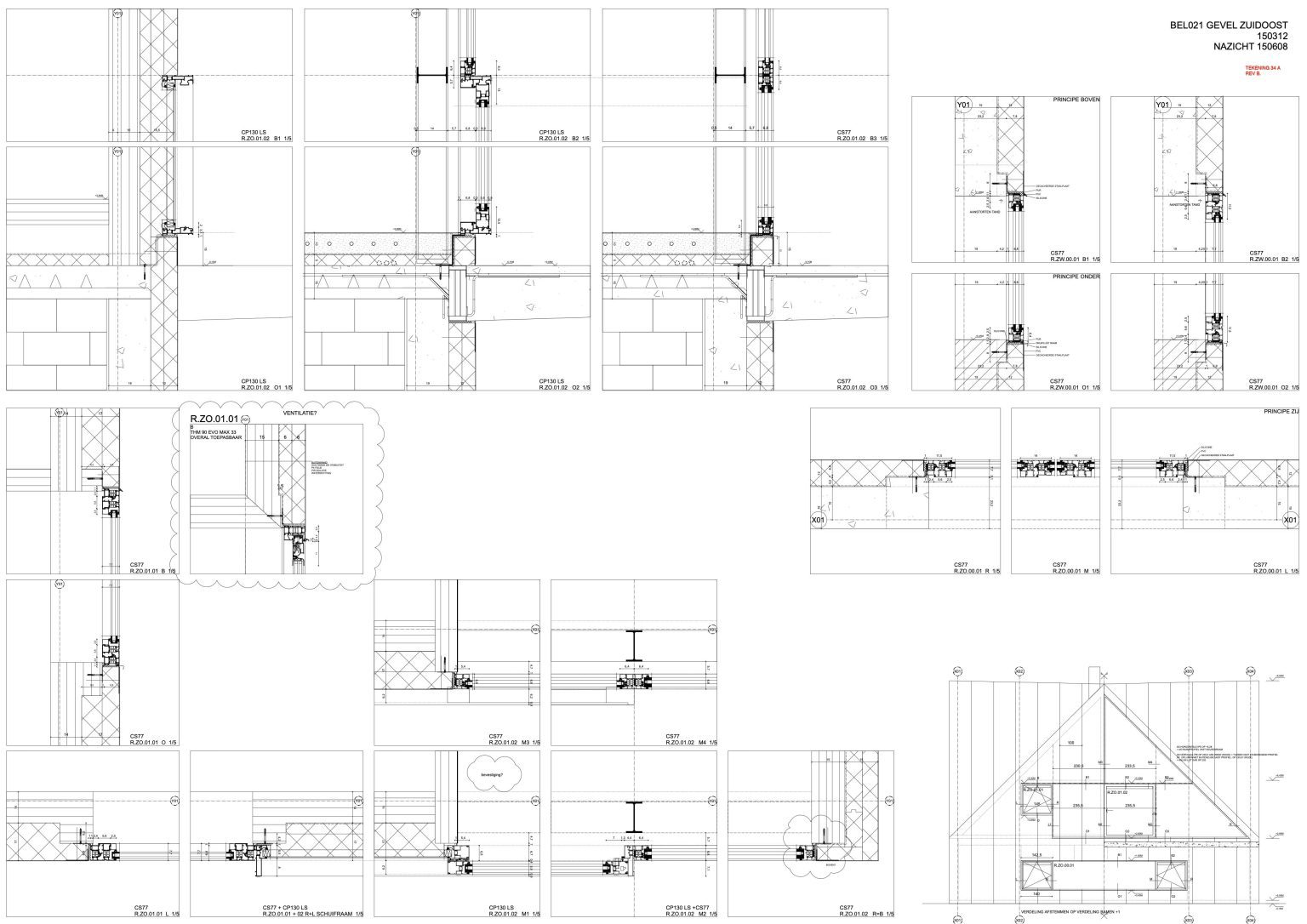
Once the initial shock wears off, the house reveals very little on second glance. From the street, it presents a largely closed façade with a large red window-door at the bottom and a mysterious cluster of round openings in a triangular pattern above. A discreet concrete canopy marks the entrance.
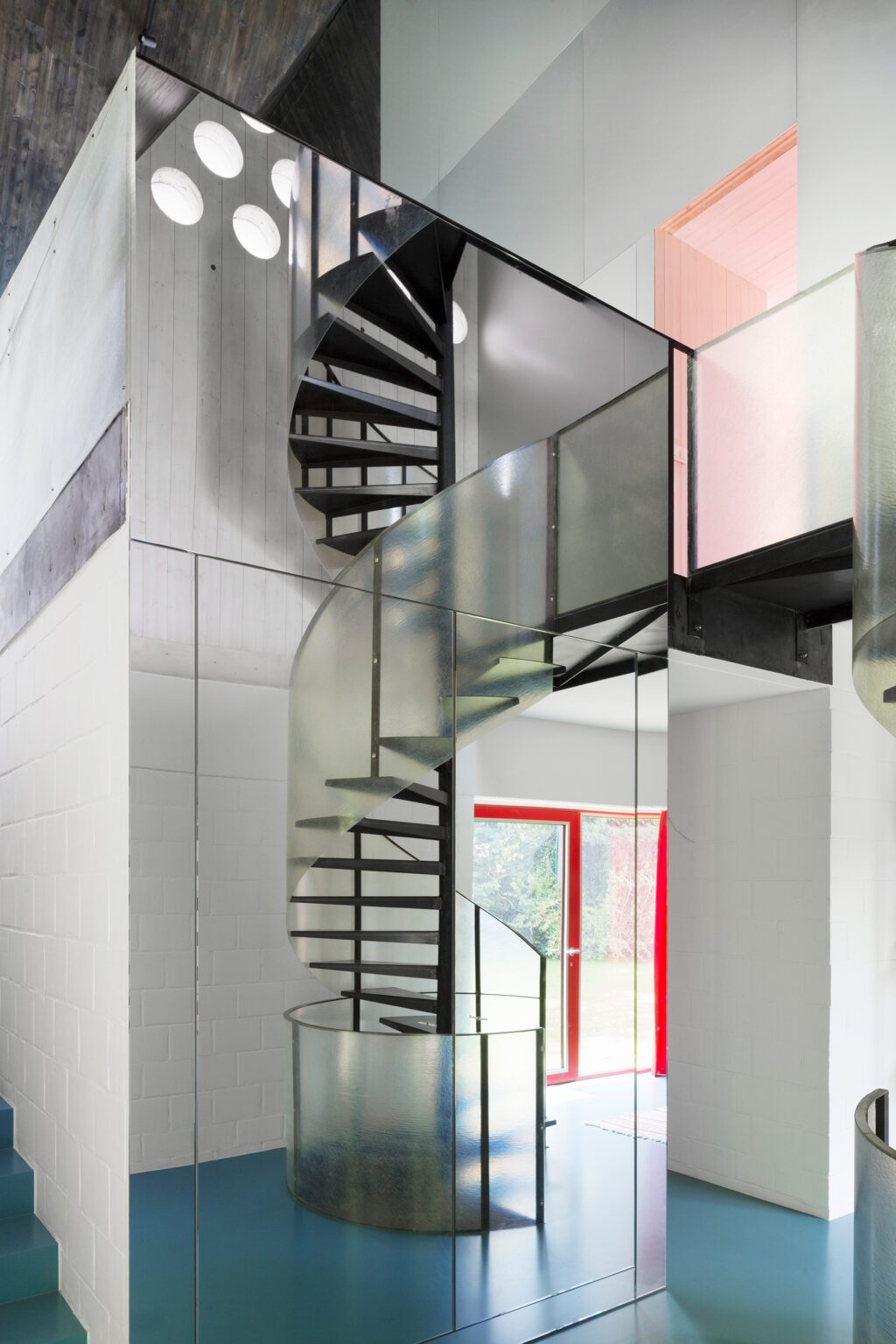
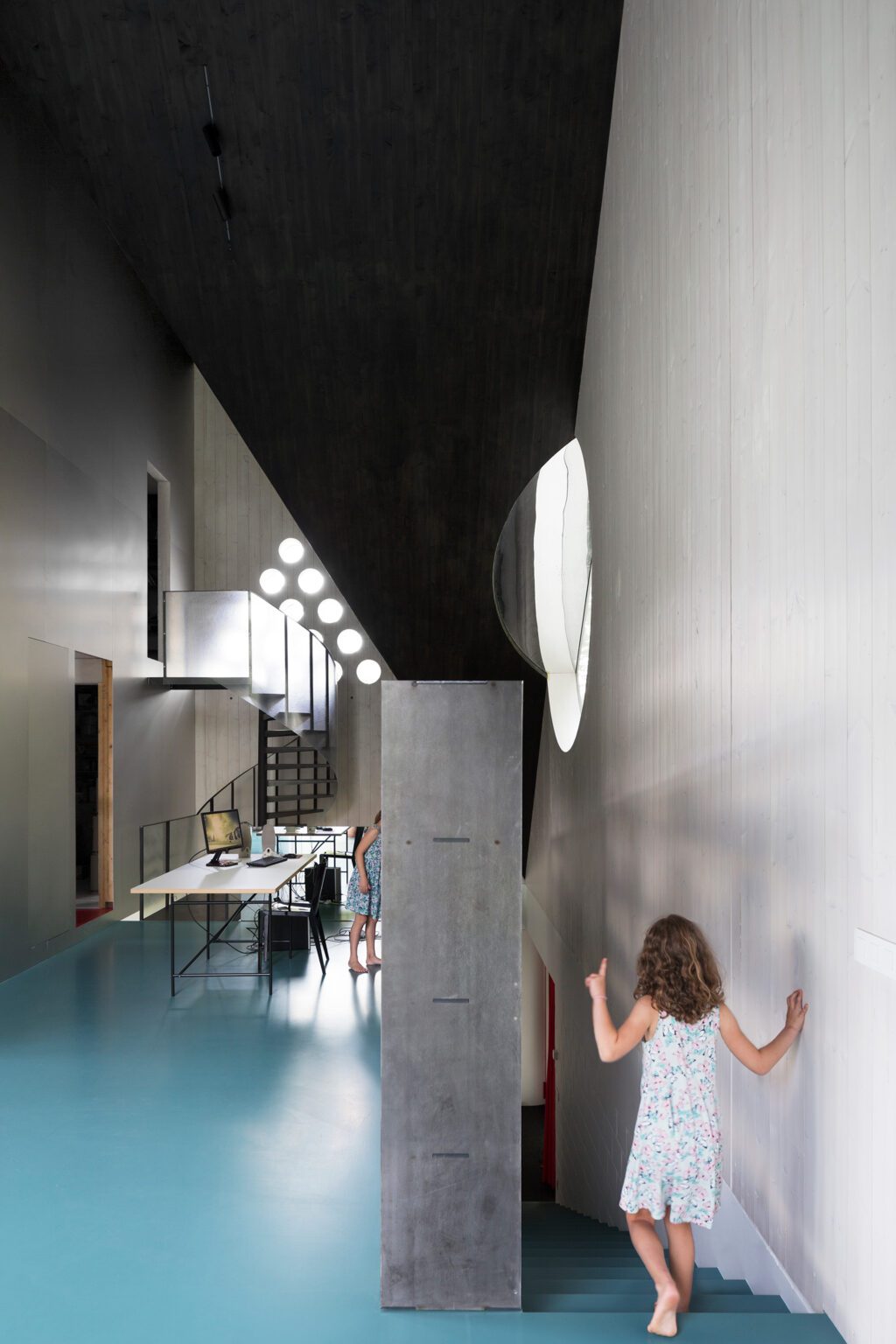
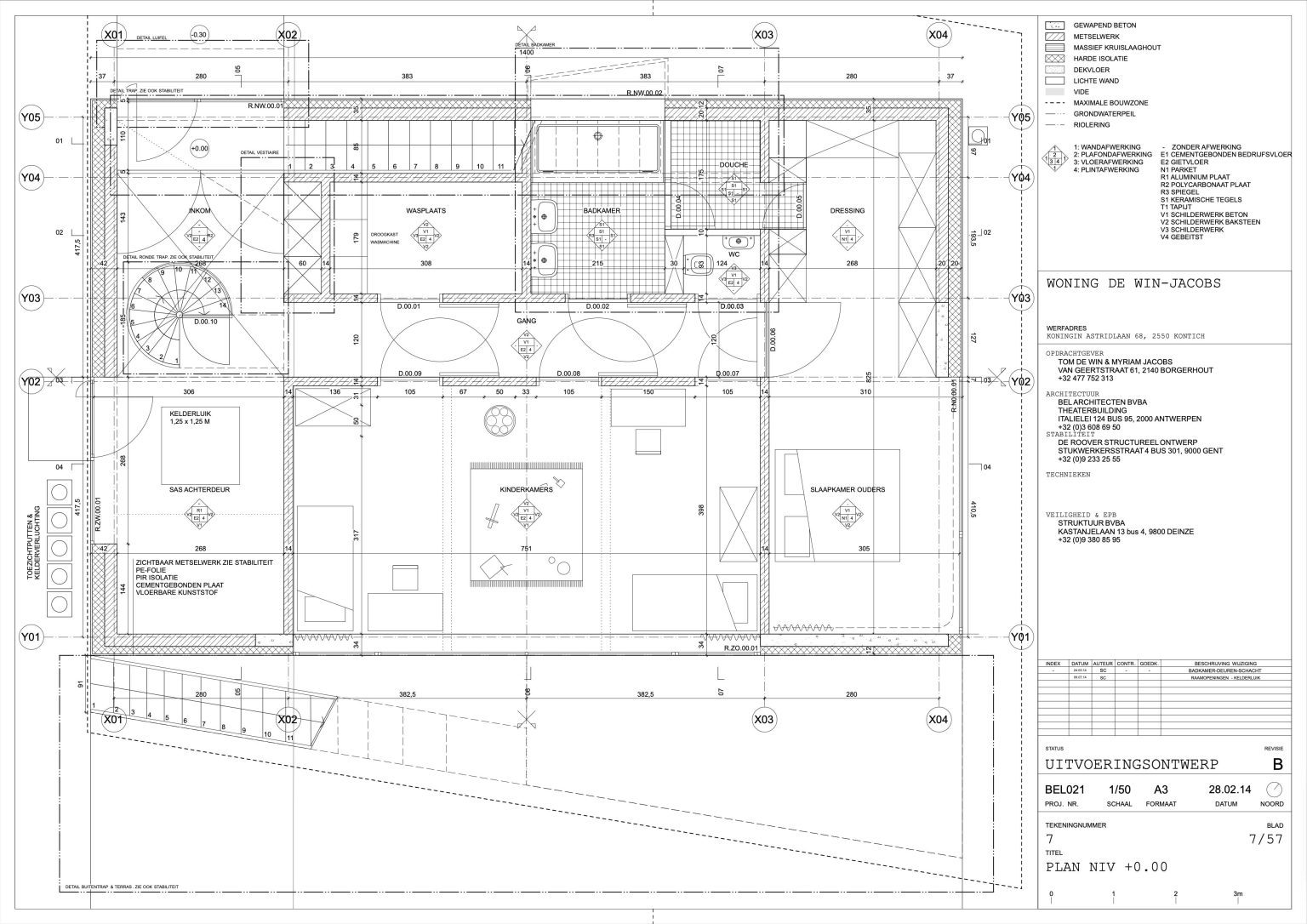
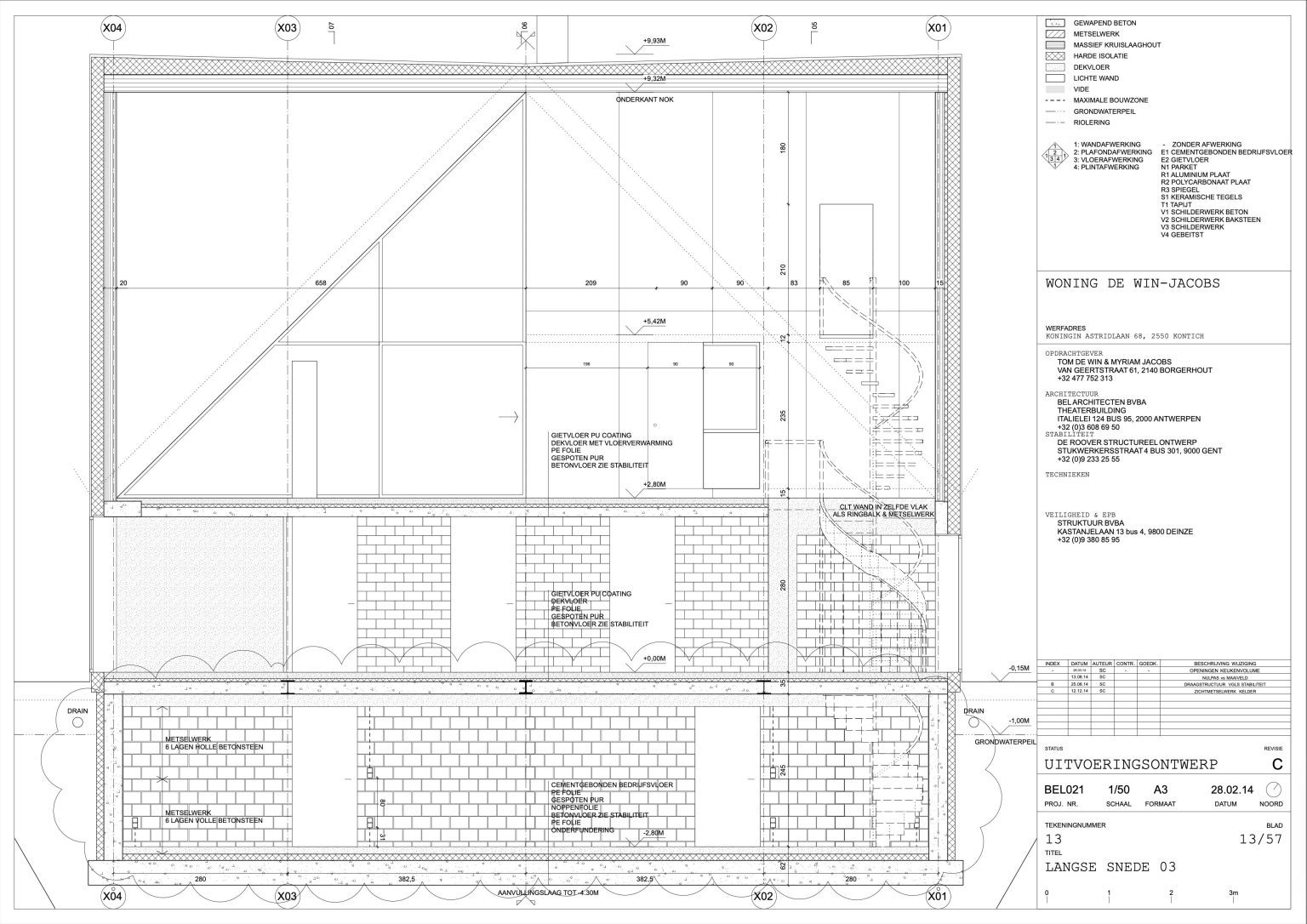
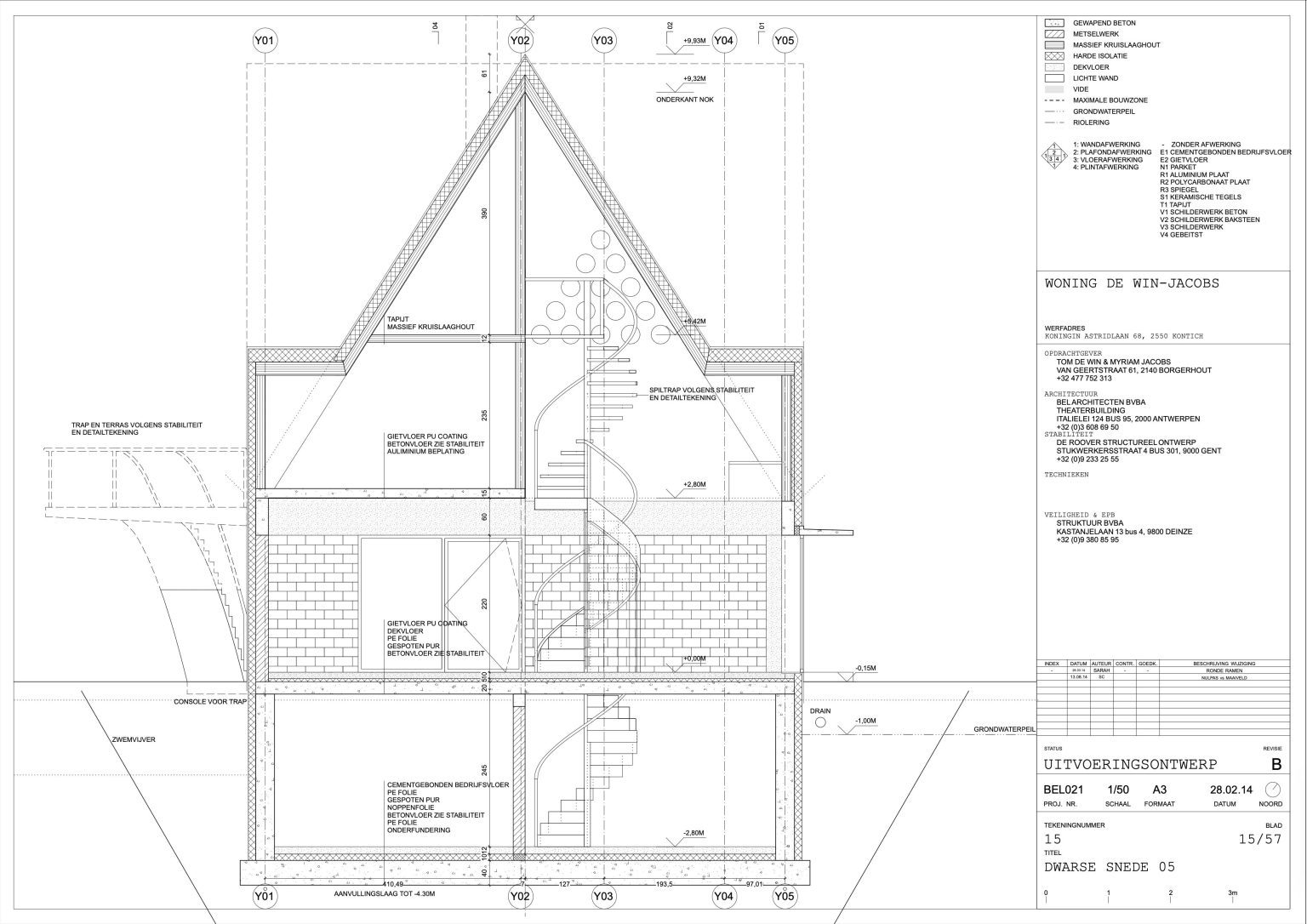
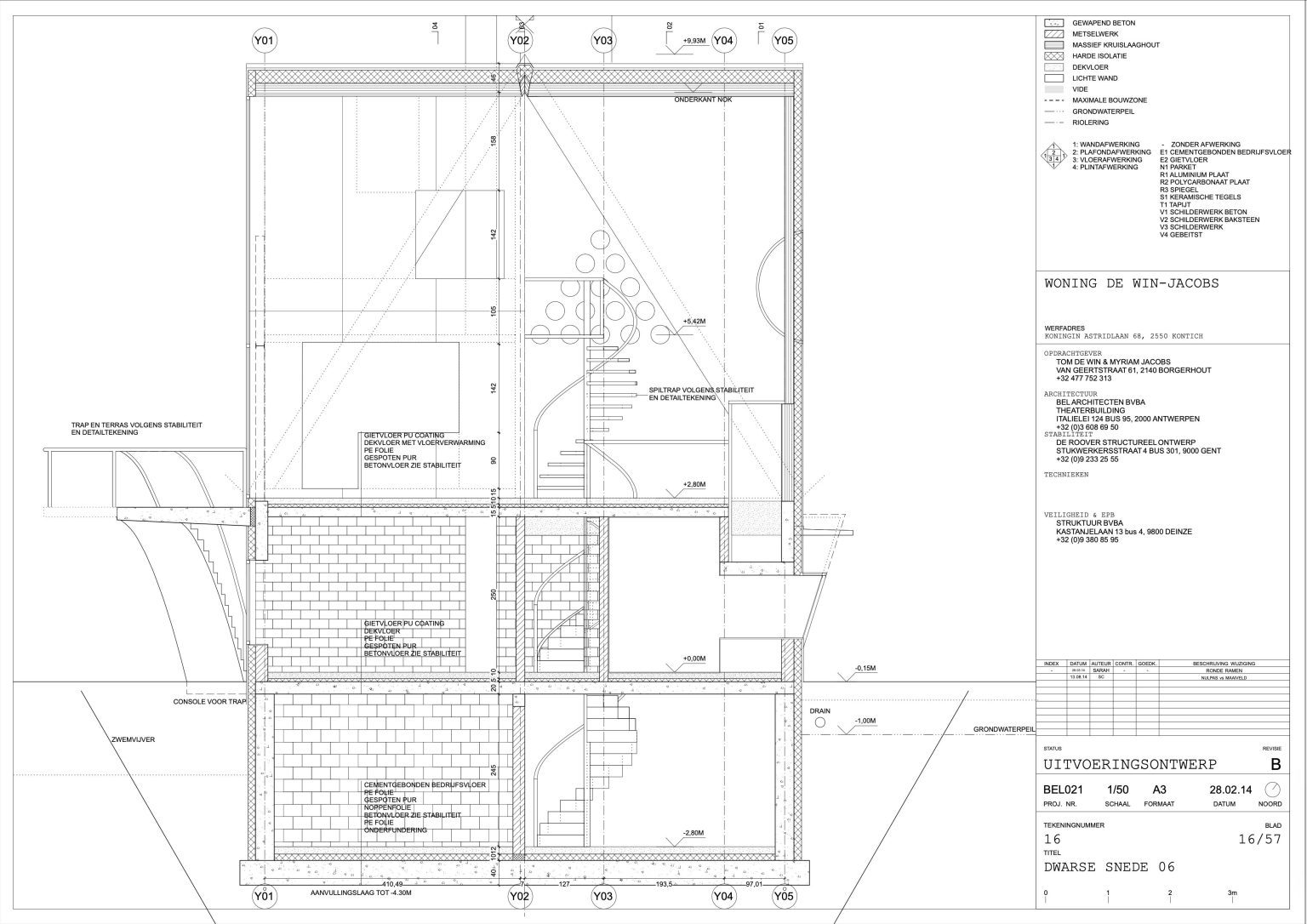
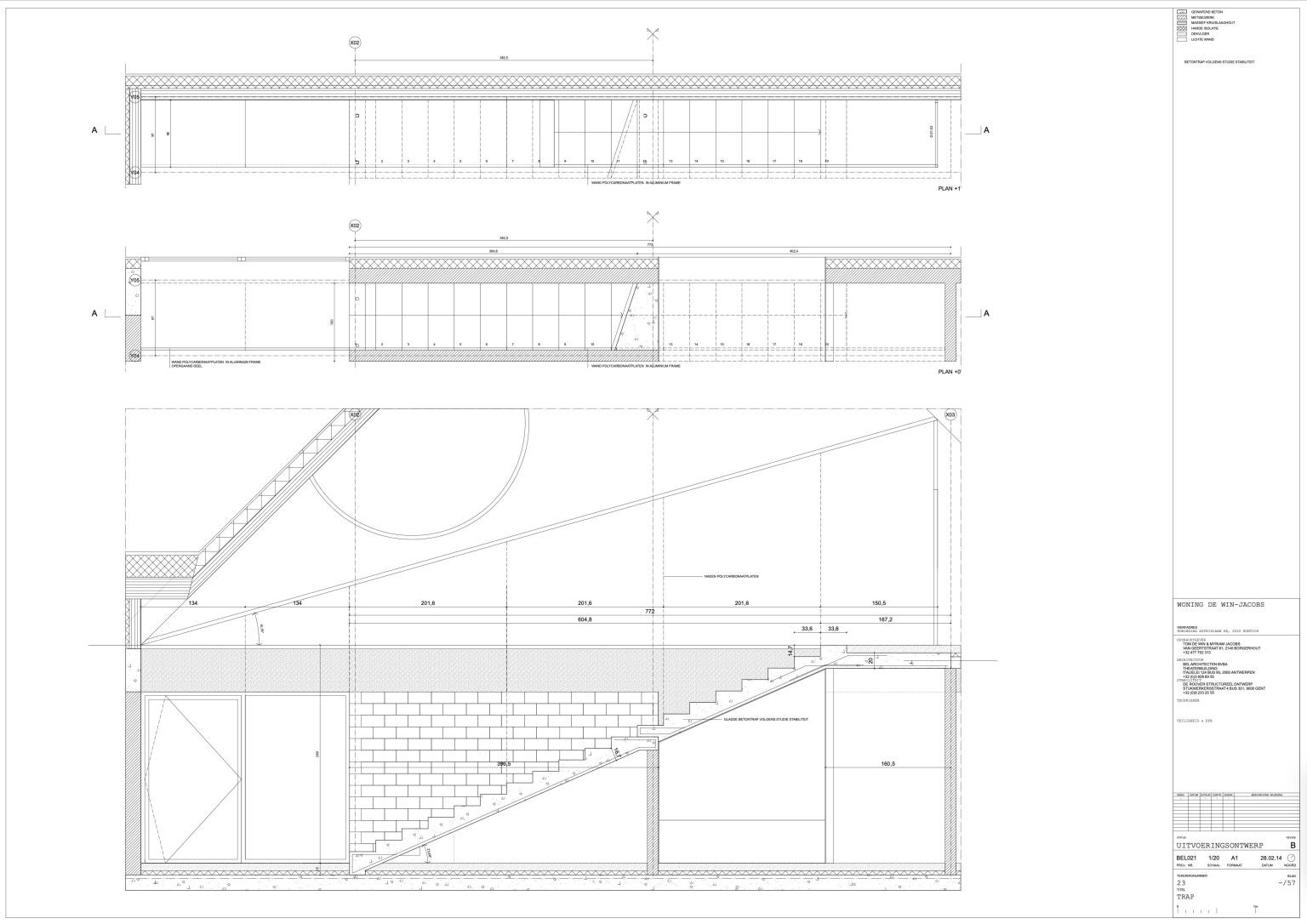
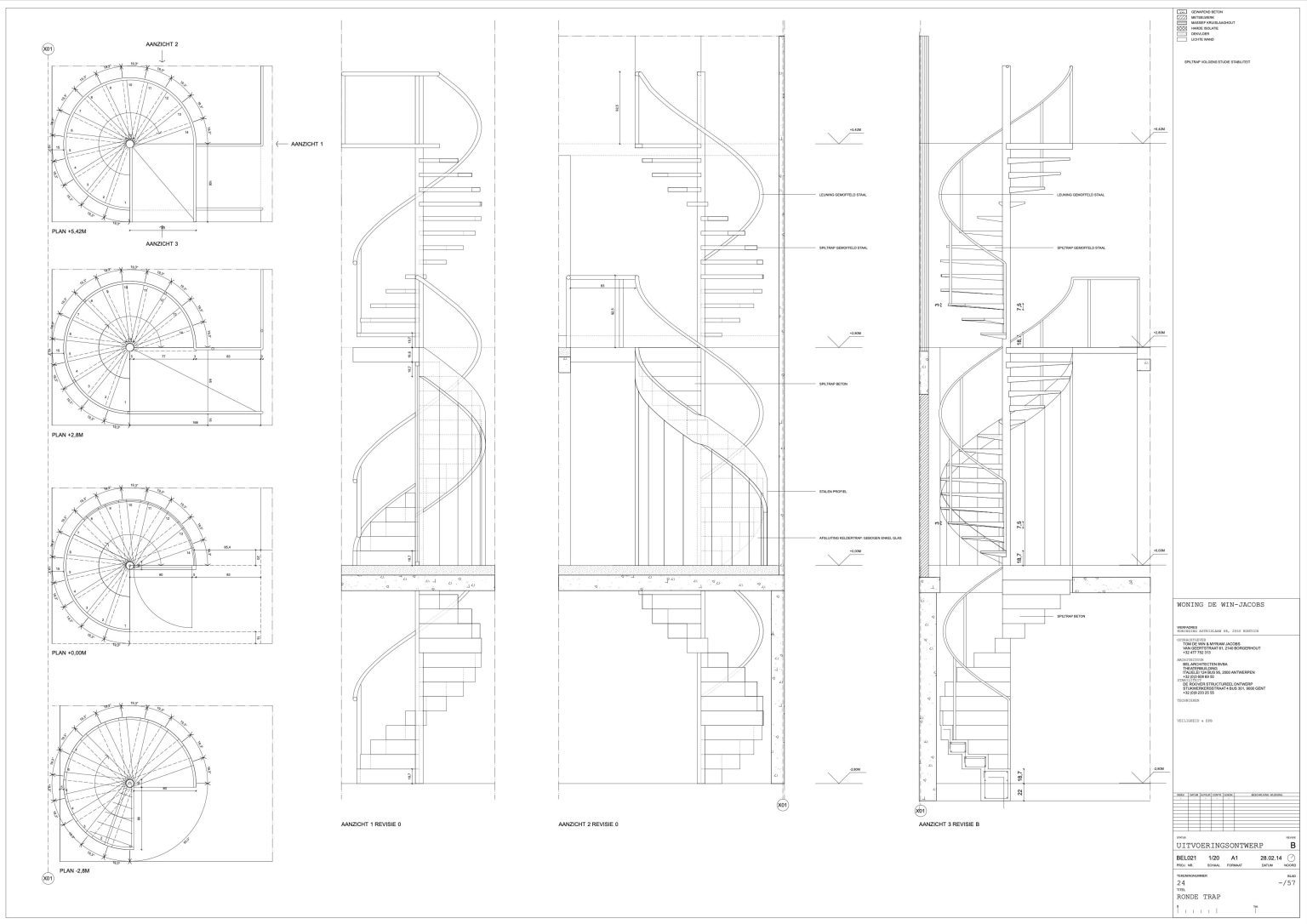
Entering the house delivers a second jolt. The architects waste no time on subtle transitions: the eye is immediately drawn upward, all the way to the roof ridge. Light filters in from unexpected angles. The dynamic in the narrow entrance zone is heightened by an elegant steel spiral staircase, shooting upward like a whirlwind. A second, invitingly shallow but narrow staircase follows a mirrored cabinet wall up to the central living space. Just one meter beyond the front door, this house is already intriguingly rich.
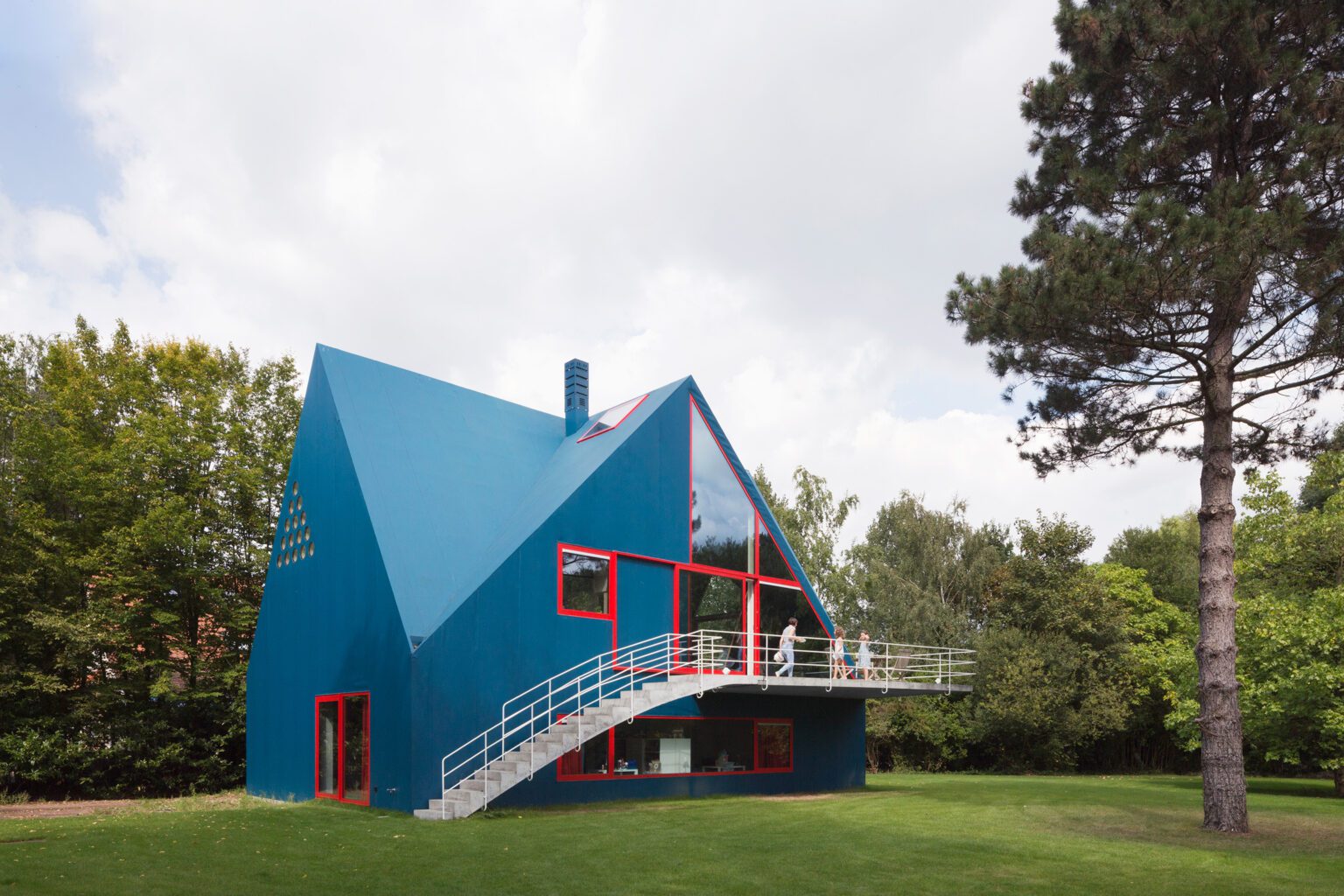
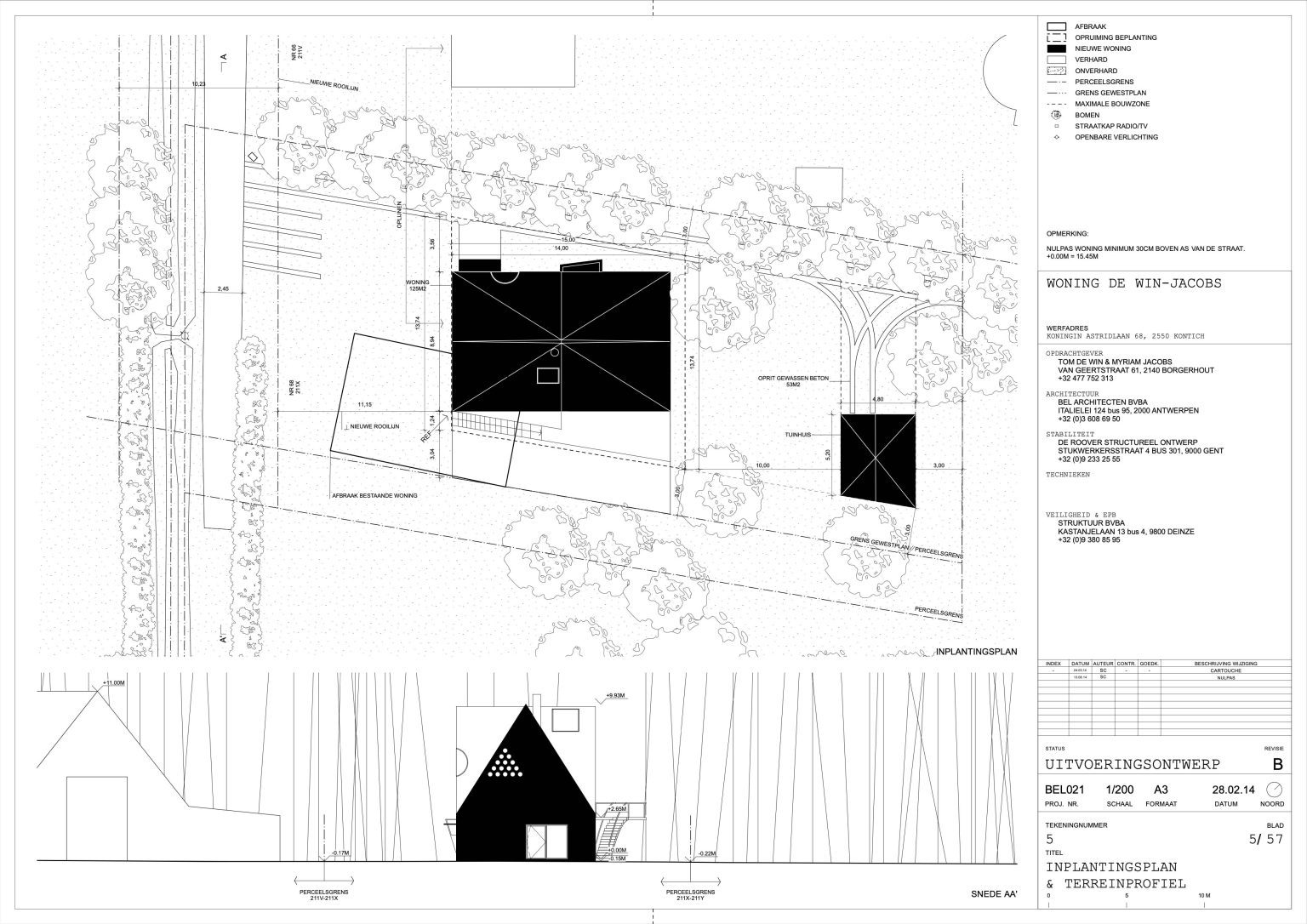
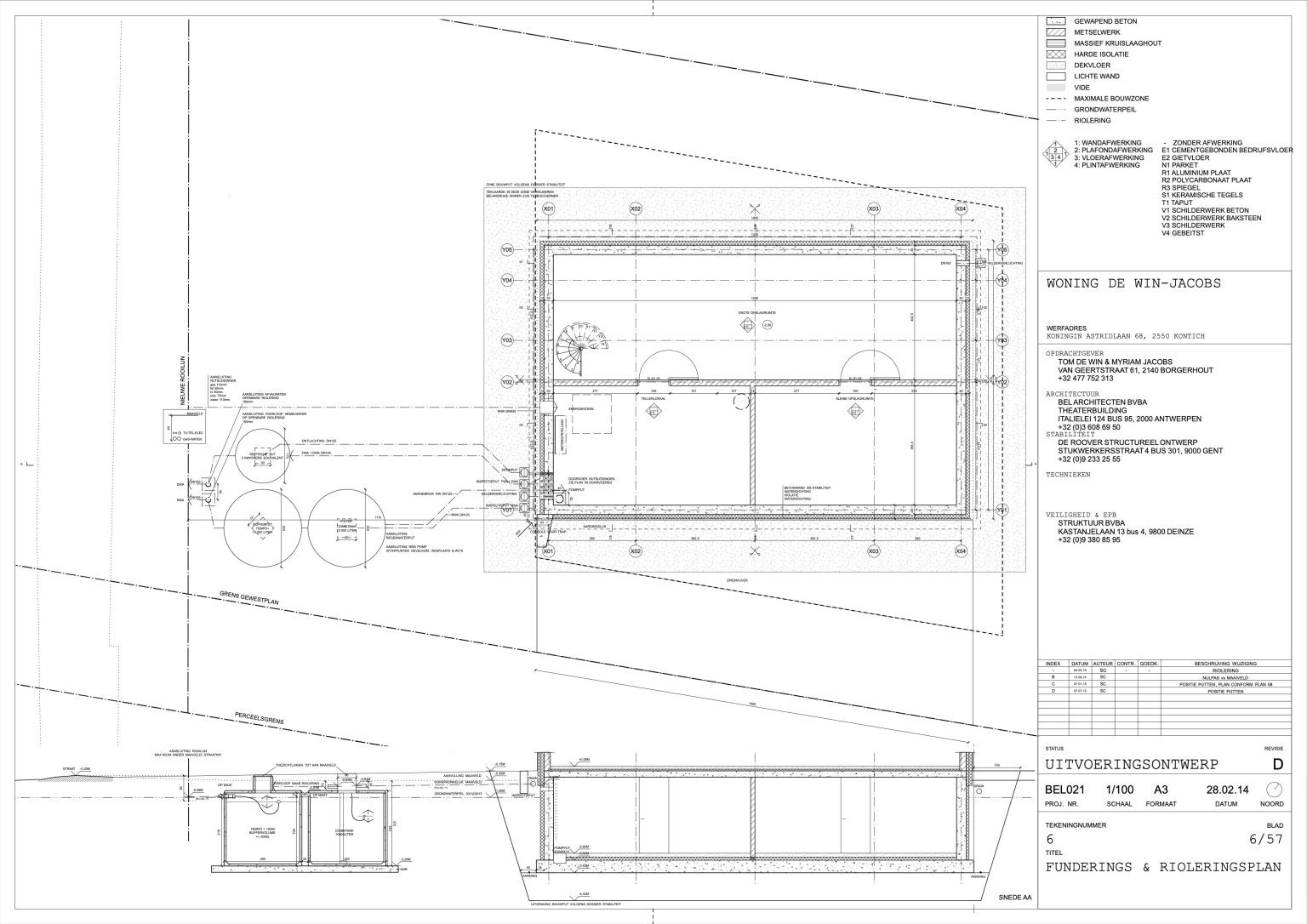
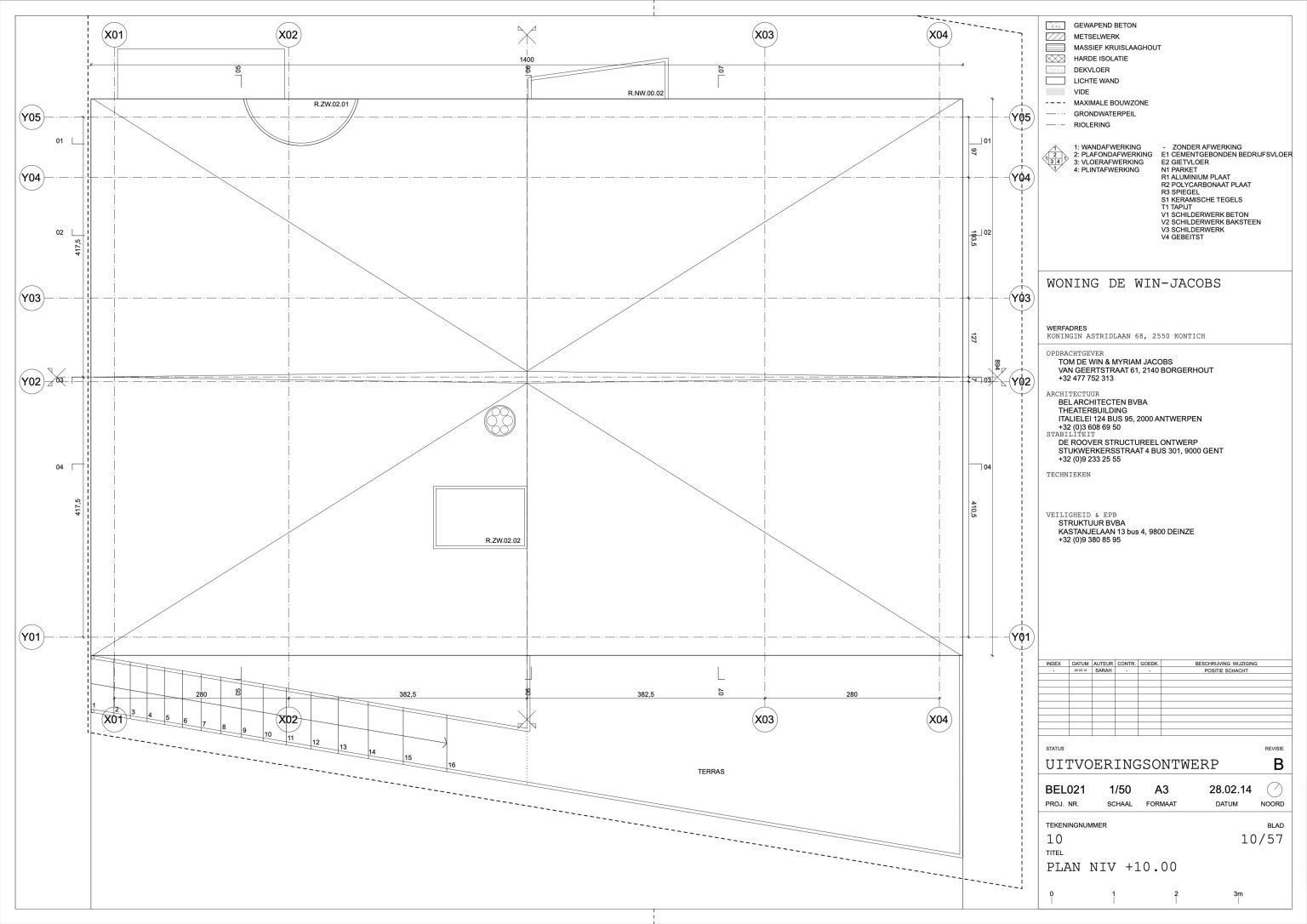
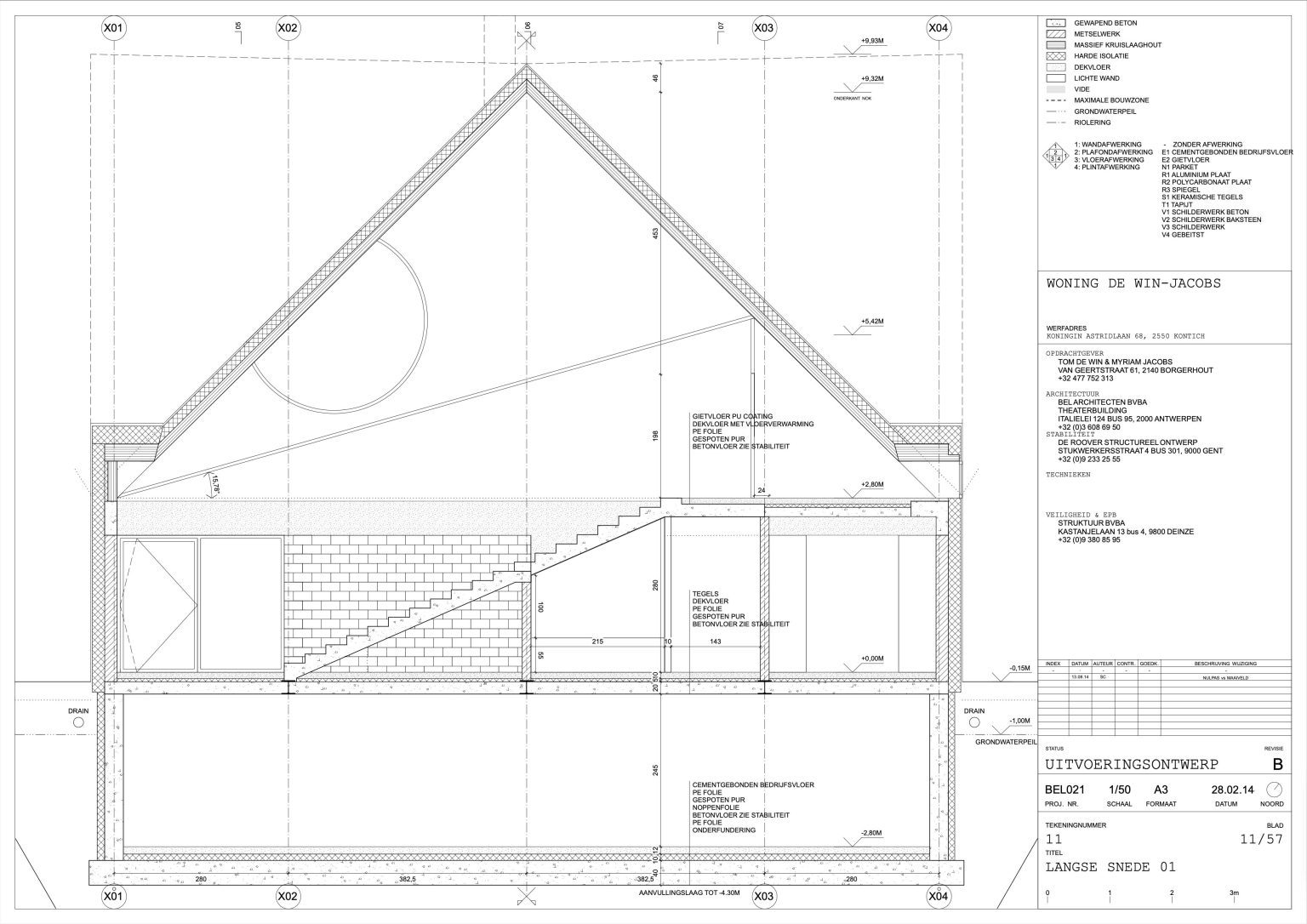
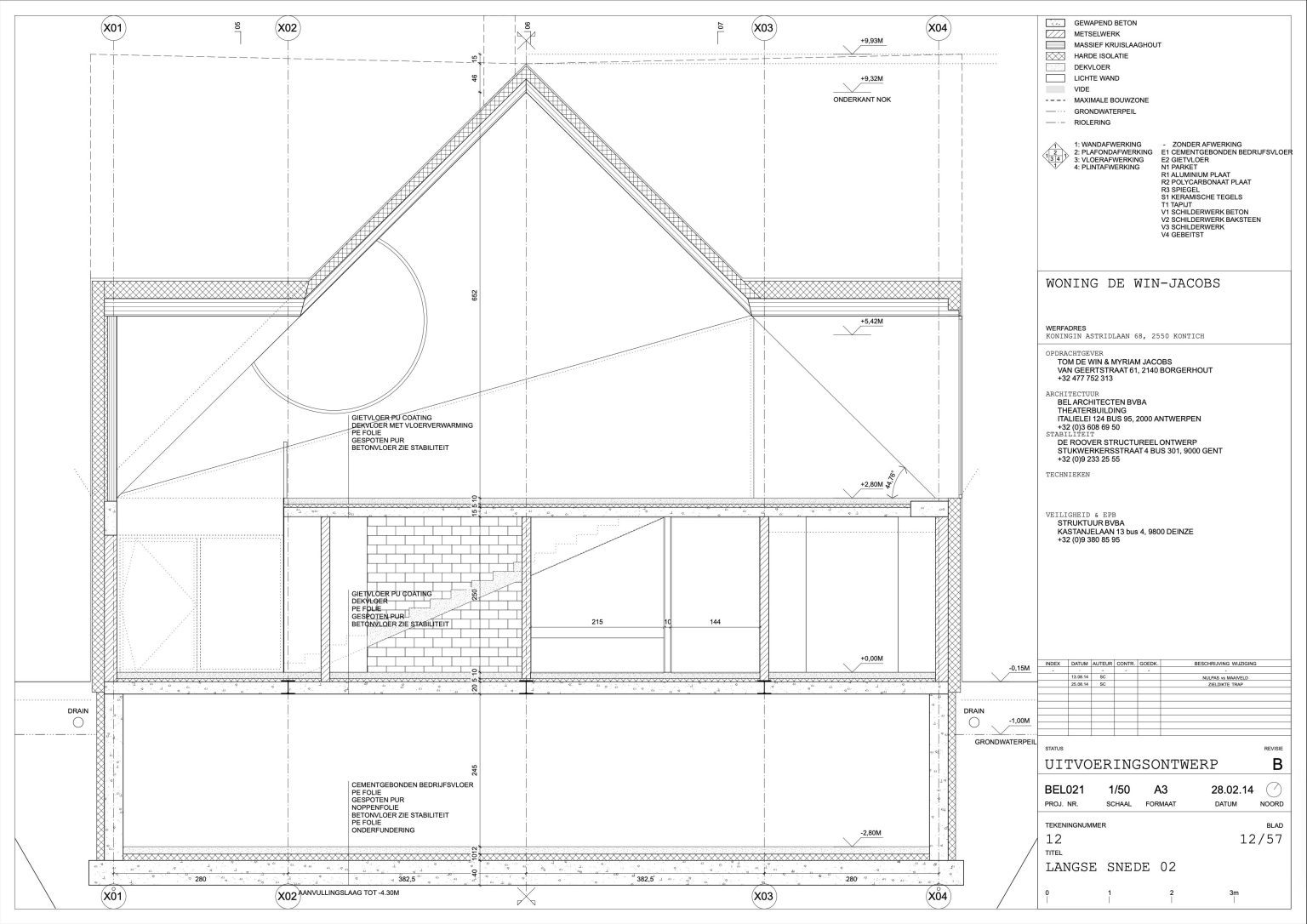
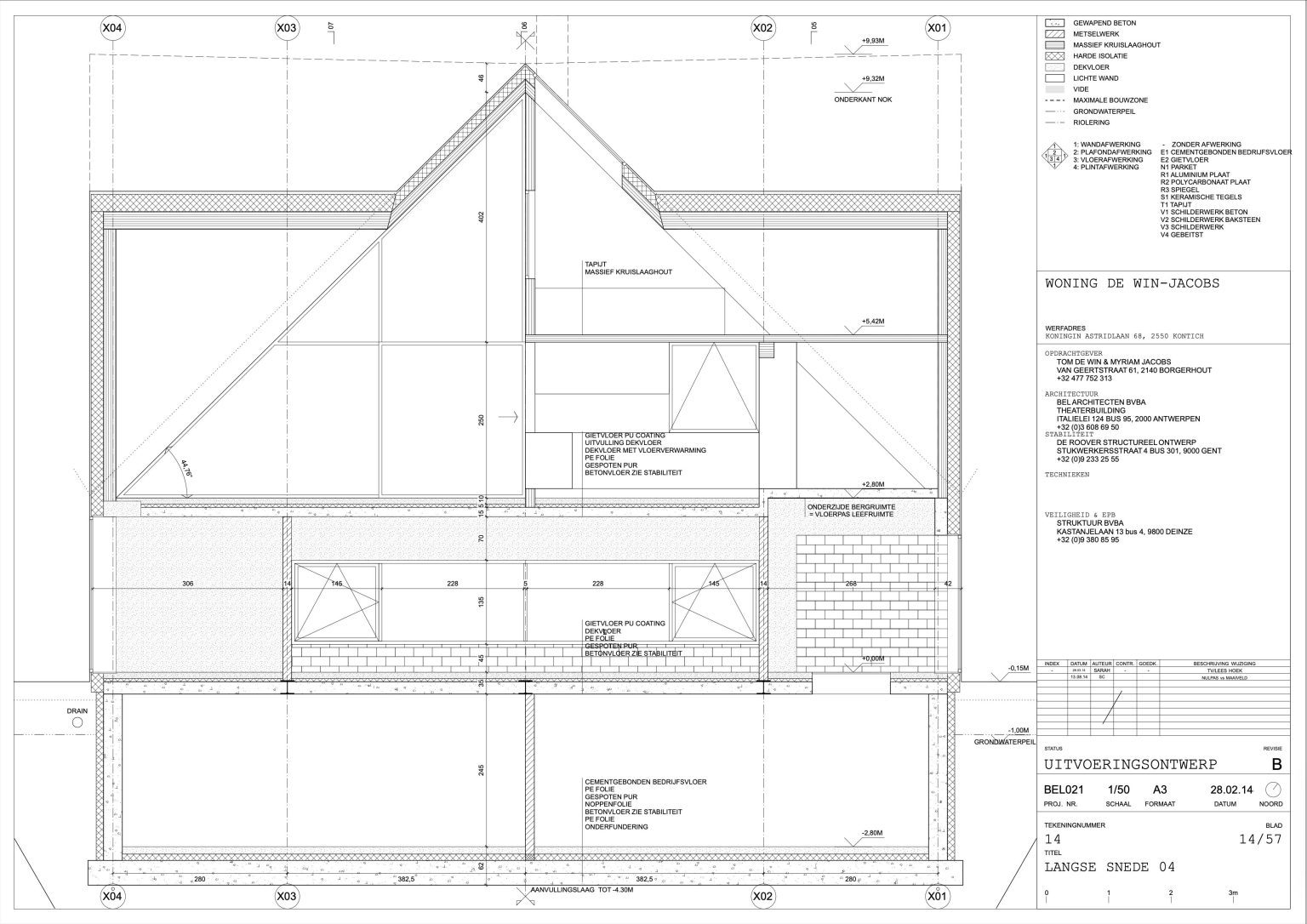
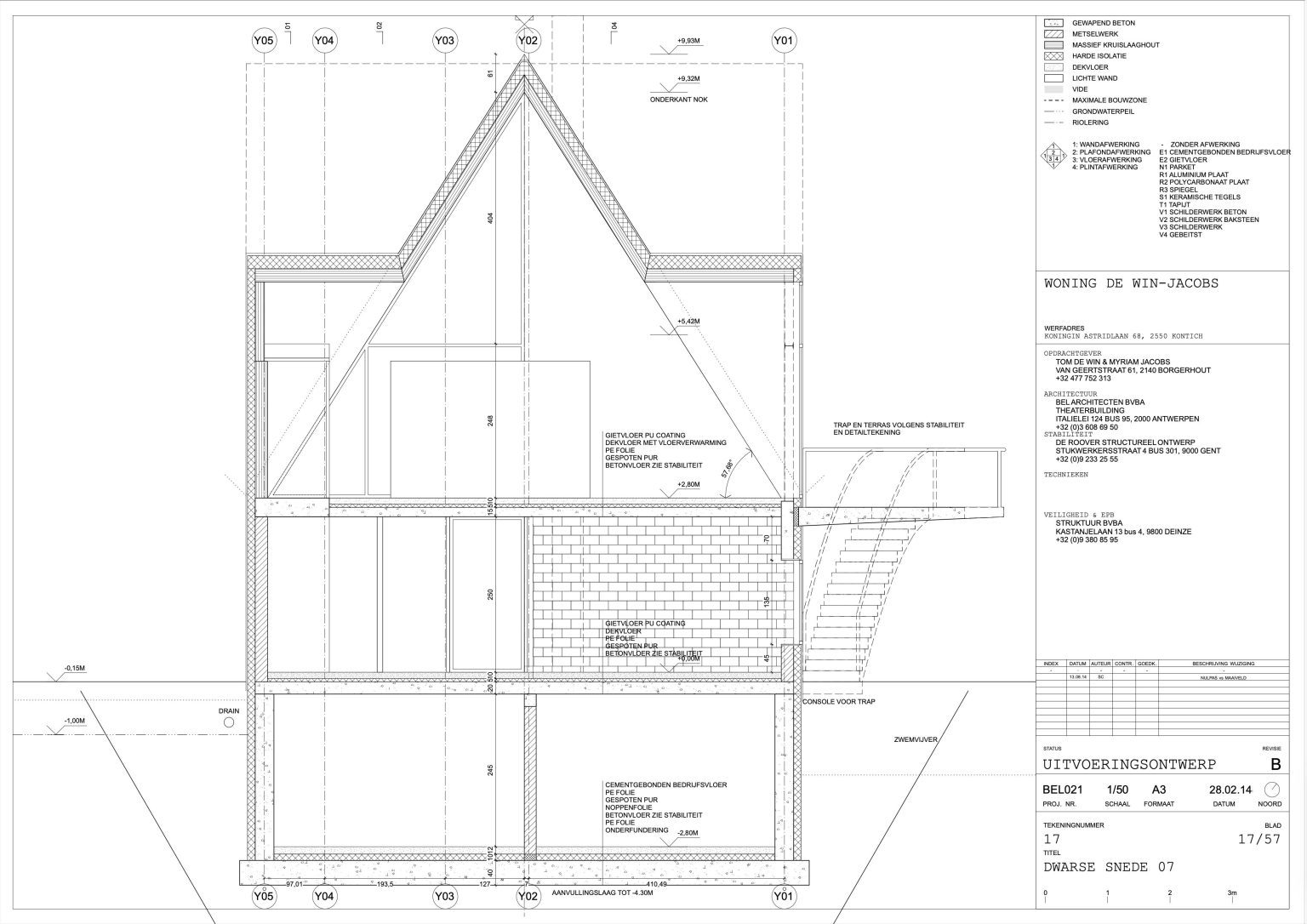
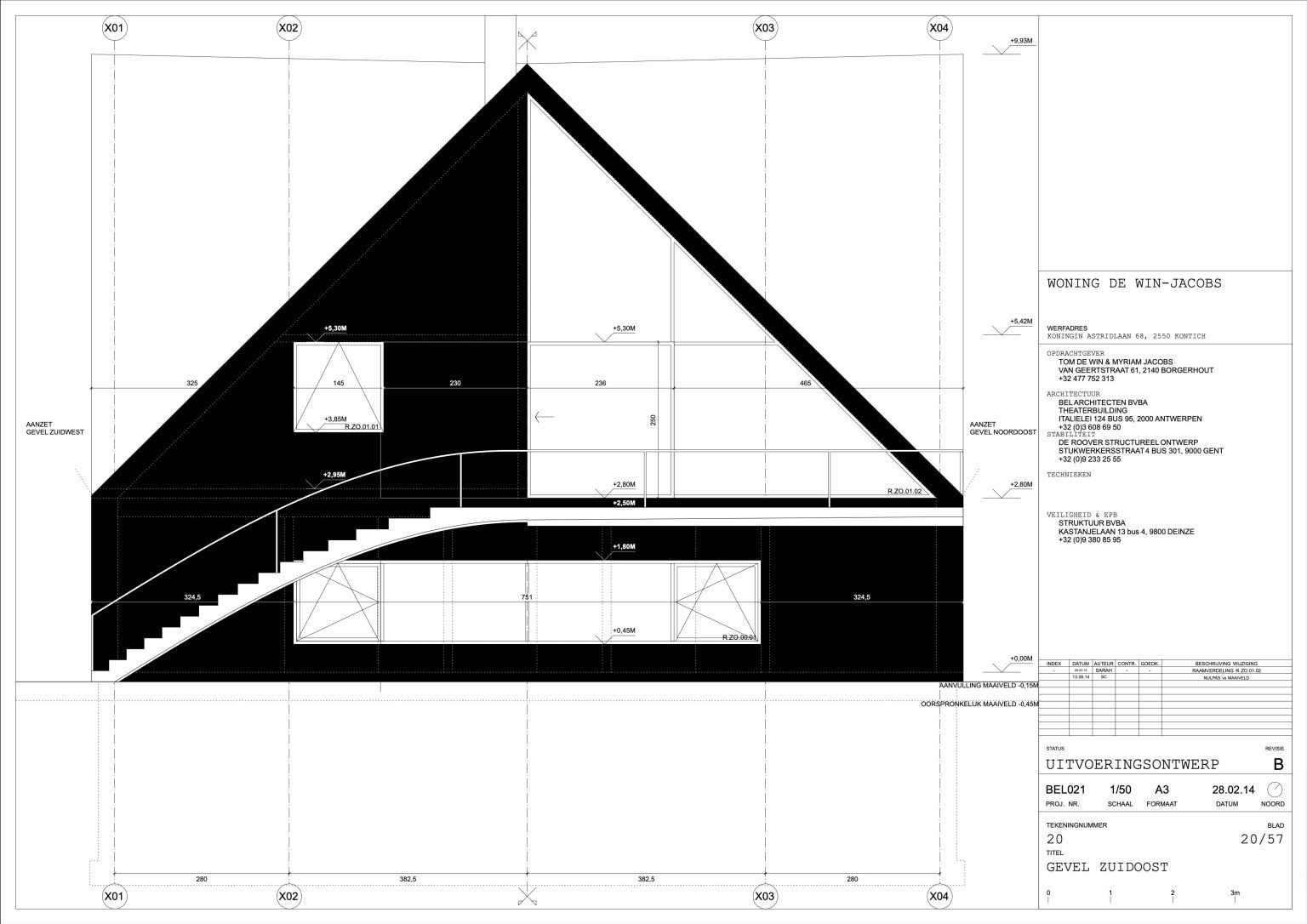
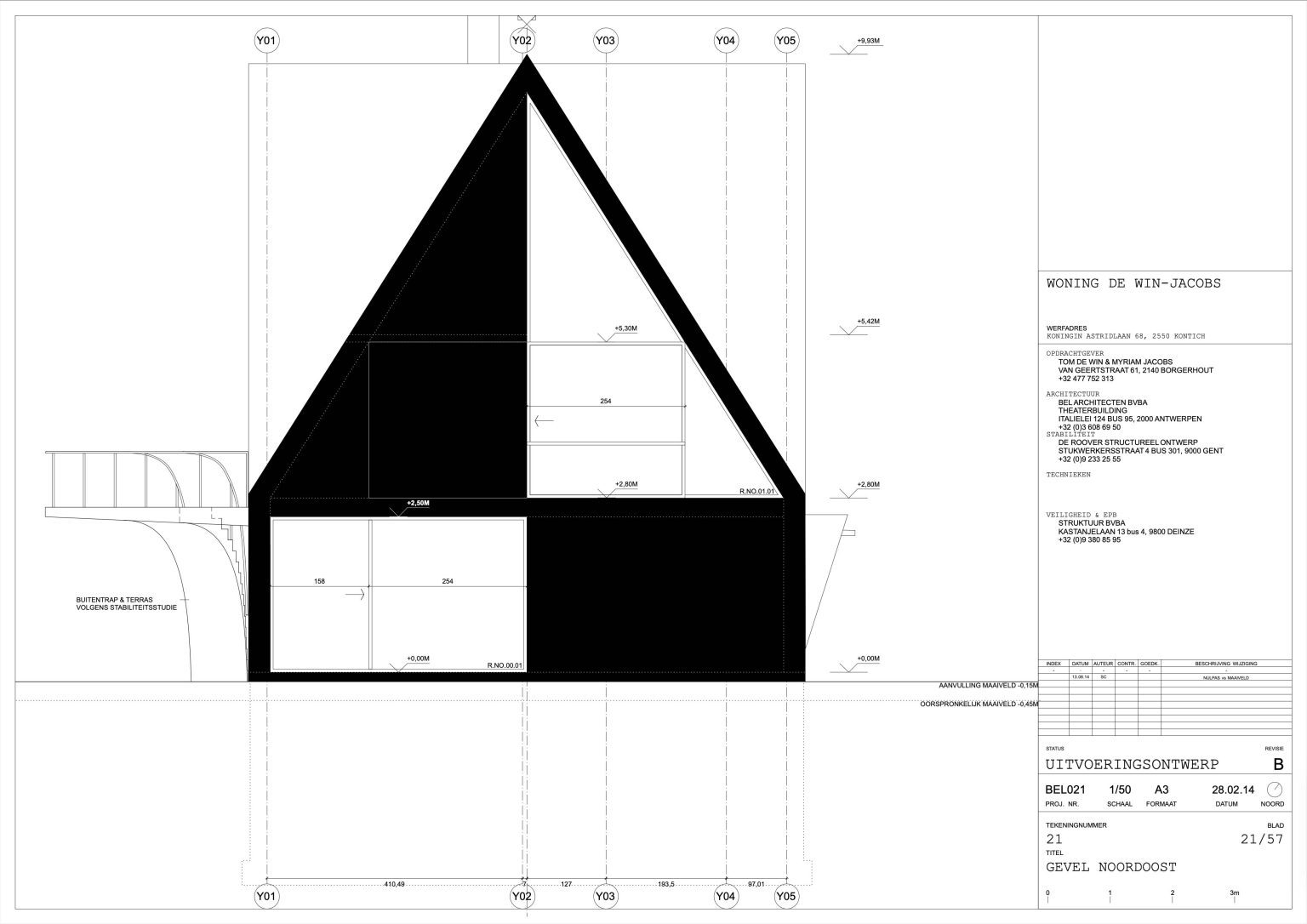
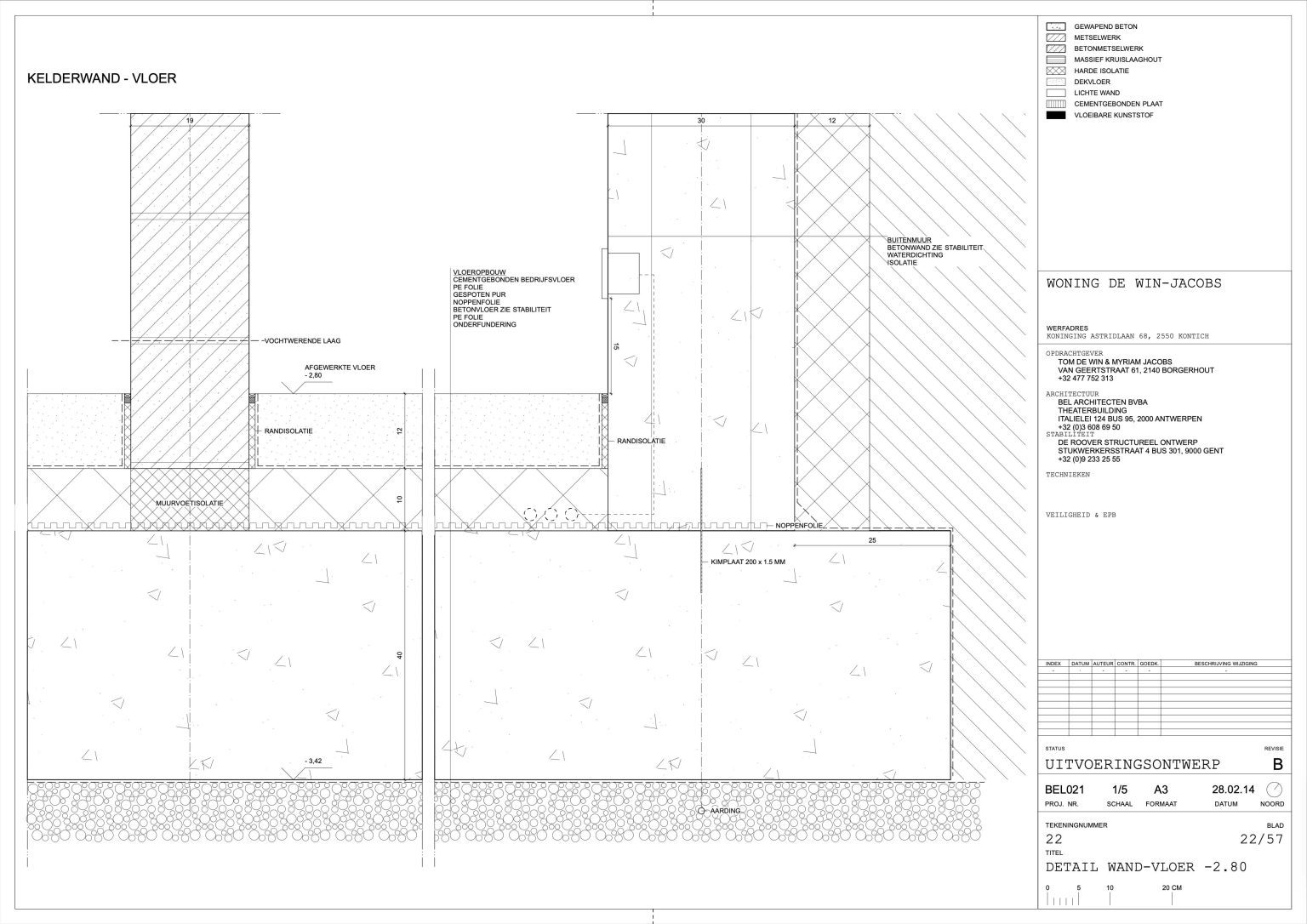
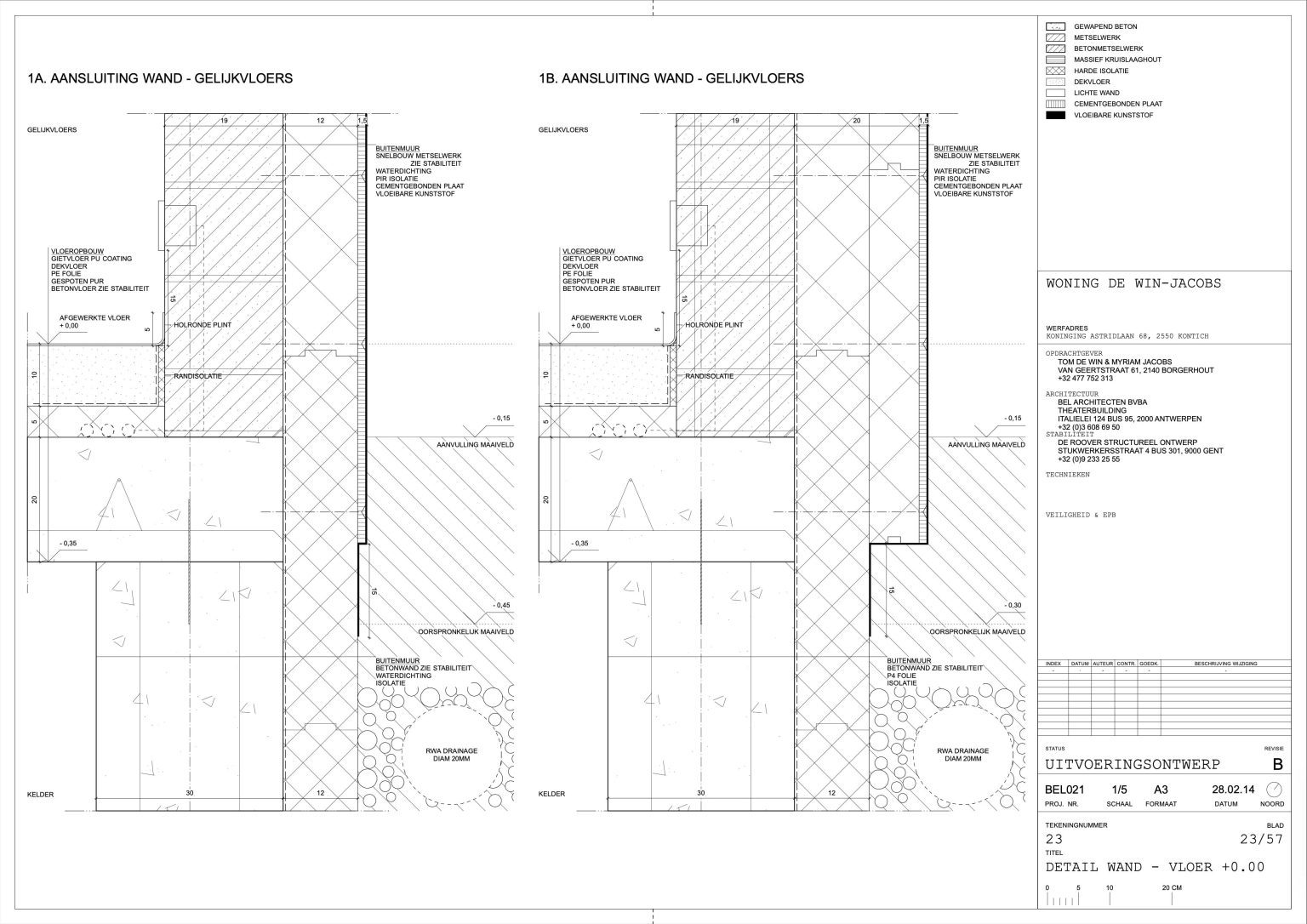
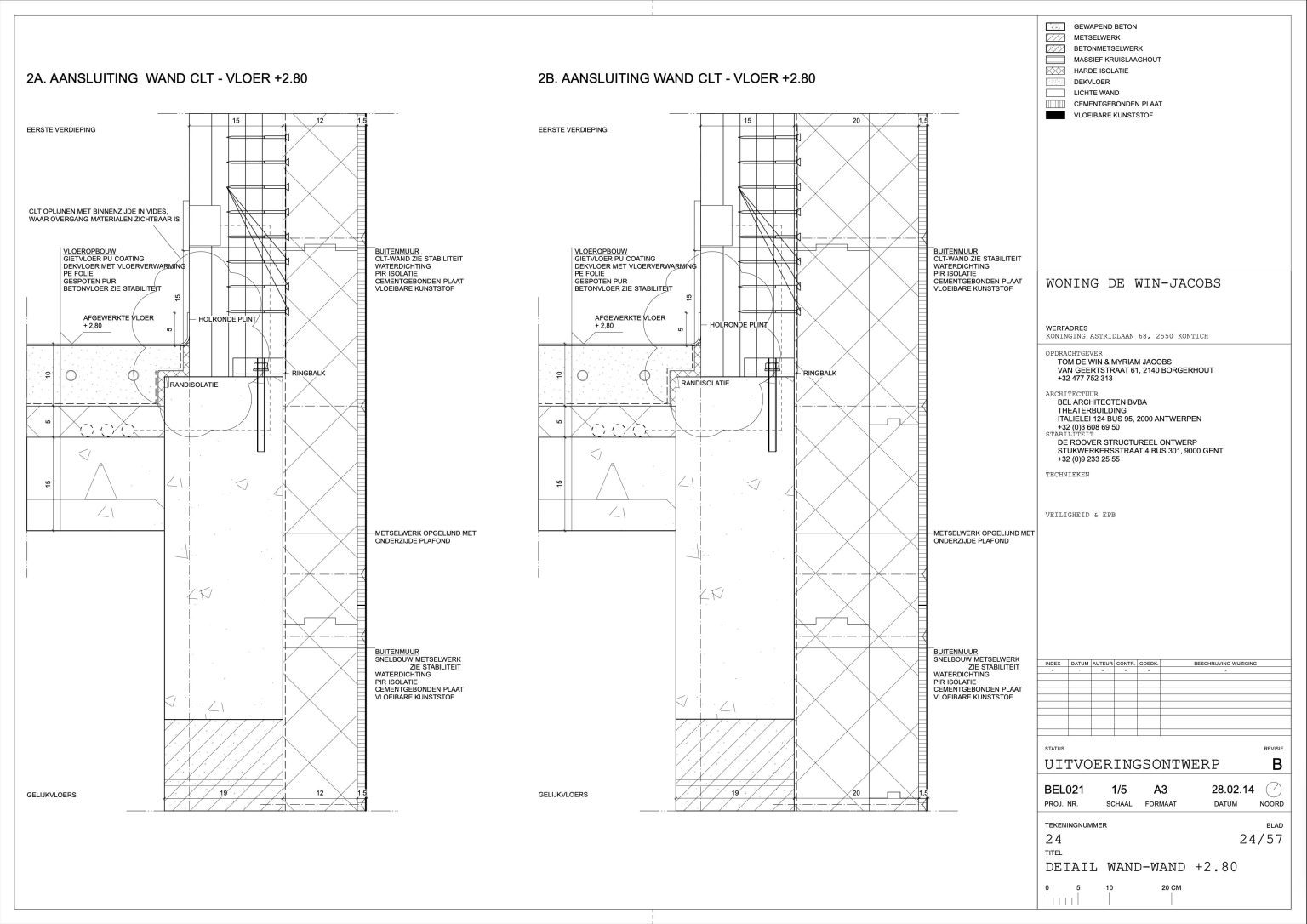
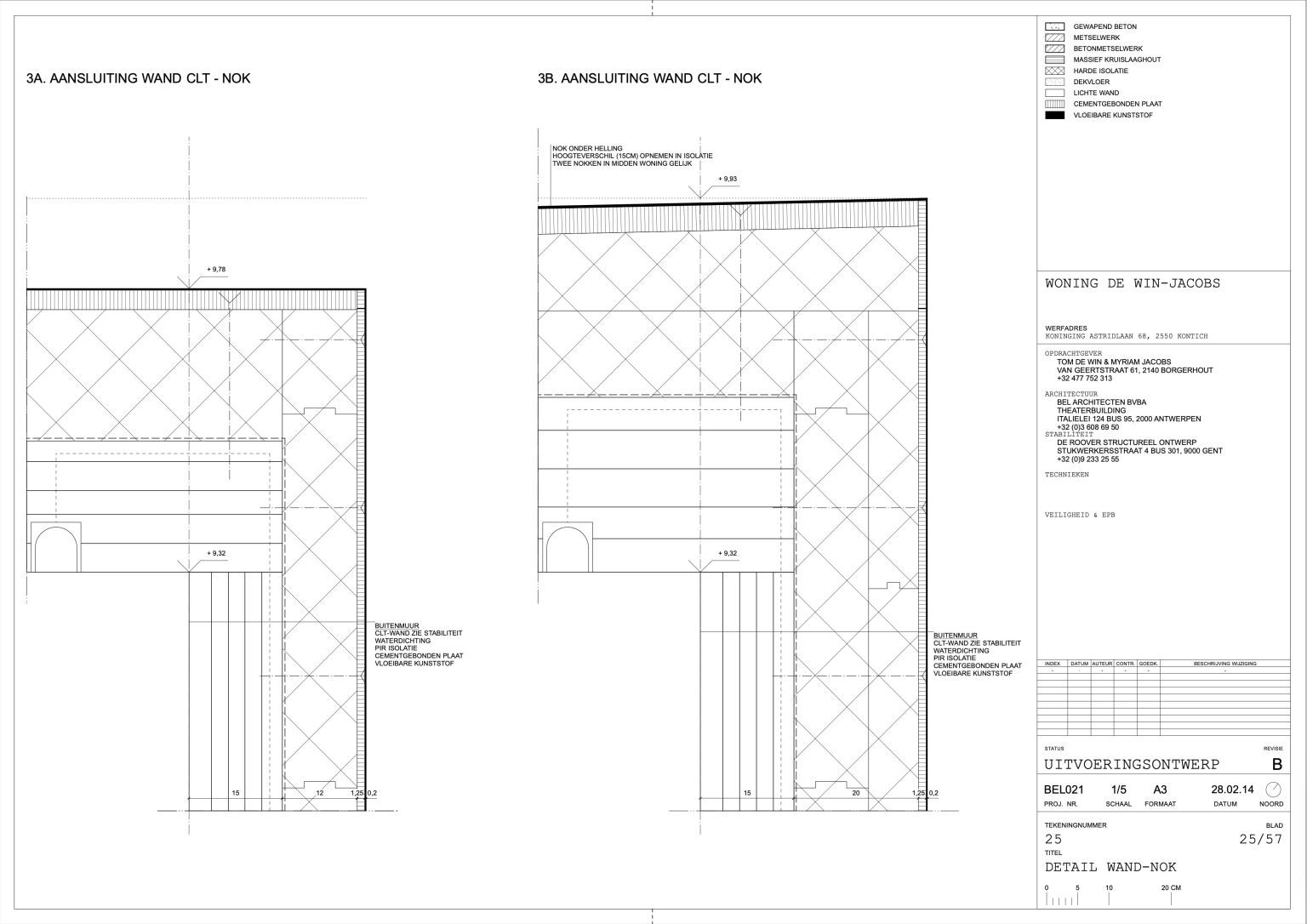
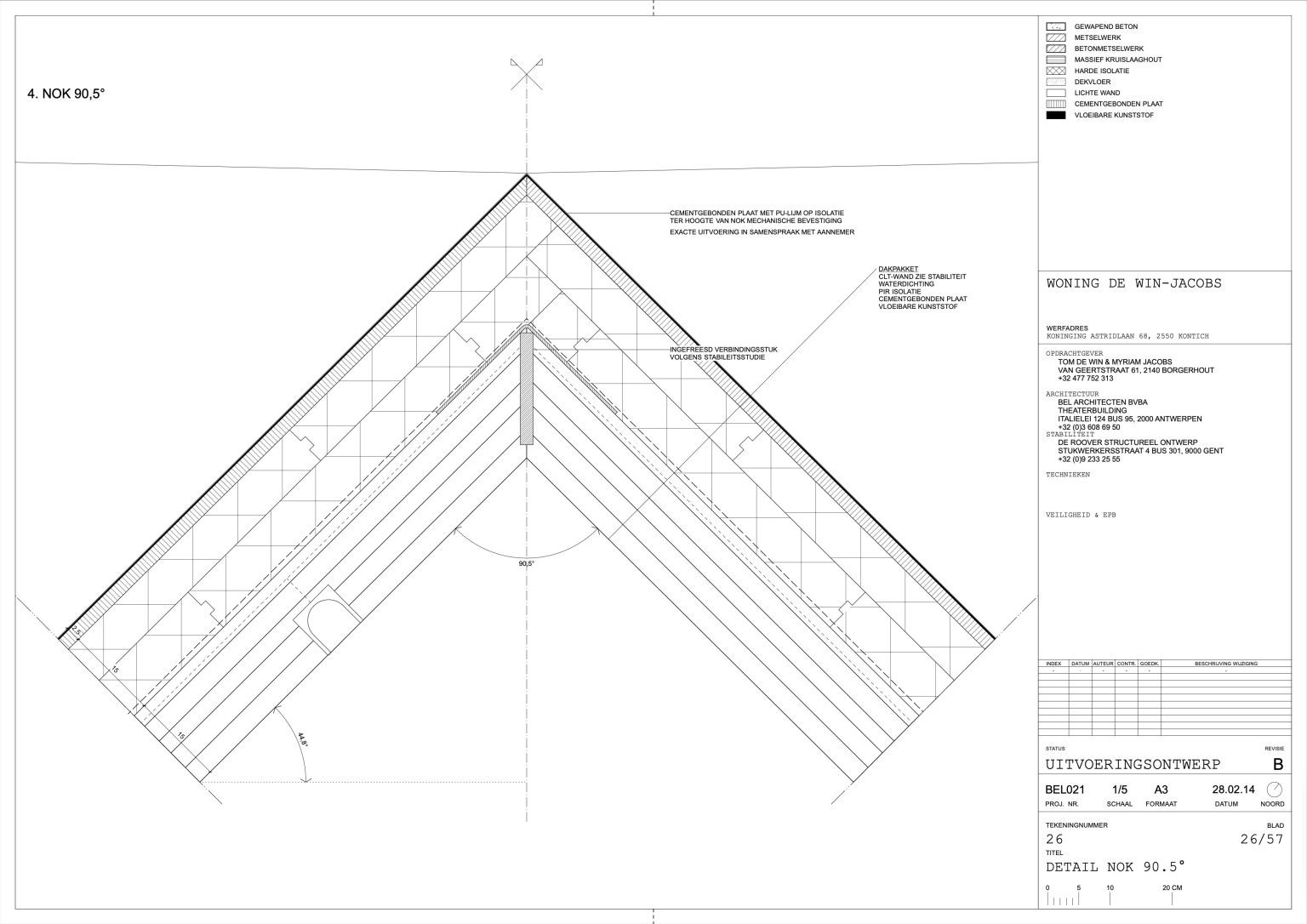
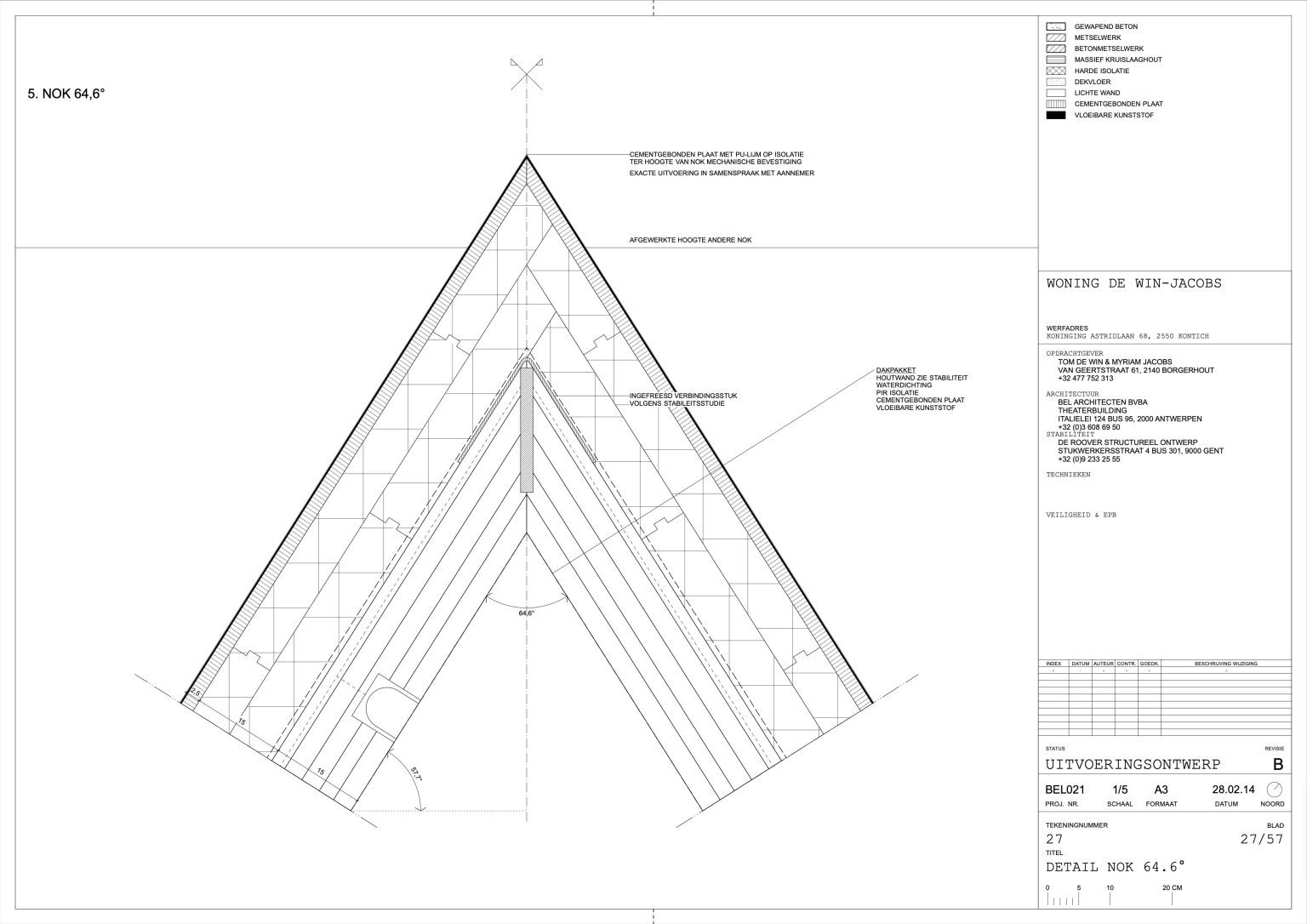
The unconventional layout is immediately clear. The ground floor – effectively a plinth – houses the bedrooms, bathroom, and toilet. The main living spaces are located on the upper level. This arrangement is also reflected in the building’s two-part structure, partially concealed by a uniform blue PVC cladding that wraps both walls and roof. The base is made of brickwork; the roof structure consists of solid laminated timber panels: an enormous, cross-shaped wigwam.
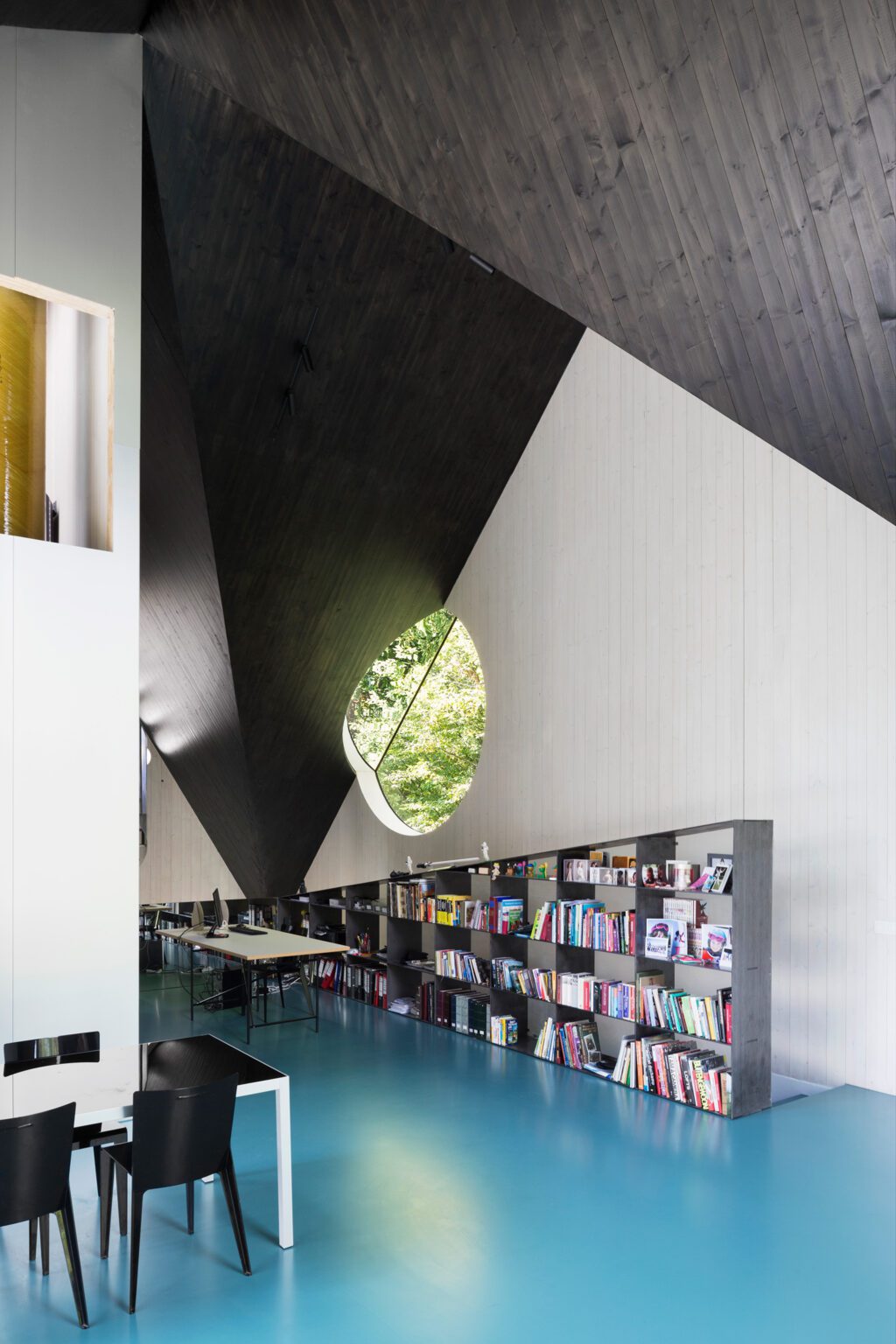
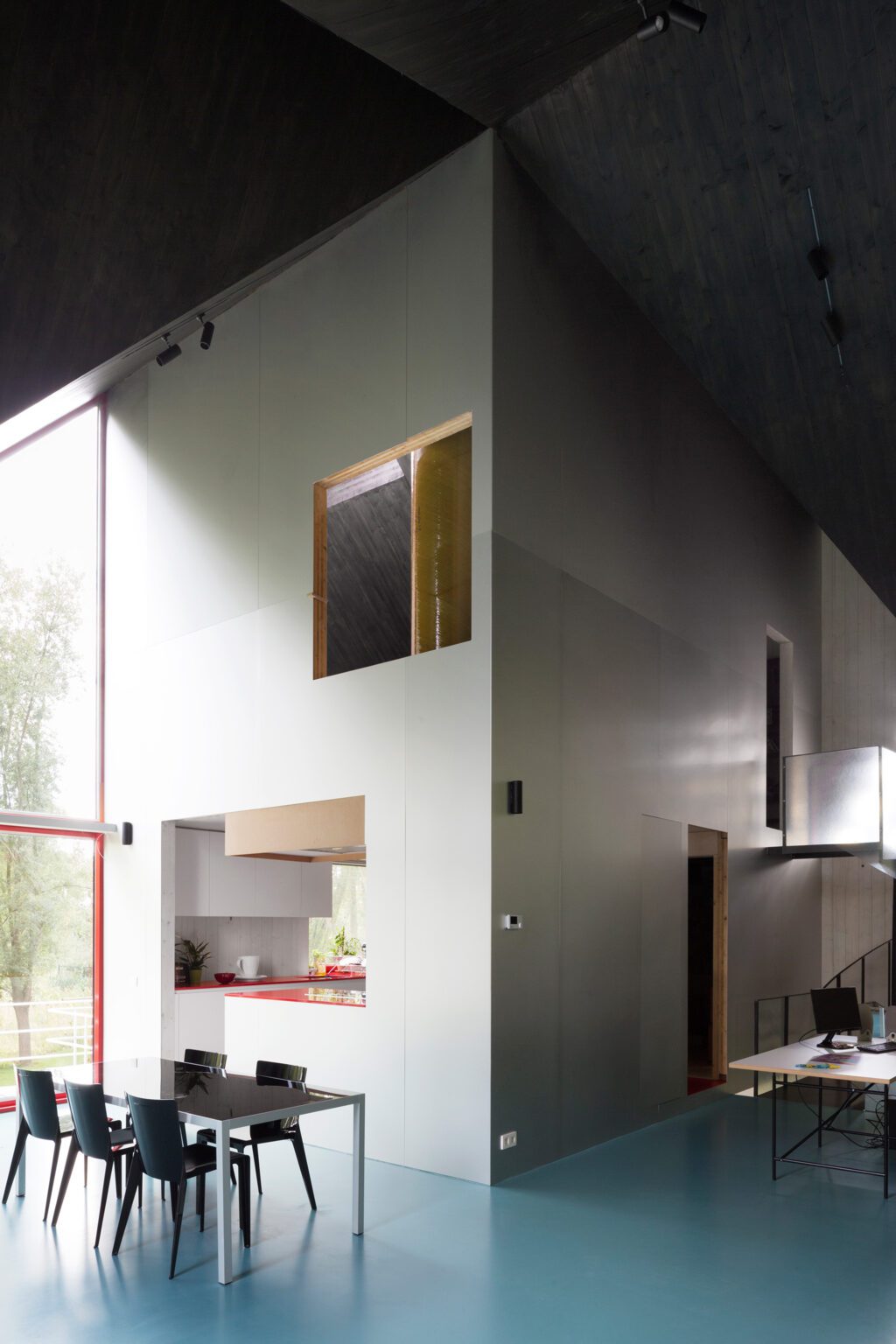
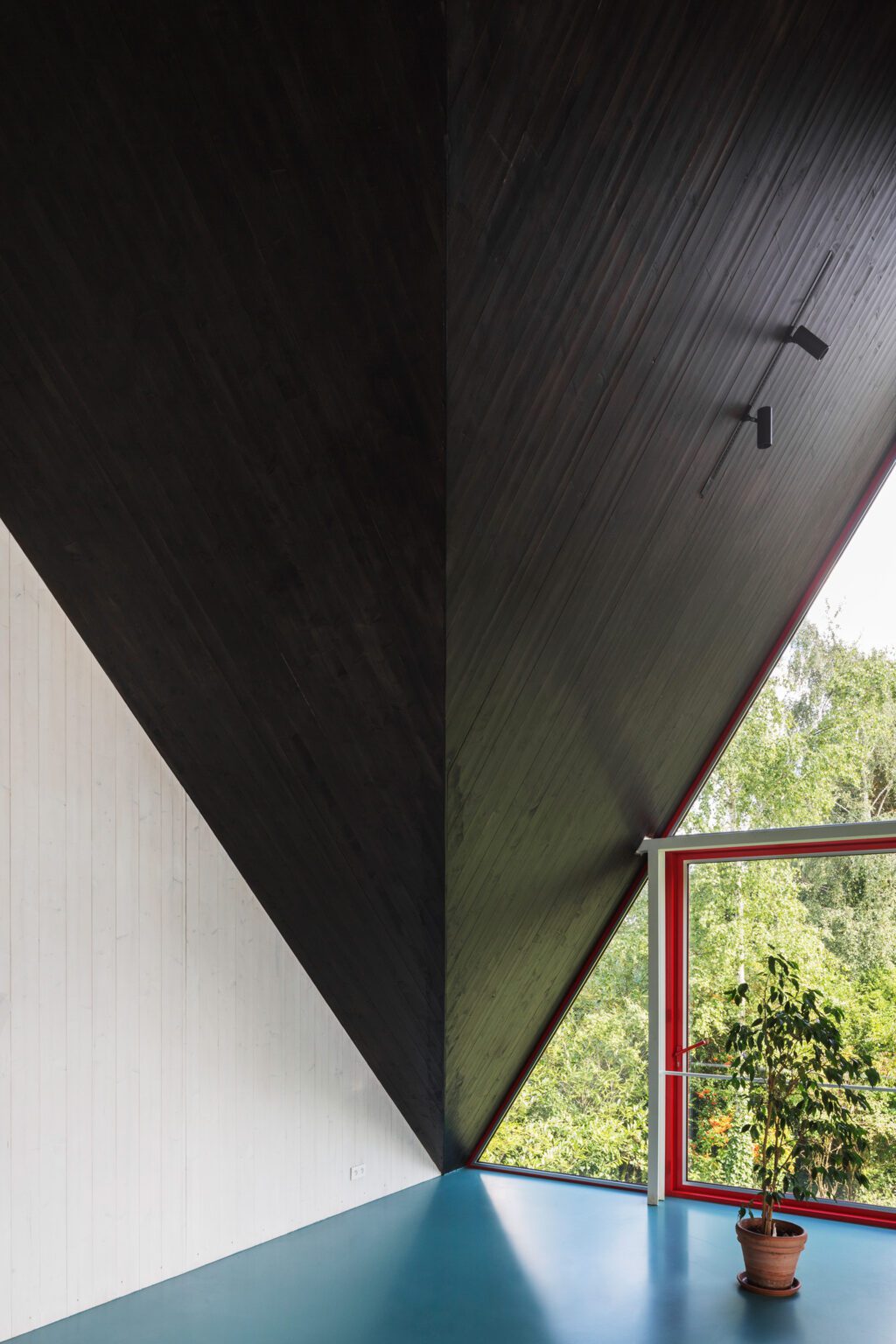
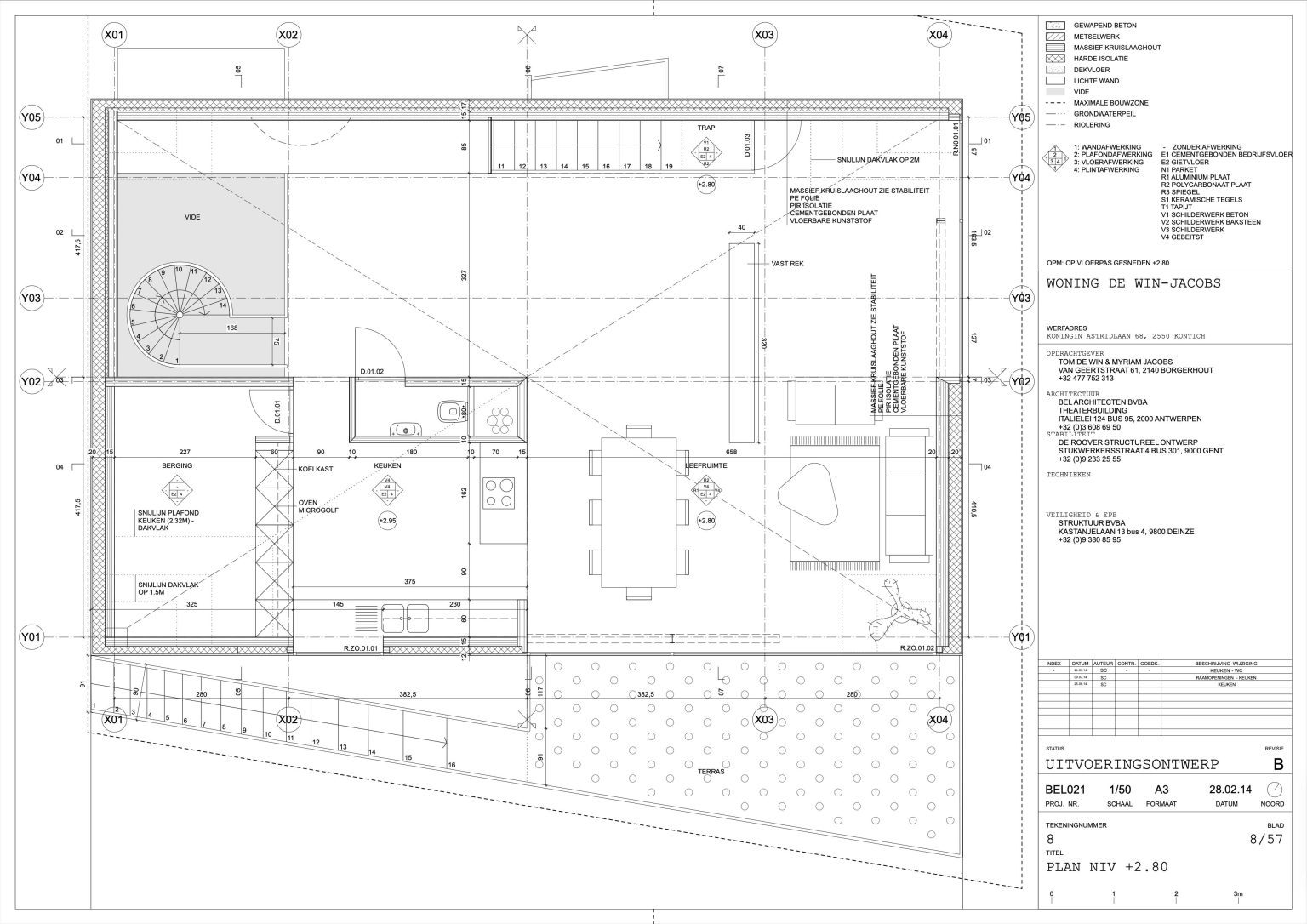
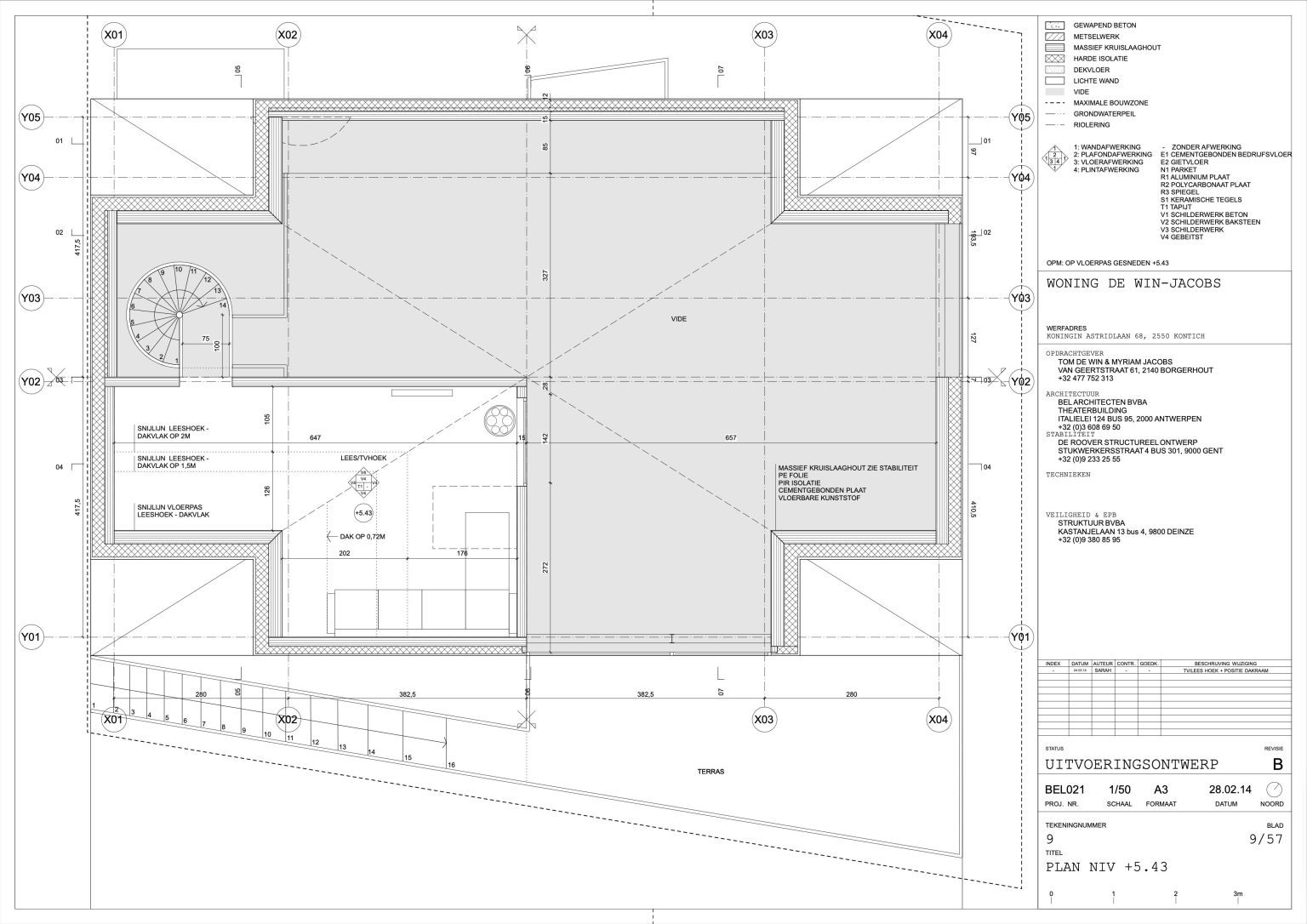
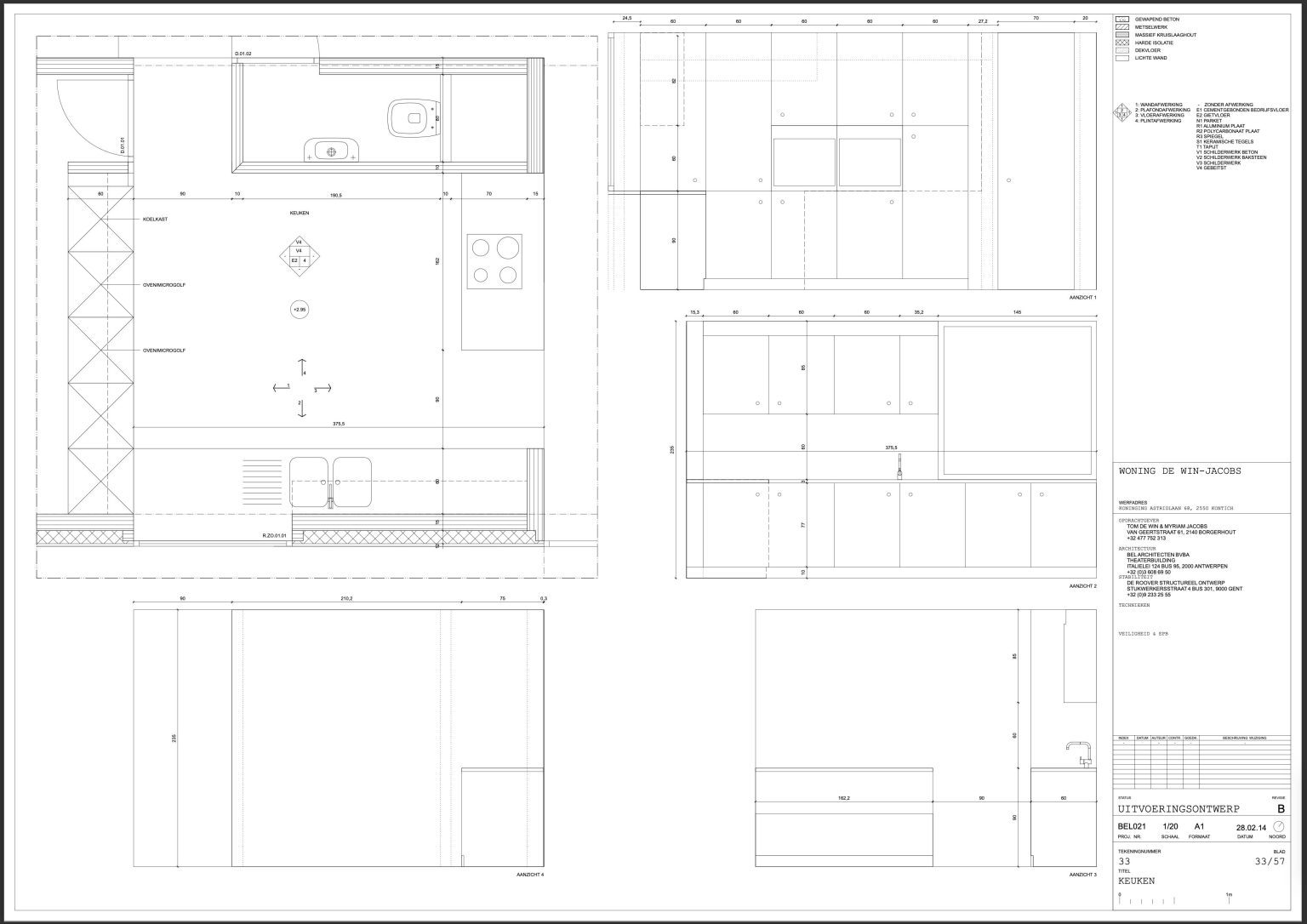
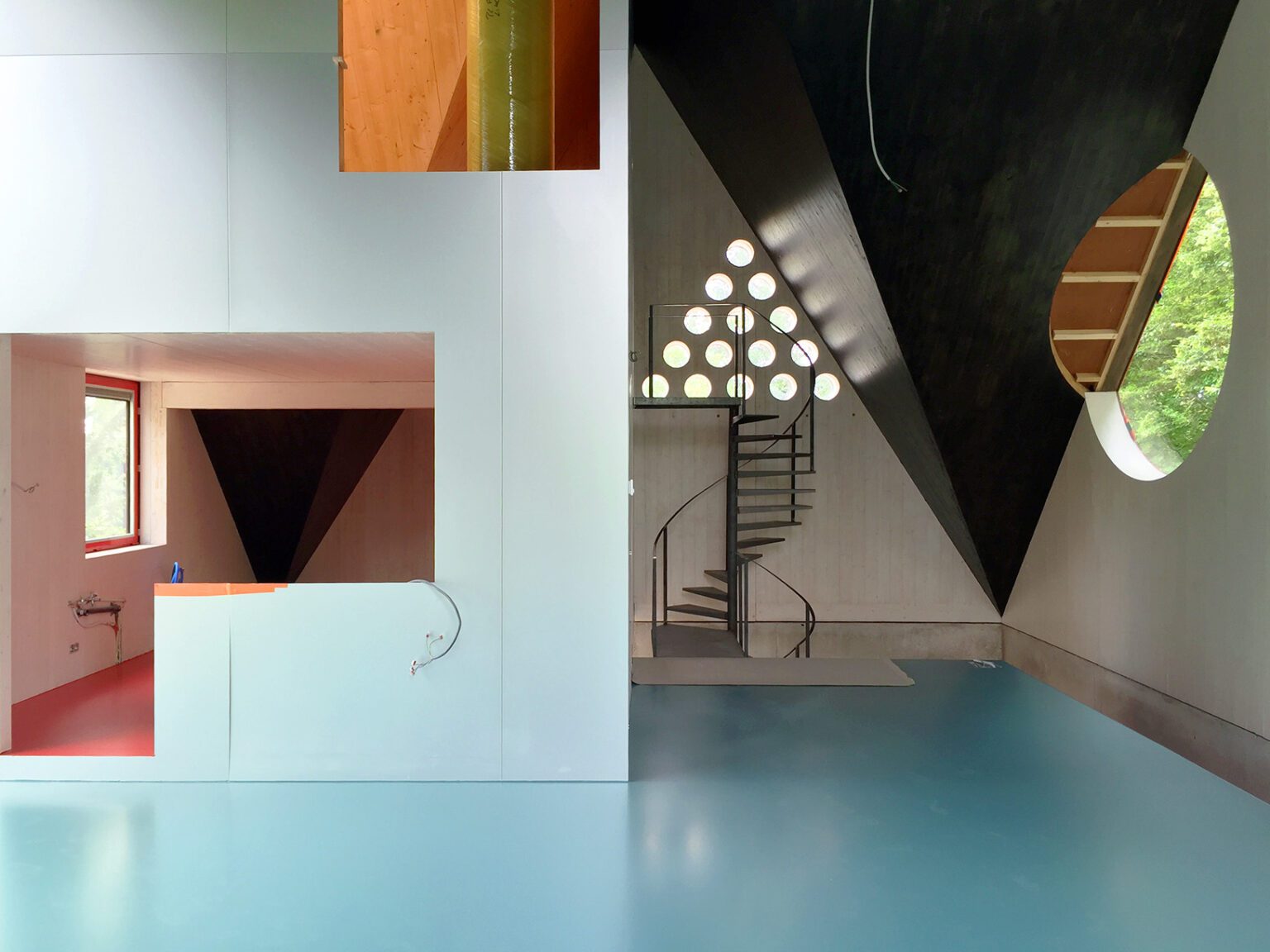
The wealth of spatial experiences this house offers is hard to capture in a few photos. The central living space is dominated by heavy, black-stained sloping roof planes that rest on the corners of the base, interspersed with white-painted (occasionally perforated) walls or generous windows. The living area spans the entire first floor, a quarter of which is taken up by a tower-like volume clad in aluminium, housing the kitchen and a second toilet. Above the kitchen, accessible only via the dizzying spiral staircase, is a TV and lounge room that can also serve as a guest space. From this elevated perch, you overlook the living area and through the windows beyond to the outside world.
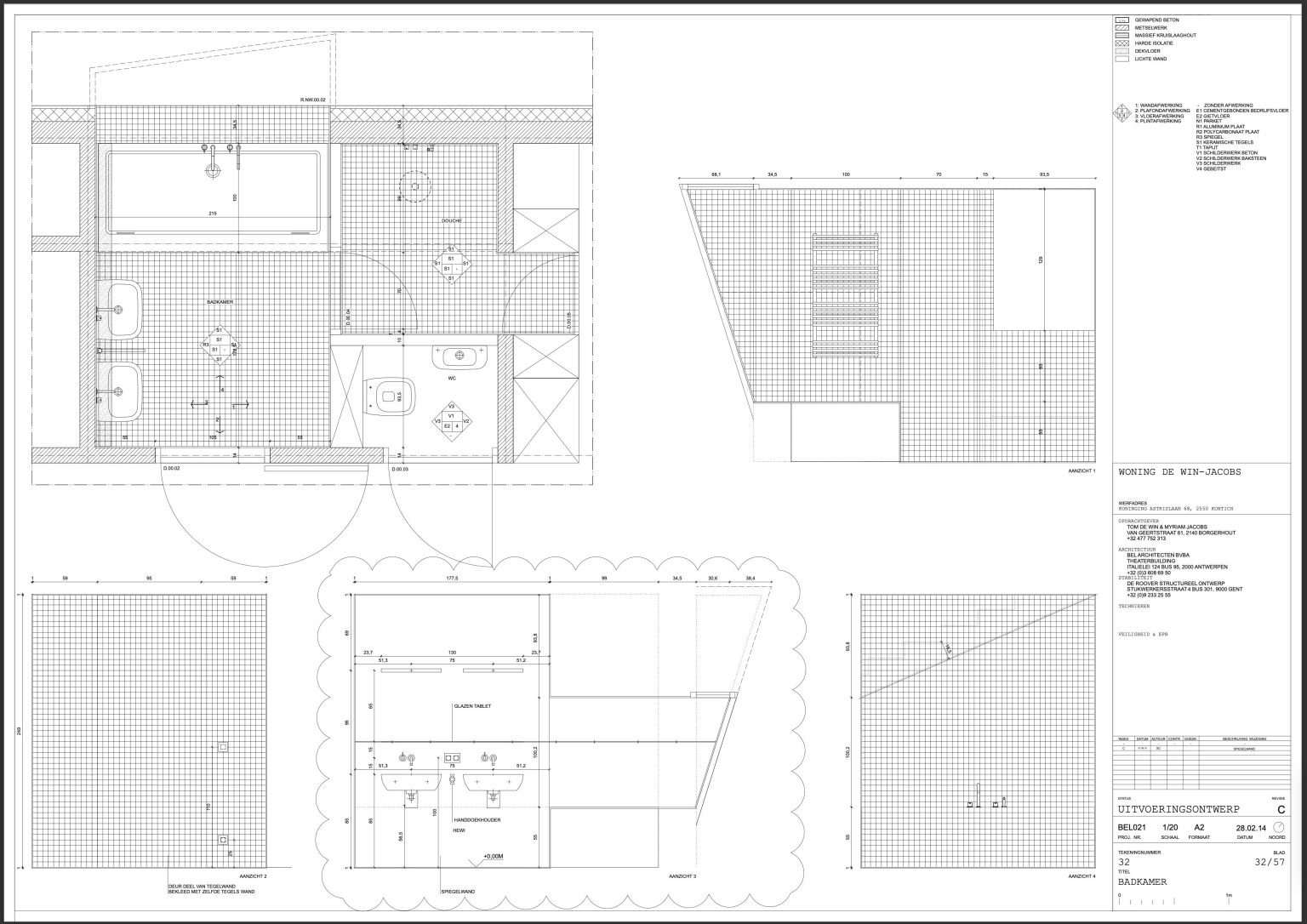
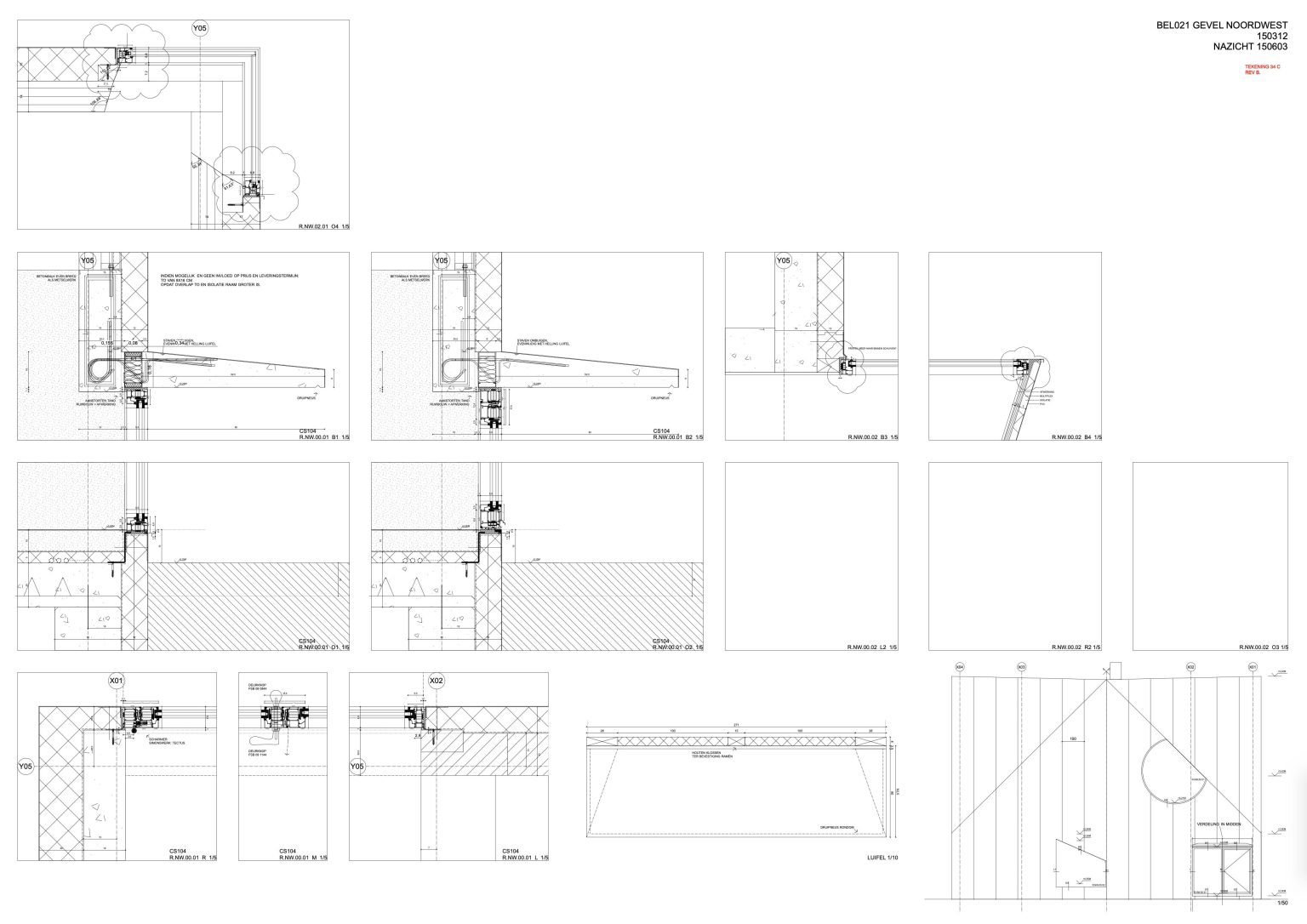
The colours of the exterior return inside: the red of the exterior frames reappears in the kitchen floors and countertops, the blue (in a softer shade) in the poured floors and bathroom tiles—a magical bath chapel tucked beneath the gentle stairway to the living room, catching sunlight from a tilted skylight that juts from the façade.
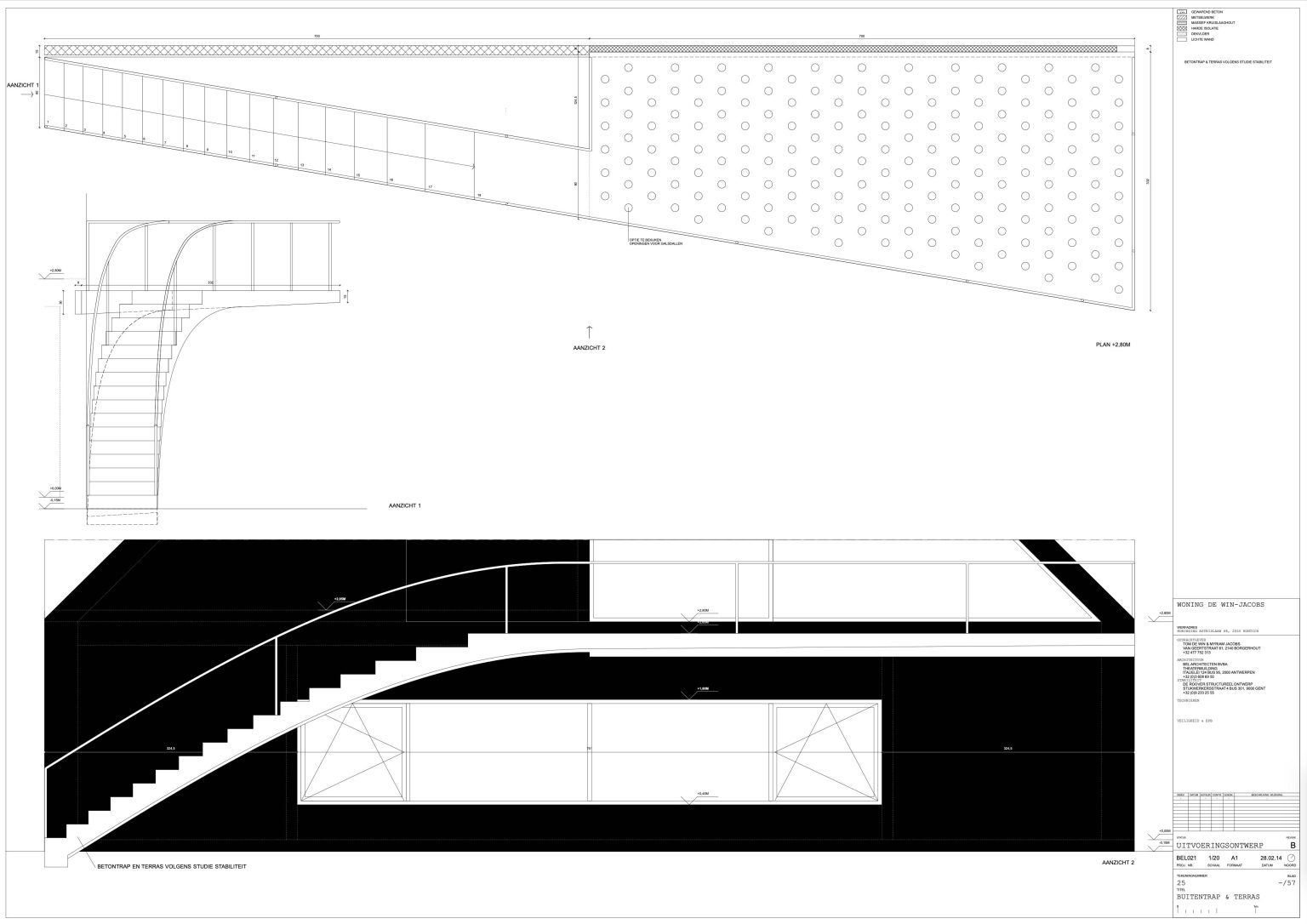
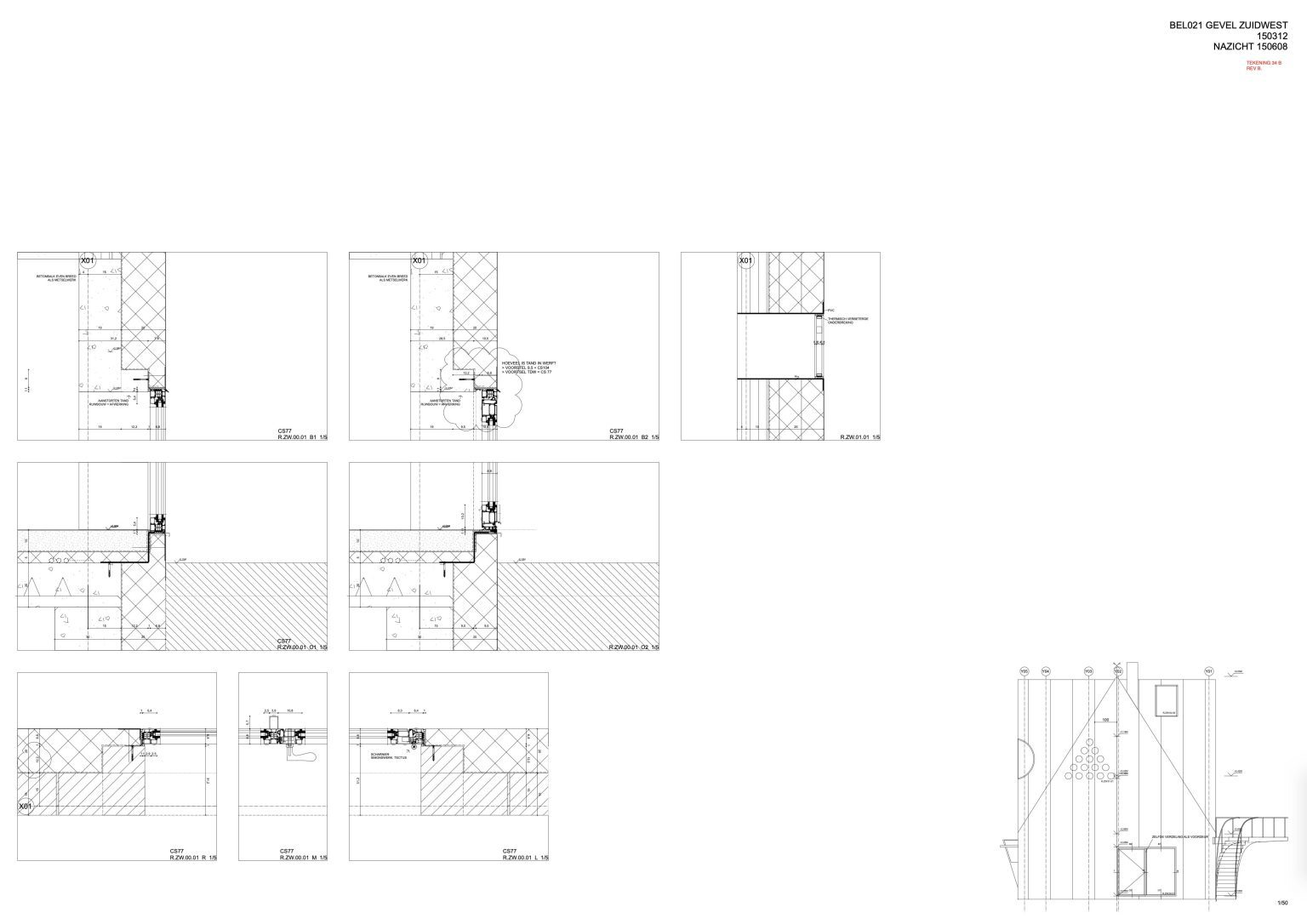
The pièce de résistance is the monumental, cantilevered terrace. Starting from a narrow staircase on the south façade, it stretches in one fluid motion toward the horizon. What at first seems a break from the building’s geometric purity becomes the ultimate bridge between structure and site, between interior and landscape. The house is a belvedere that captures and celebrates the sweeping beauty of the land. “That view, and the idea that the living room had to be on the upper floor—that hadn’t occurred to us, but the architects saw it right away,” the client confirms. “Annoying how they’re always right!”
What looks like a built child’s drawing is, in all its apparent simplicity and delightful complexity, a dream of a building.
Text by Martin Van Schaik, published in Knack Weekend, 27 september 2017.