BEL057 – WATCHTOWER DE PANNE
LOOKOUT POINT WESTERPUNT
As part of the Horizon 2025 program, the municipality of De Panne, the Province of West Flanders, and Westtoer are developing a new landmark: a lookout point at the Westerpunt.
A lookout tower? Not quite.
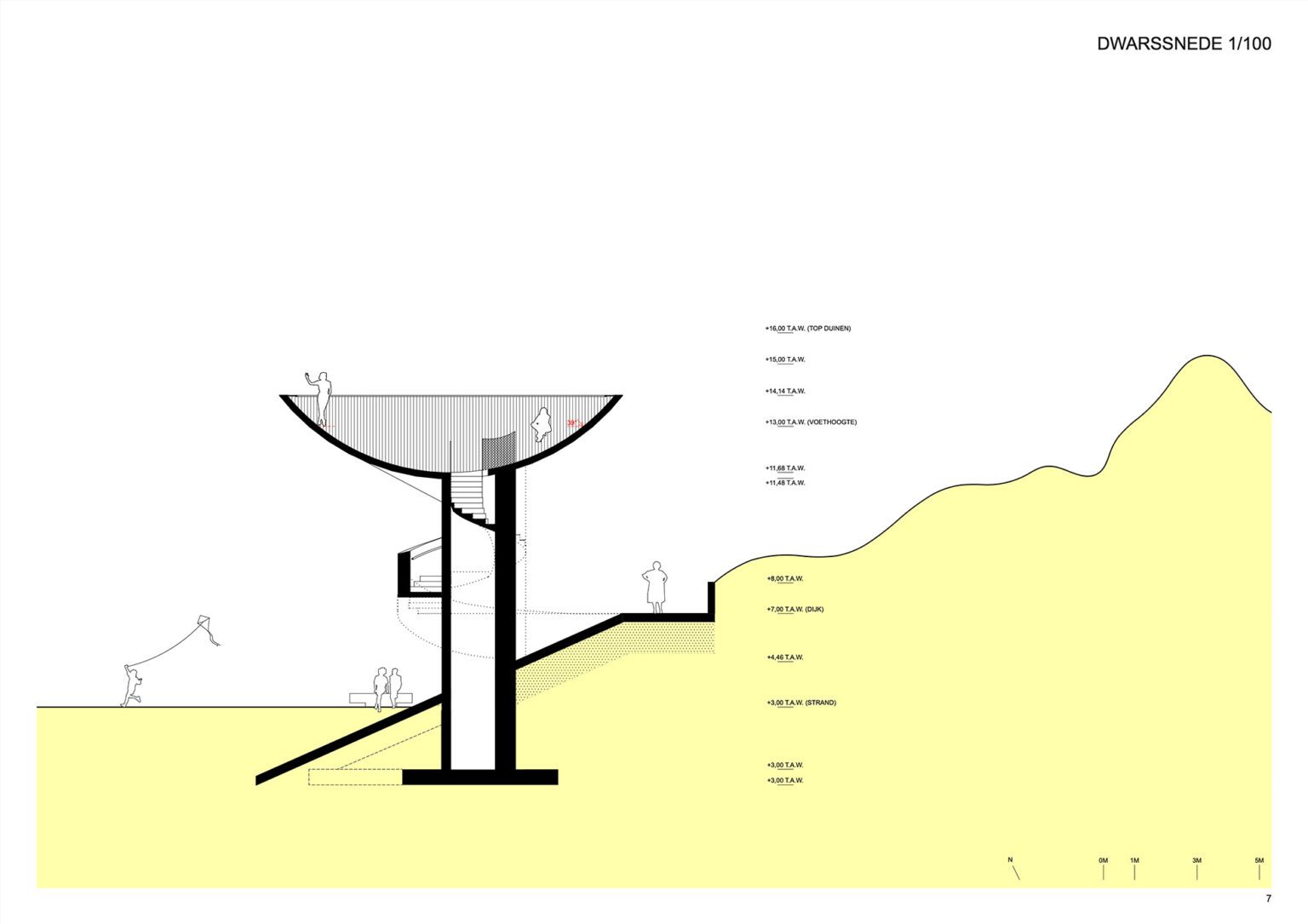
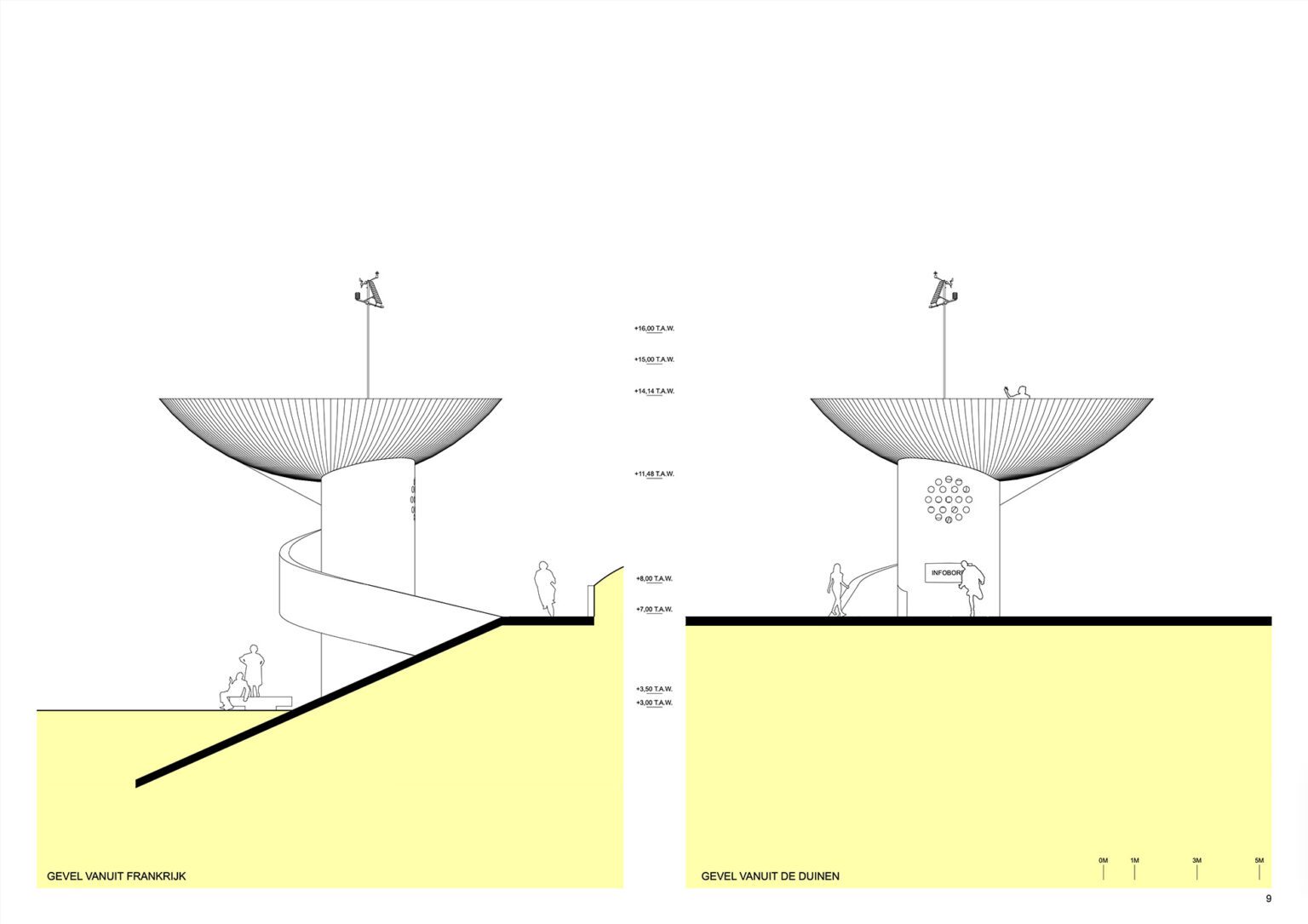
Unlike traditional lookout towers that aim to take visitors as high as possible, this design is not about climbing to the very top. With a platform positioned at 6 meters above the promenade (13 meters TAW), the dunes on the opposite side of the seawall still rise higher, up to 15 meters TAW—and remain fully walkable. In other words, one could actually see further by walking the dunes than by climbing the tower. This raised an important design question: how can this lookout become a truly unique experience?
Location
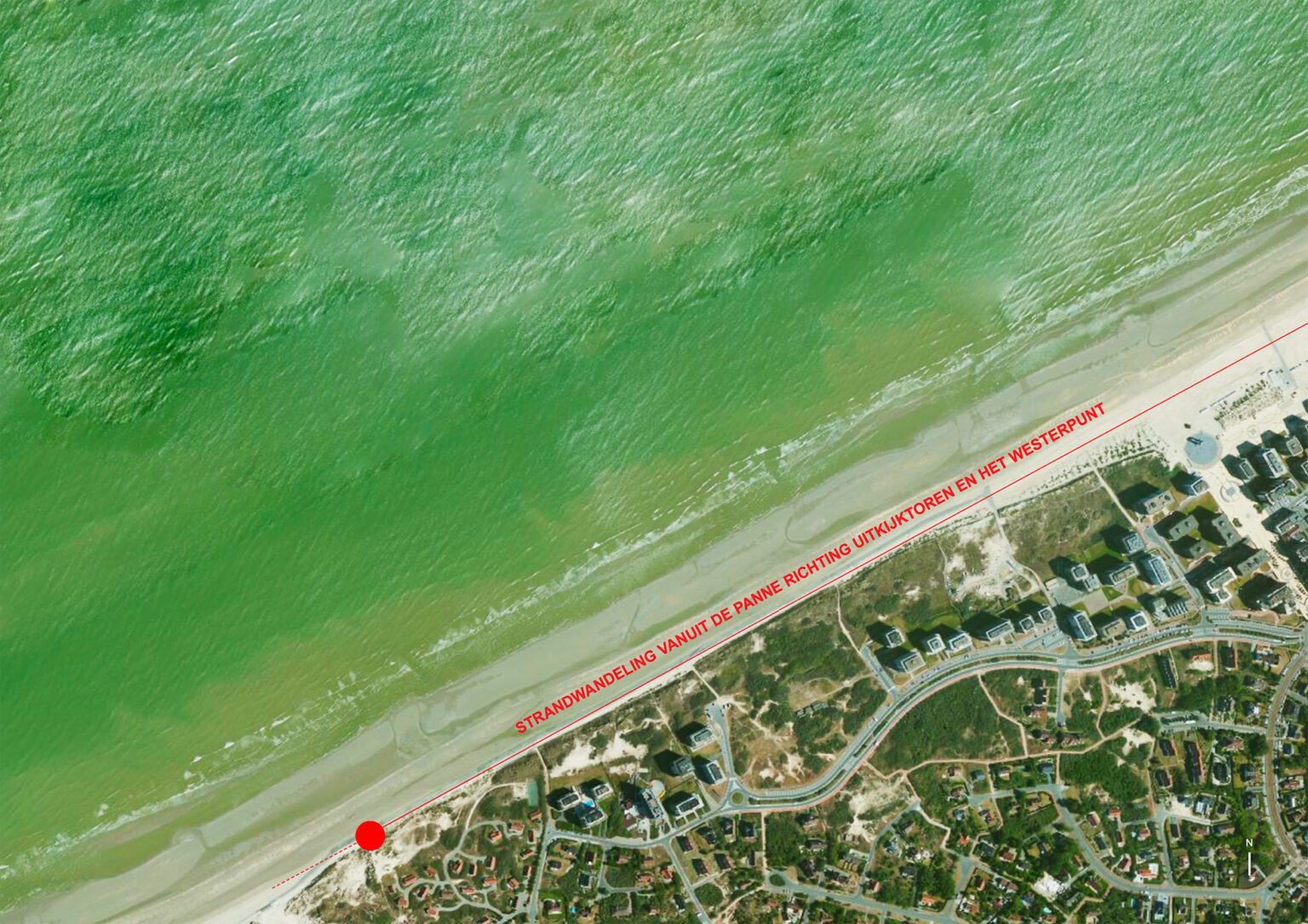
The lookout is positioned at the very end of the promenade in De Panne: the Westerpunt. It is an extraordinary site between sea and beach, overlooking the Westhoek nature reserve, which together with Les Dunes du Perroquet forms the largest dune landscape along the Belgian coast.
Approach
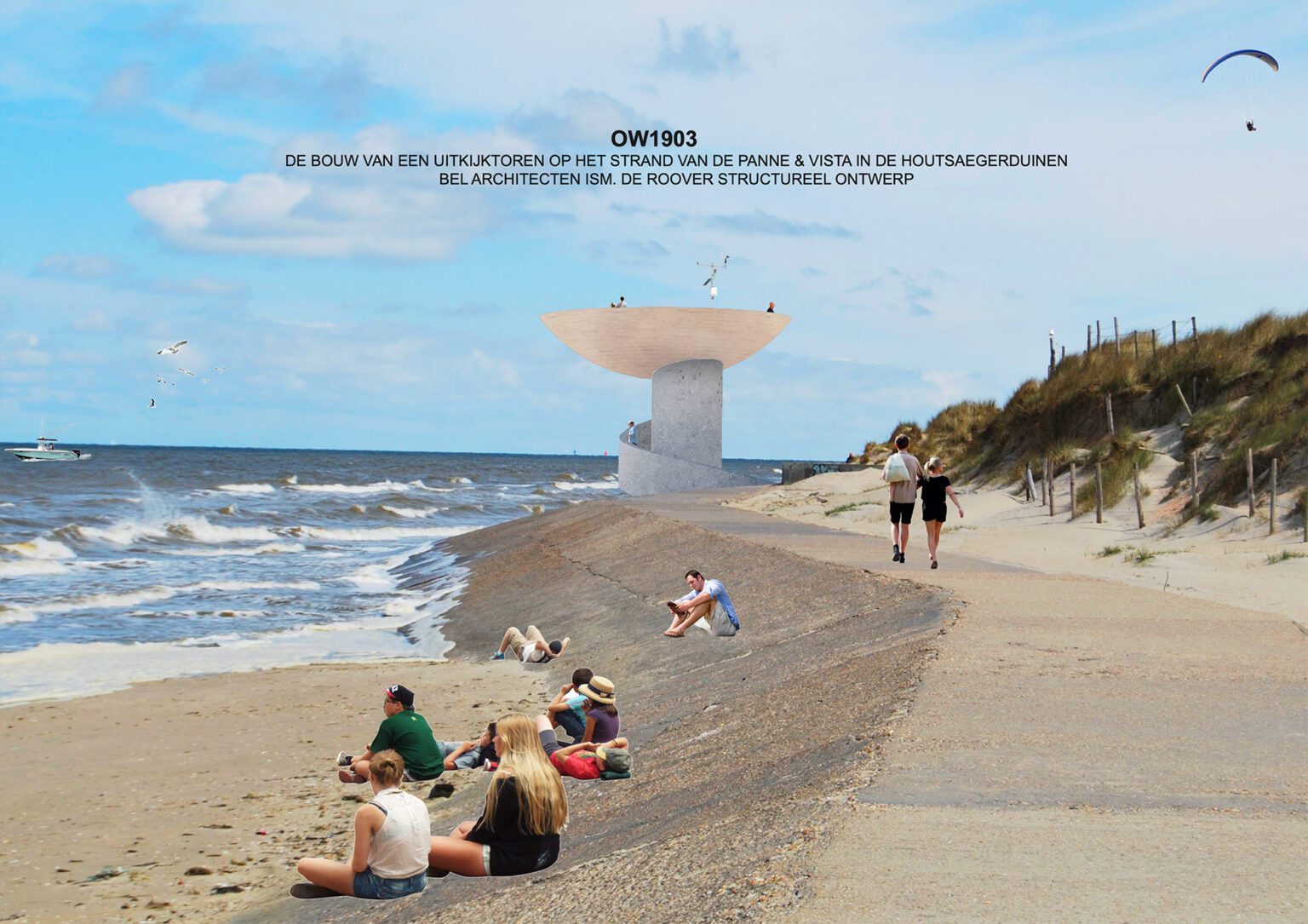
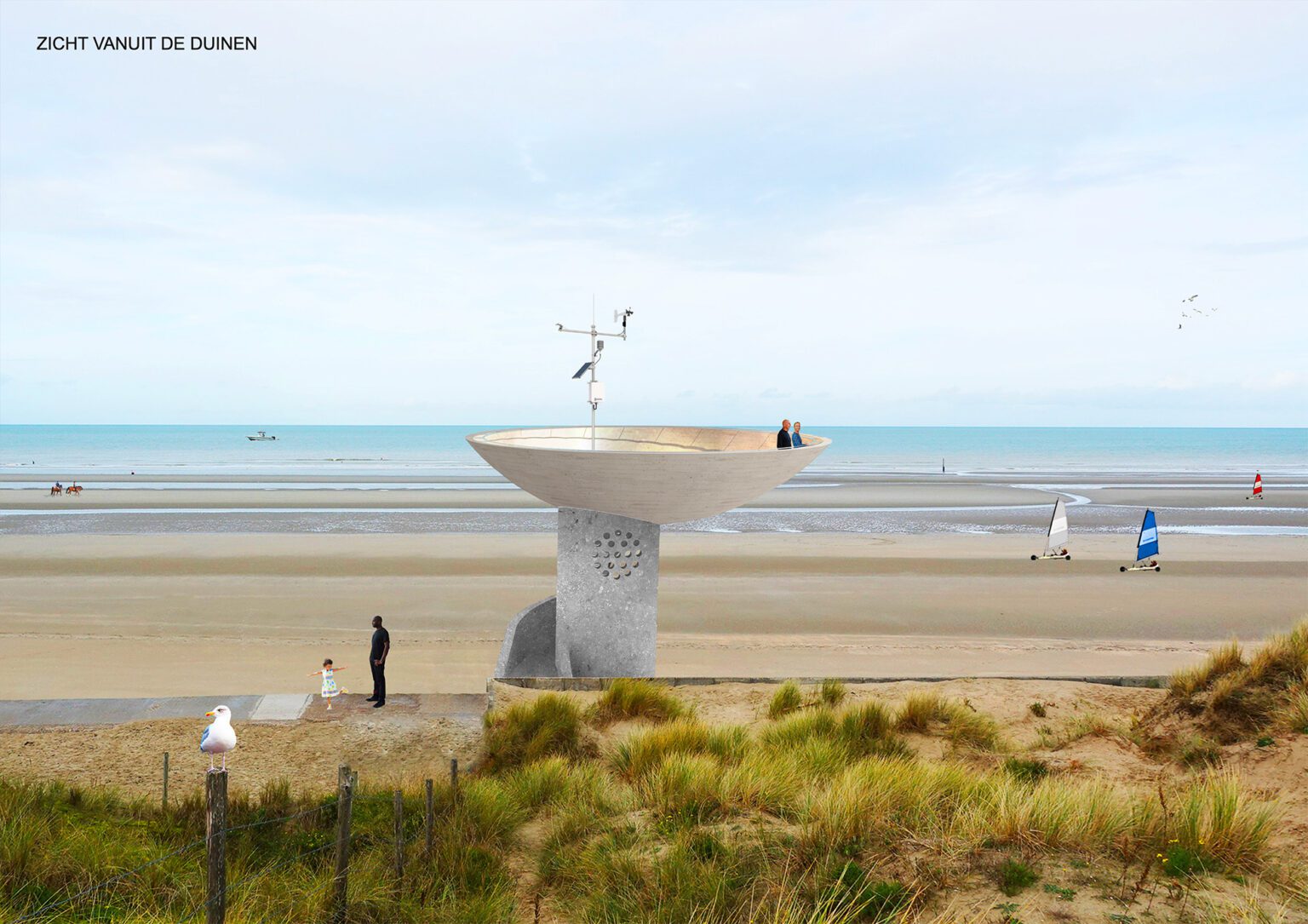
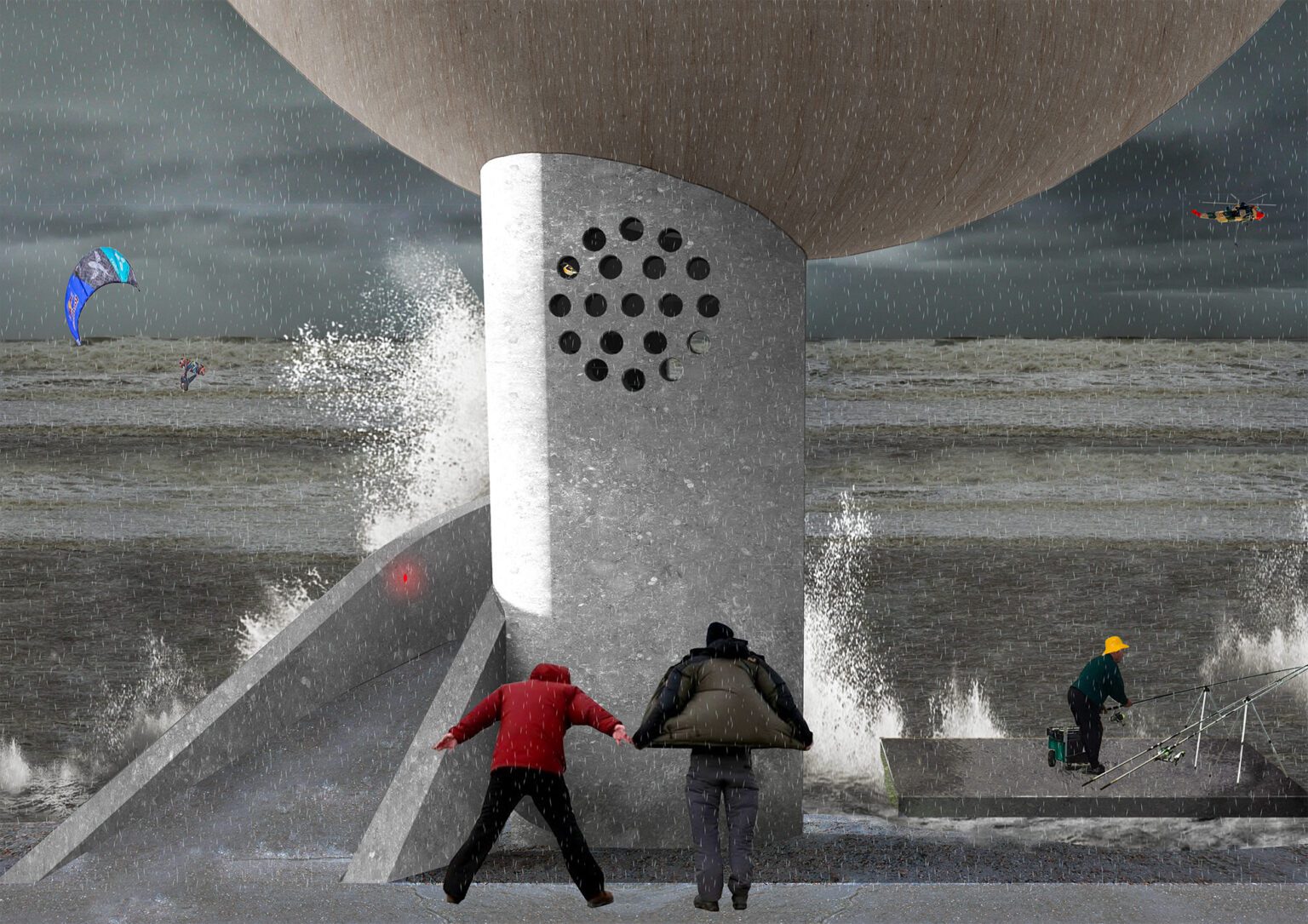
The result is an impressive and imaginative structure. From a distance, it appears as a giant bowl delicately balanced on an asymmetrical base. Some may see it as a monumental silver-grey shell, others as a gigantic ear listening to the sounds of the universe.
Design
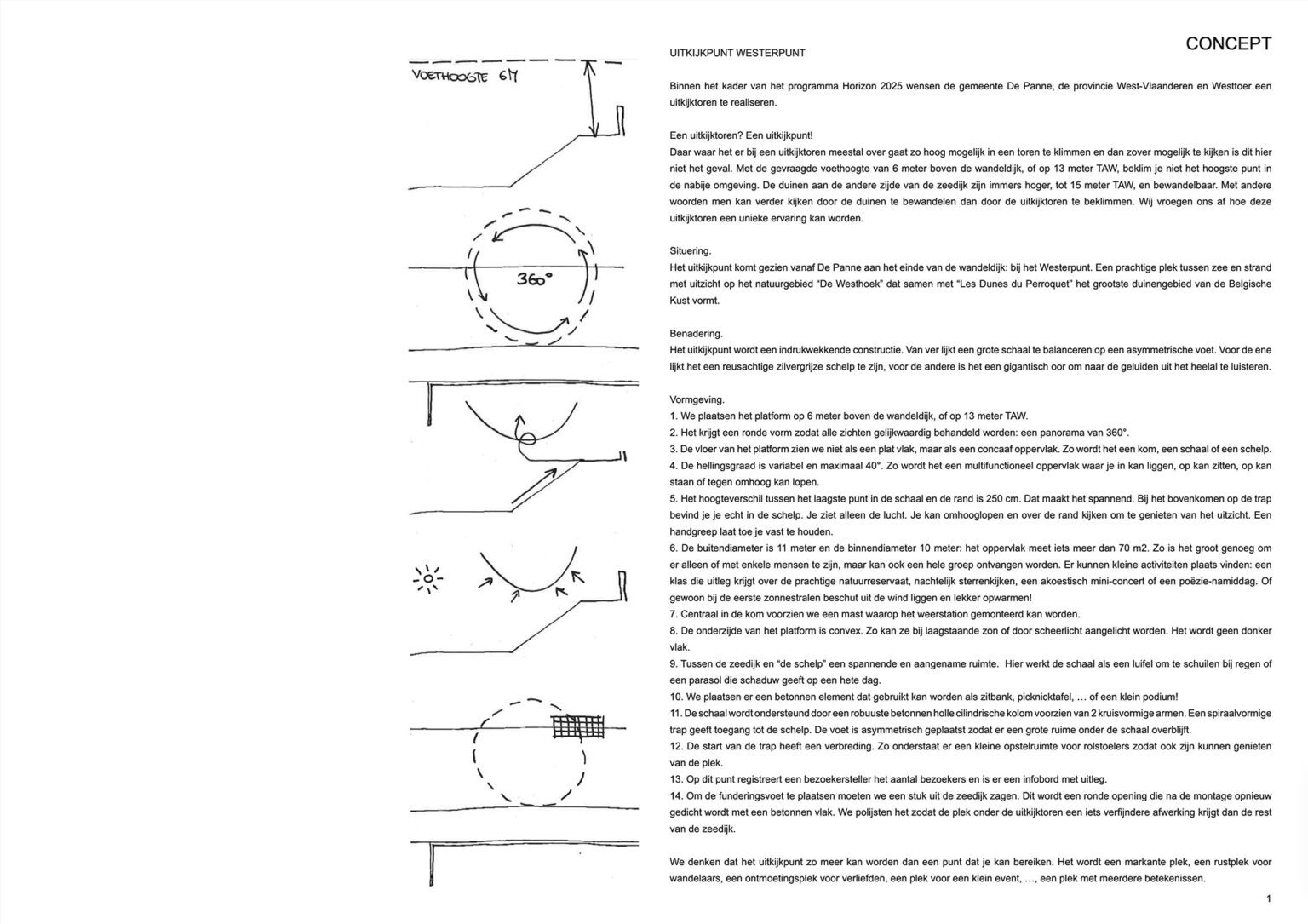
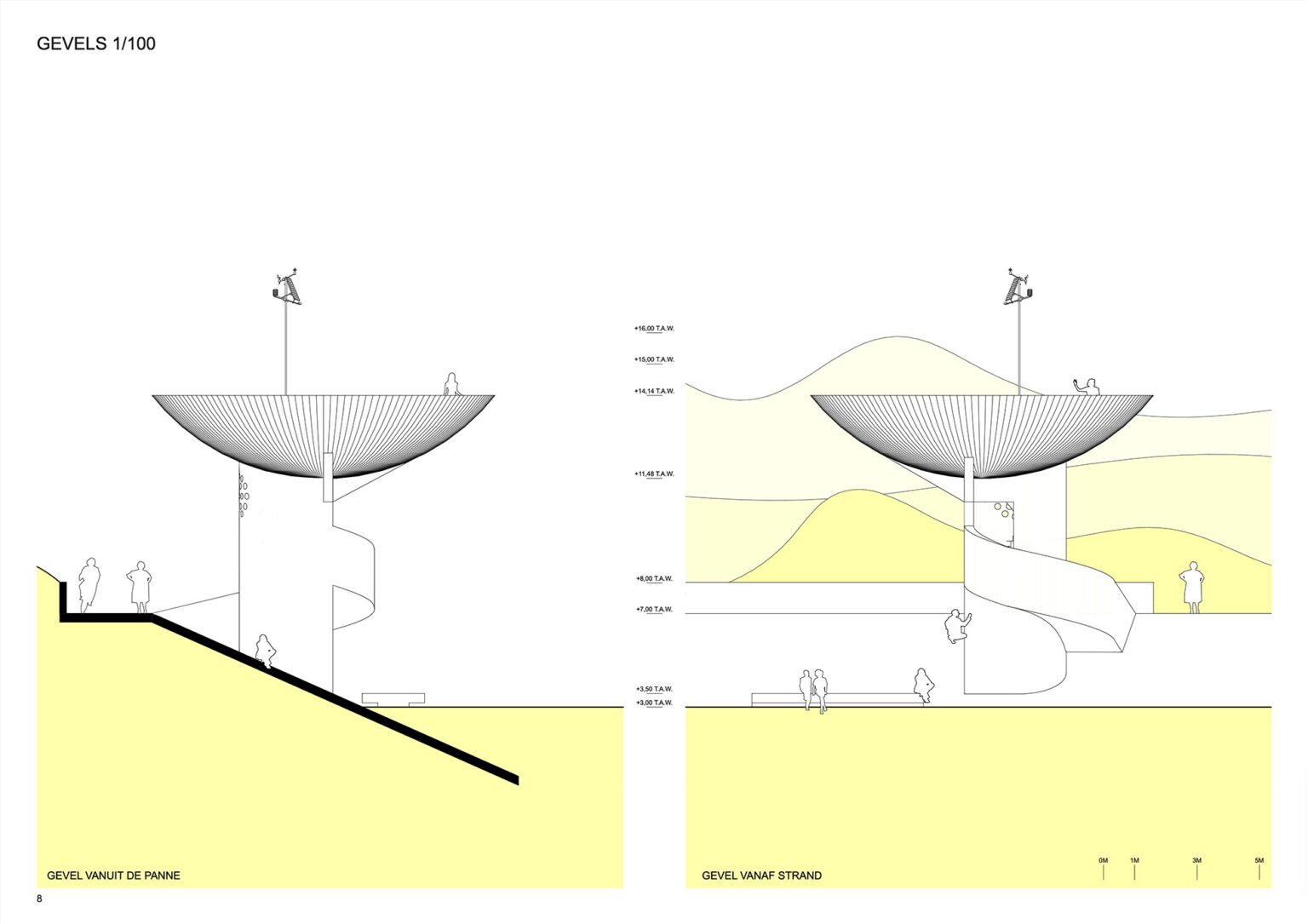
The platform is raised 6 meters above the promenade (13 meters TAW).
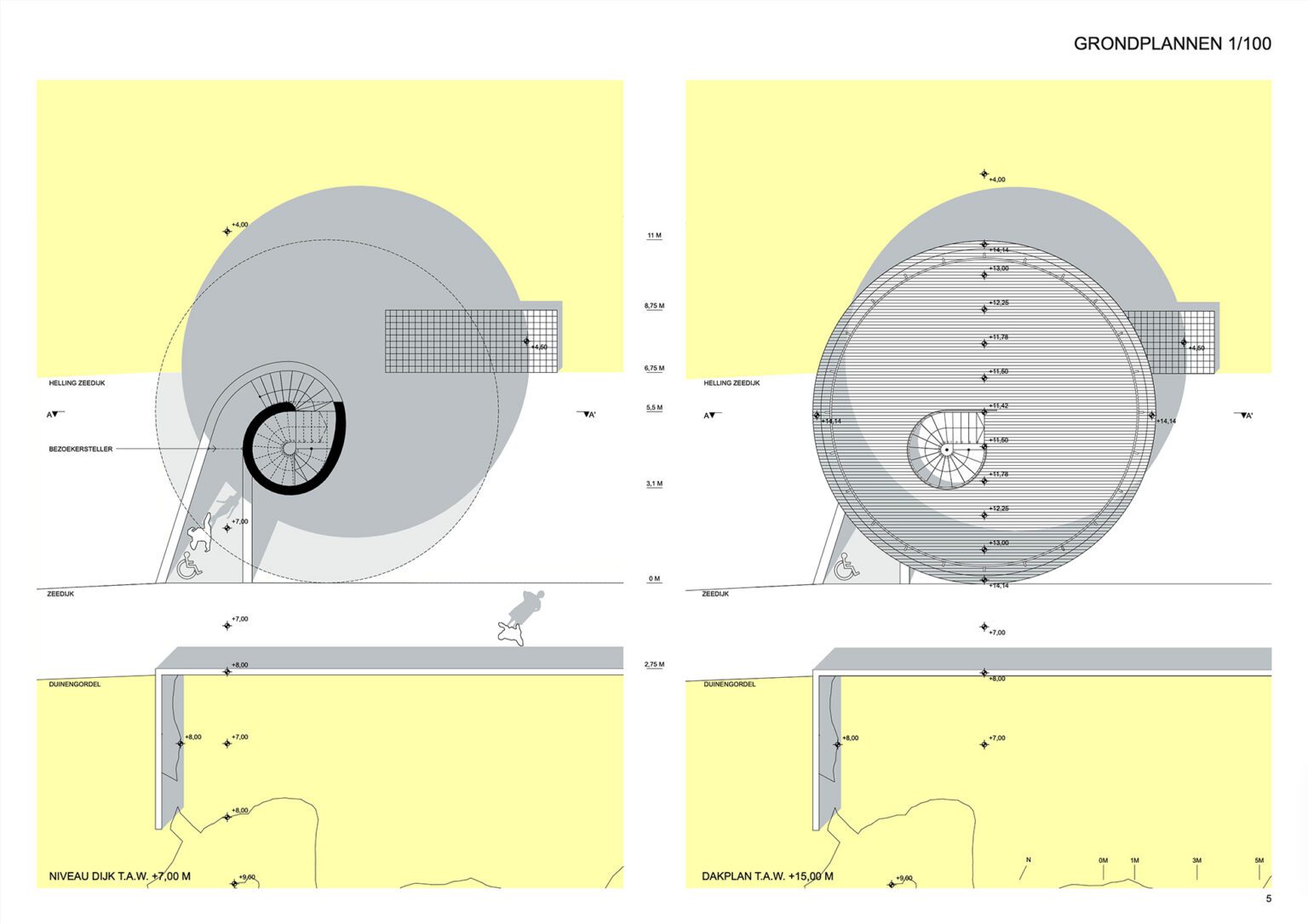
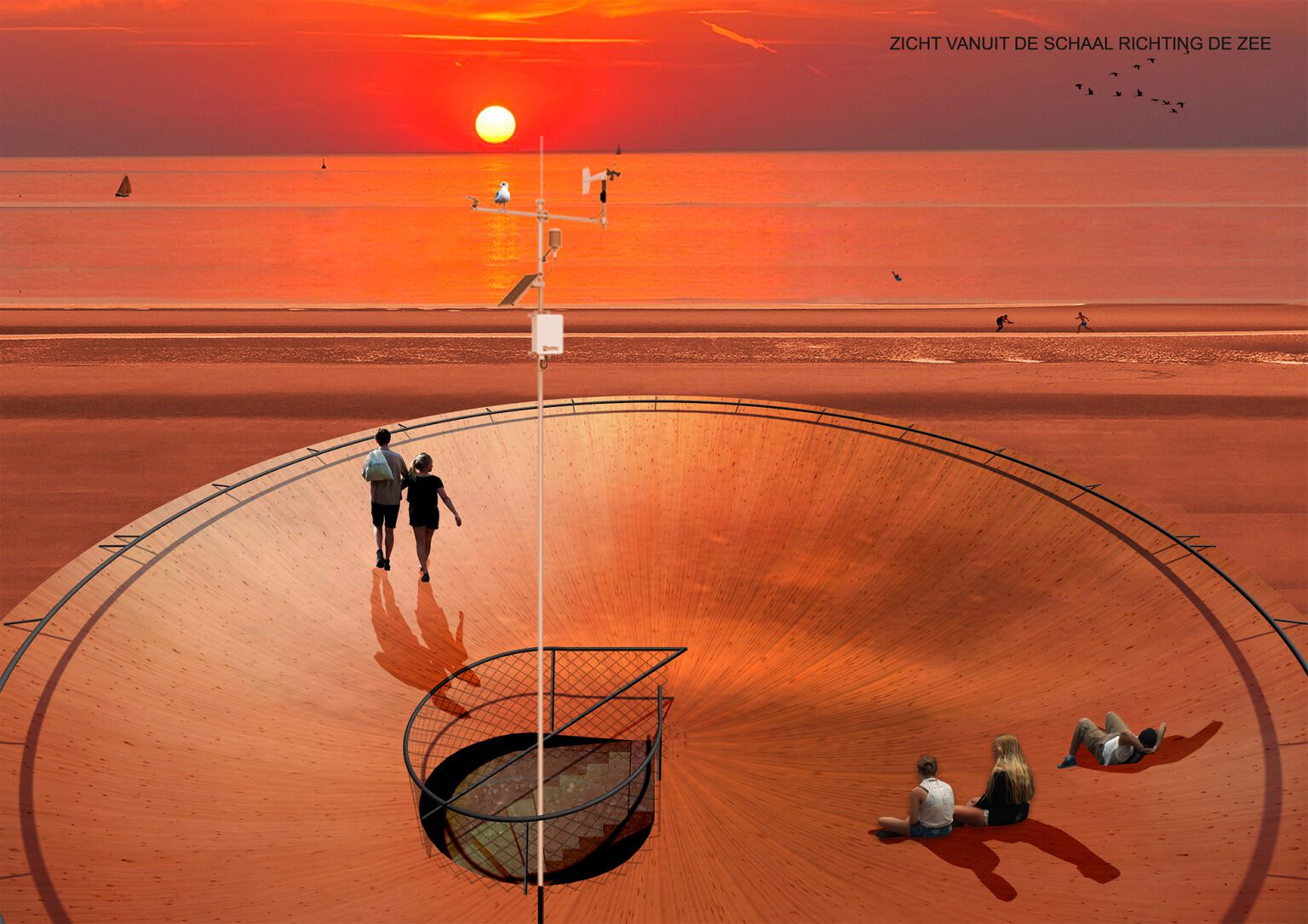
Its circular shape offers an equal panoramic experience in all directions: a full 360°.
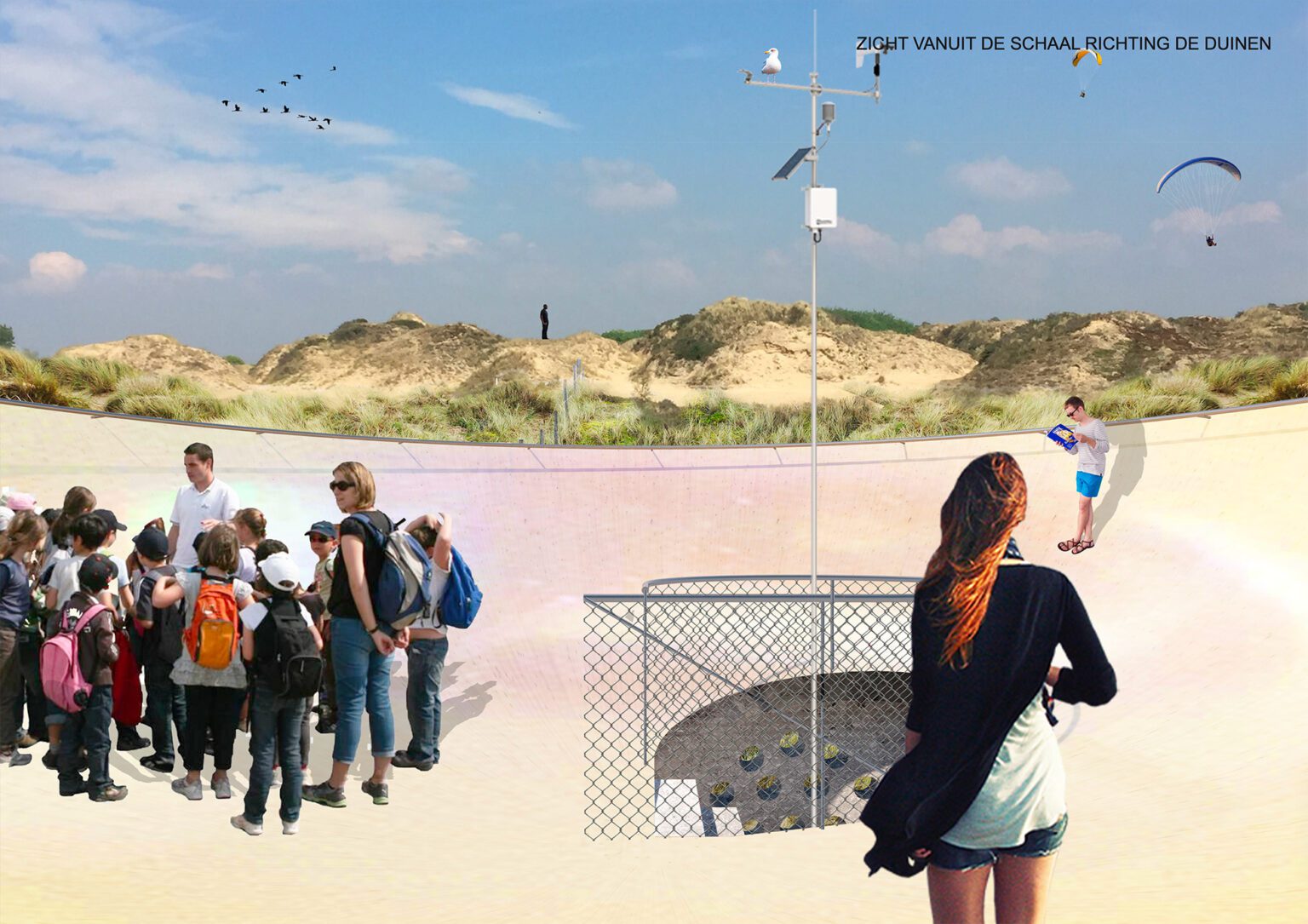
The floor is not flat but concave, shaped like a bowl or shell.
With a variable slope up to 40°, the surface invites multiple uses—lying down, sitting, standing, or walking upwards against the incline.
The height difference between the lowest point of the bowl and its rim is 2.5 meters, creating a sense of drama. Upon reaching the top of the stairs, visitors step “inside the shell,” initially seeing only the sky. From there, they can climb to the rim and look out over the vast surroundings, supported by a handrail.
With an outer diameter of 11 meters and an inner diameter of 10 meters (over 70 m² of surface), the platform accommodates both intimate visits and larger groups. It can host educational sessions for school classes, stargazing at night, acoustic mini-concerts, or poetry afternoons. Or it can simply be a serene spot to bask in the morning sun, sheltered from the wind.
At the center of the bowl, a mast supports a weather station.
The underside of the platform is convex, designed to catch sunlight at low angles and avoid becoming a dark surface.
Between the seawall and the “shell,” an inviting sheltered space emerges: a canopy against rain, or shade on hot summer days.
A robust concrete element doubles as a bench, picnic table, or small stage.
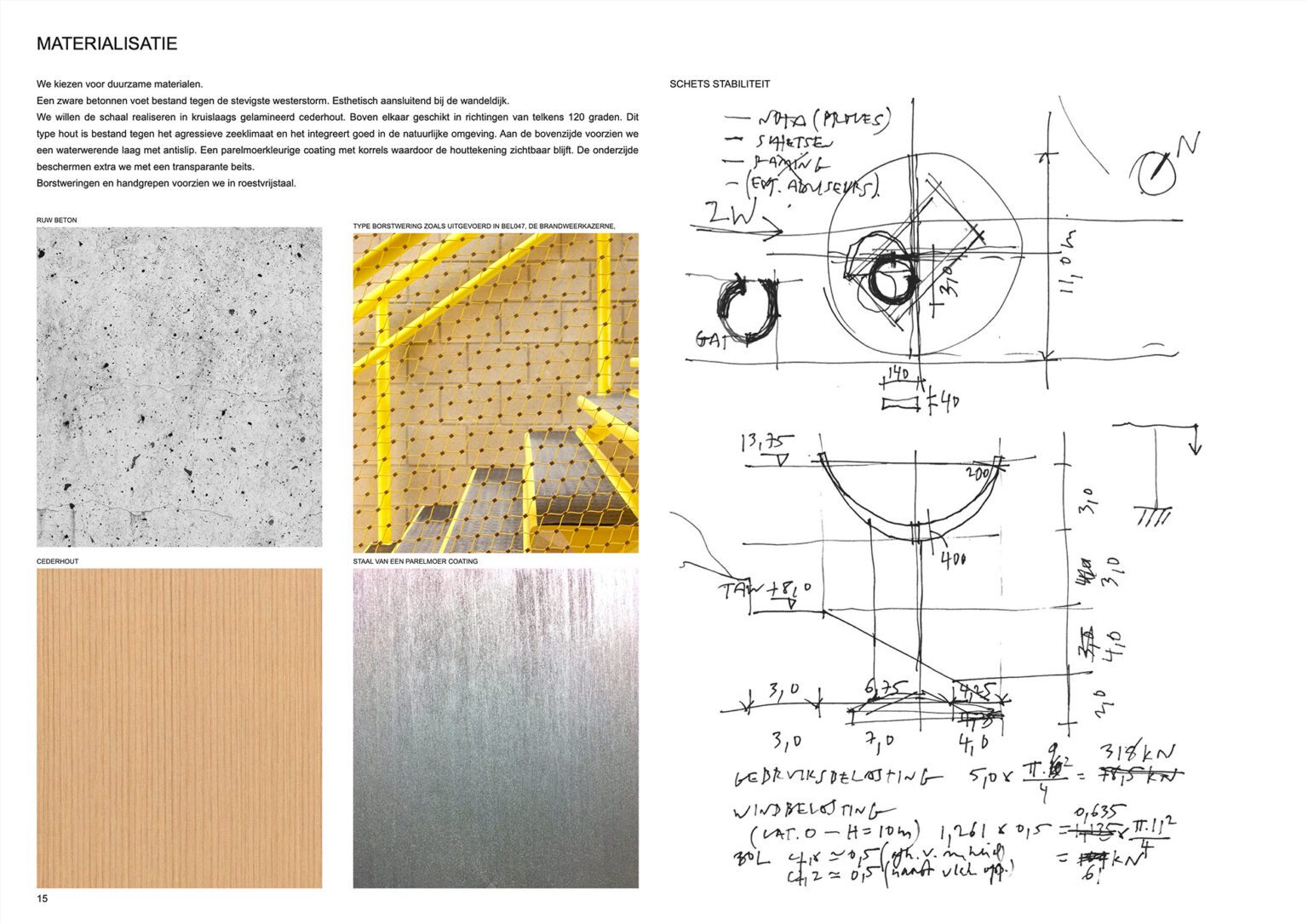
The structure rests on a strong hollow concrete column with two cross-shaped arms. A spiral staircase winds upward to the platform. The column is placed asymmetrically, leaving a generous covered area below.
At the start of the staircase, a widened area provides space for wheelchair users to enjoy the view from below.
This point also features a visitor counter and an information board.
To install the foundation, a round opening will be cut into the seawall, later closed with a polished concrete patch, giving the space beneath the structure a more refined finish than the surrounding seawall.
More than a destination
This lookout is not just a point to reach. It is designed as a striking landmark, a resting place, and an experience in itself—blending architecture, nature, and imagination into a new coastal icon.