BEL005 – RESIDENTIAL CARE CAMPUS
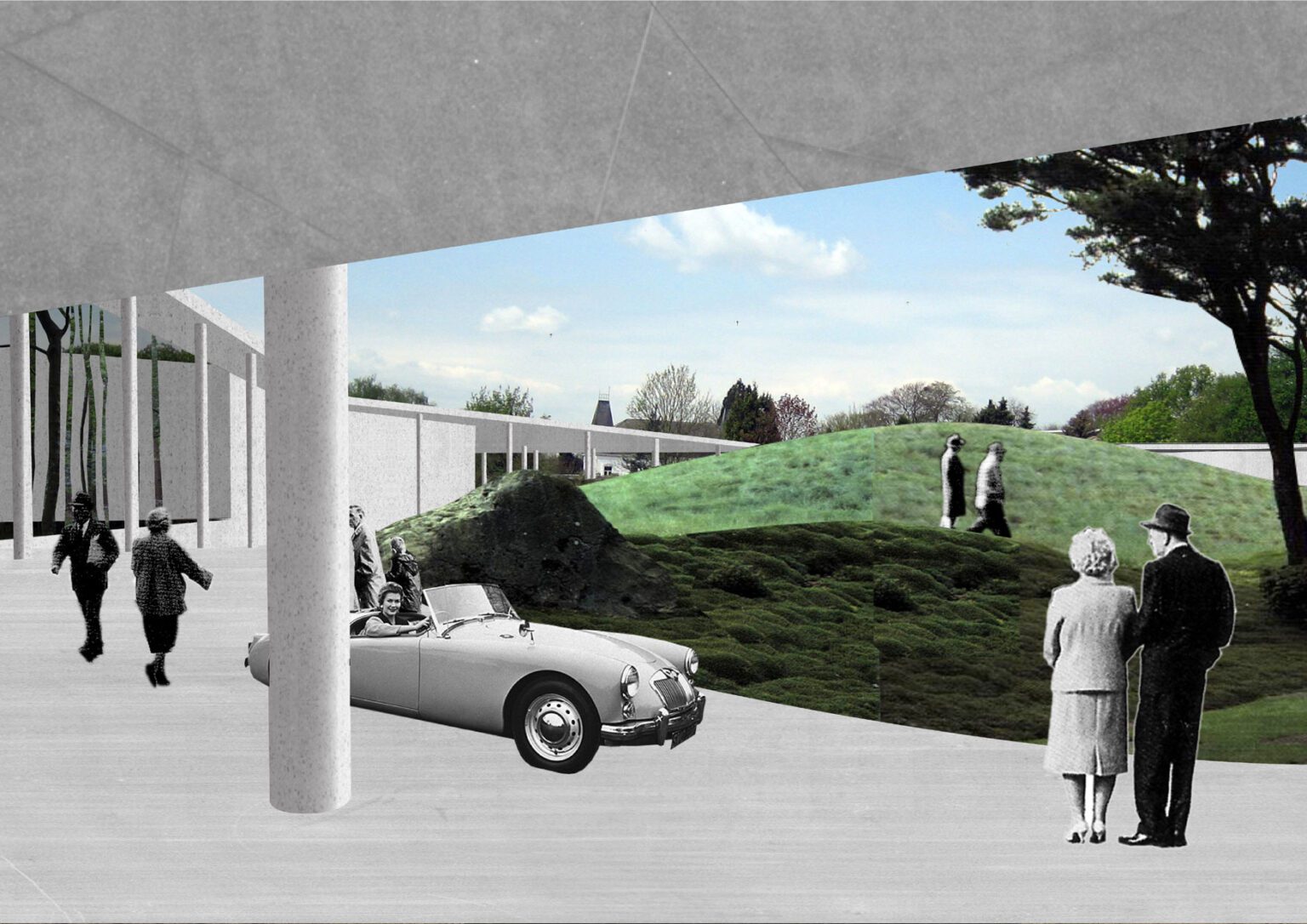
Approaching from Velm, Van Peten Castle first reveals itself through a densely wooded park with tall trees. At the junction with Halingenstraat, the view suddenly opens up to the castle’s entrance.
The castle, surrounded by a distinct English-style park, forms an enclave within the open landscape. The expansive site features pronounced topography; the land rises more steeply than Halingenstraat, offering spectacular panoramic views of the Hainaut loam plateau.
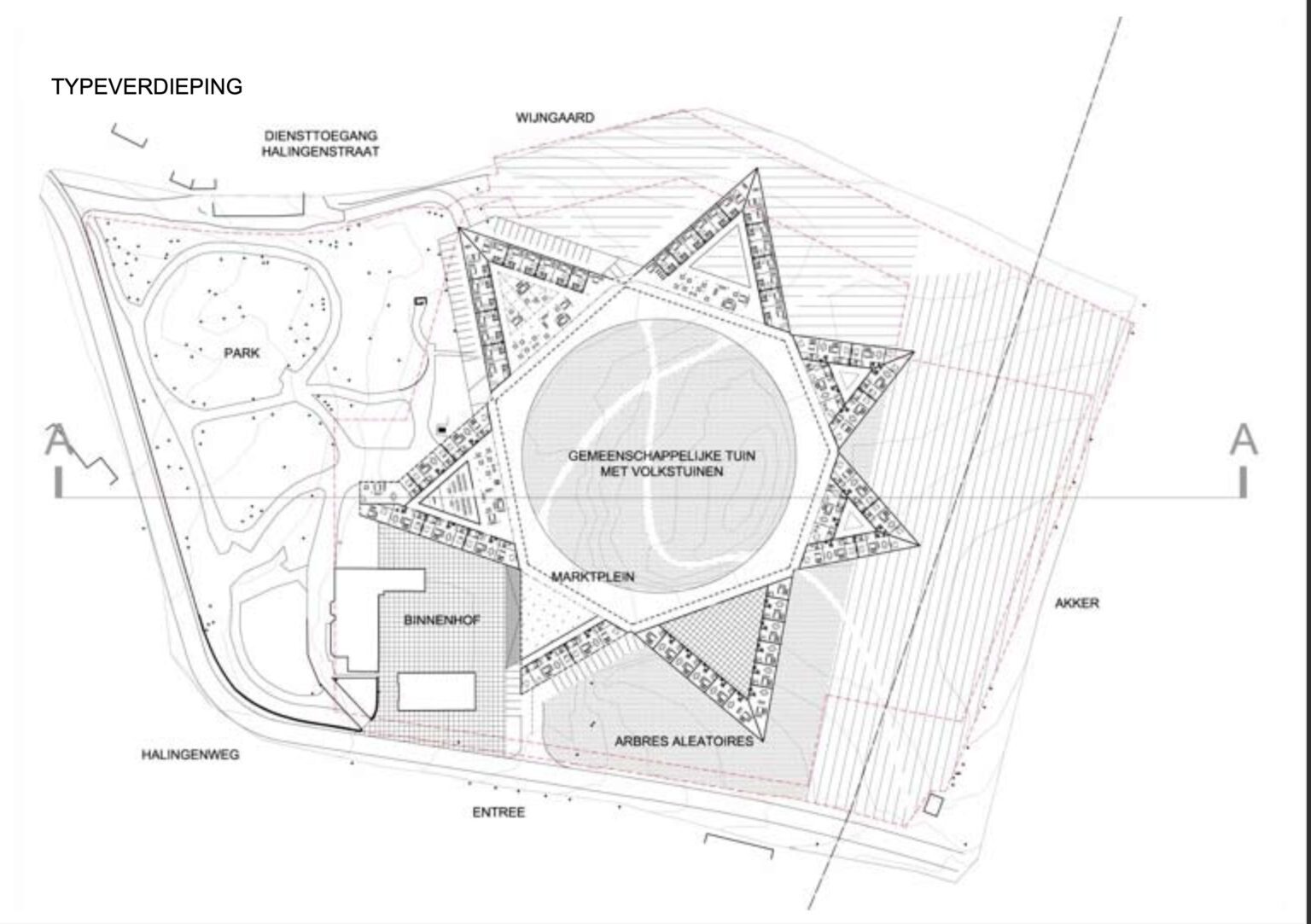
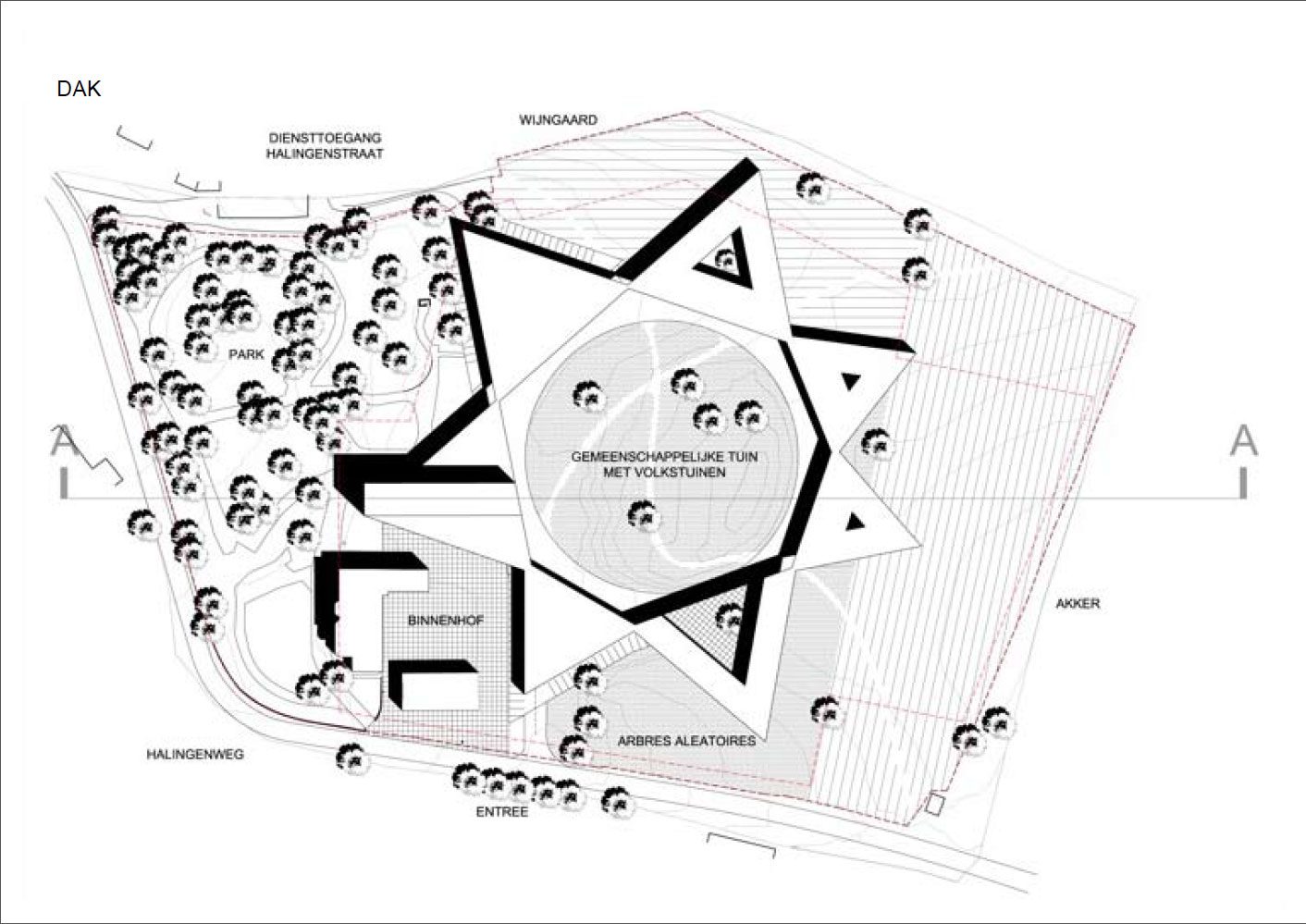
The site is used to its full potential. A broad buffer zone—including the English park—is preserved and planted. The new development consists of two building levels and includes three residential typologies: a care hotel, assisted-living flats, and housing units. These are complemented by shared facilities: a small shop, a medical practice, a multipurpose hall, and a swimming pool.
The layout of the master plan is best compared to a sunflower. At its core is a central garden (the seed), surrounded by a series of buildings (the petals). This garden becomes the heart of the community—a place for meeting and shared experiences.
A simple ring road encircles the garden and connects all buildings in the most compact way, giving each an address. Like a shared residential street, it accommodates slow-moving car traffic together with pedestrians and cyclists. The road is embedded in the gently sloping terrain to minimize inclines.
The castle and the adjacent former boarding school serve as anchor points within the master plan. The castle will be renovated and repurposed as a grand café, becoming a public and symbolic centerpiece of the site.
In addition to the castle renovation, the plan includes six new buildings: two for the care hotel, two for the assisted-living flats, and two housing blocks.
Each building has a triangular footprint, a geometry that offers an efficient gross-to-net ratio and supports energy efficiency.
All shared amenities are positioned around the central garden, which provides two key benefits:
Every residential unit enjoys panoramic views of the surrounding landscape while maintaining privacy.
The inner garden becomes an animated central stage, a place where curious residents can observe and engage with life on campus.
A covered walkway connects all buildings, ensuring that elderly or less-mobile residents can move safely and comfortably between facilities, regardless of weather.
Between the castle and the “sunflower” layout lies a courtyard that reorients the castle’s rear into a new front. This courtyard becomes the gateway to the care campus and a vibrant communal space for events like traditional folk dances, fairs, or weekly farmers’ markets.